


Page 24 - APPLIED PROCESS DESIGN FOR CHEMICAL AND PETROCHEMICAL PLANTS, Volume 1, 3rd Edition
P. 24
Process Planning, Scheduling and Flowsheet Design                      11


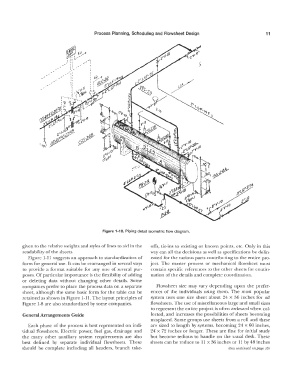
                                            Figure  1-10.  Piping detail isometric flow diagram.


          given to the relative weights and styles of lines to aid in the   offs,  tie-ins  to  existing or known  points,  etc.  Only  in  this
           readability of the sheets.                           way can all  the decisions as well as specifications be delin-
             Figure  1-1 J  suggests an approach to standardization of   eated for the various parts contributing to  the entire  pro-
          form for generai  use.  It can be rearranged in  several  ways   ject.  The  master  process  or  mechanical  flowsheet must
           lo  provide  a  format  suitable  for  any  one  of several  pur-   contain specific references to the other sheets for contin-
           poses.  Of  particuiar importance is the flexibility of  adding   uation of the details and complete  coordination.
          or  deleting  data  without  changing  other  details.  Some
          companies prefer to  place  the process  data on a  separate   Flowsheet size  may  vary  depending  upon  the  prefer-
          sheet,  although  the same basic  form for the table can be   ences  of the  individuals  using  them.  The  most  popular
          retained as shown  in Figure  1-11. The layout principles of   system  uses  one  size  sheet about 24  x  36  inches  for  all
          Figure  1-8 are also standardized by some companies.   flowsheets. The use of miscellaneous large and small sizes
                                                                to represent the entire project is often awkward when col-
          General Arrangements Guide                            lected,  and increases  the possibilities of sheets  becoming
                                                                misplaced.  Some groups  use sheets from  a  roll  and these
             Each  phase  of the  process  is best  represented  on indi-   are sized  to  length  by systems,  becoming 24  x  60  inches,
          vidual  flowsheers.  Eiectric  power,  fuel  gas,  drainage  and   24 x  72 inches  or  longer.  These are fine for initial  study
          the  many  other  auxiliary  system  requirements  are  also   but become  tedious  to  handle on  the  usual  desk.  These
          best  defined  by  separate  individual  flowsheets.  These   sheets can be reduce to  11  x 36 inches or 11  by 48 inches
          should  be  complete  including  all  headers,  branch  take-                          (text  continued on page  15)

