


Page 50 - Template Tesis UTM v2.0
P. 50
Cellobiose
                       Fragment of cellulose molecule


                            Glucose


                                             Crystalline cellulose


                                                                          Microfibril structure

                                                                          Primary
                                                                          cell wall


                     Hemicellulose   Cellulose
                                 microfibril   Plasma
                                            membrane

                                                                      Cellulose synthase complexes


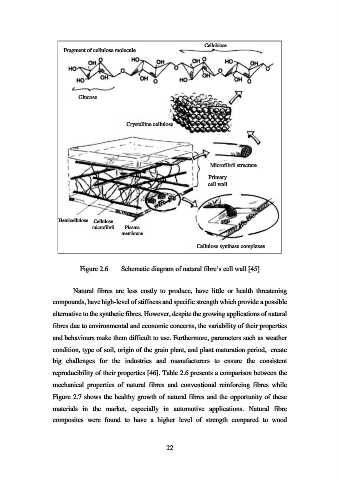
                             Figure 2.6    Schematic diagram of natural fibre’s cell wall [45]


                           Natural  fibres  are  less  costly  to  produce,  have  little  or  health  threatening

                   compounds, have high-level of stiffness and specific strength which provide a possible
                   alternative to the synthetic fibres. However, despite the growing applications of natural

                   fibres due to environmental and economic concerns, the variability of their properties
                   and behaviours make them difficult to use. Furthermore, parameters such as weather

                   condition, type of soil, origin of the grain plant, and plant maturation period,  create
                   big  challenges  for  the  industries  and  manufacturers  to  ensure  the  consistent

                   reproducibility of their properties [46]. Table 2.6 presents a comparison between the

                   mechanical  properties  of  natural  fibres  and  conventional  reinforcing  fibres  while
                   Figure 2.7 shows the healthy growth of natural fibres and the opportunity of these

                   materials  in  the  market,  especially  in  automotive  applications.  Natural  fibre
                   composites  were  found  to  have  a  higher  level  of  strength  compared  to  wood


                                                           22

