


Page 137 - Basic Principles of Textile Coloration
P. 137
126 PROTEIN FIBRES

NH CO(CH2)4         CONH  (CH2)2 NH (CH2)2  NH CO     (CH2)4         Polyamide

                                                   n

                          + CH2 CH CH2Cl

                           O

(CH2)2  N (CH2)2                         (CH2)2  N (CH2)2
        CH2                                      CH2
        CH OH                                    CH O
                                                 CH2
        CH2Cl

(CH2)2 N (CH2)2                                     H
                                         (CH2)2 N (CH2)2
H2C      CH2
                                                    CH2
     CH                                             CH OH
                                                    CH2OH Hydrolysis product
     OH Hercosett polymer

N CH2 CH CH2 S CH2 Wool                   N CH2 CH CH2 NH Wool
             OH                                        OH

    Polymer fixed to a wool thiol group      Polymer fixed to a wool amino group

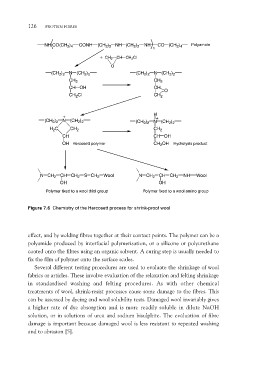
Figure 7.6 Chemistry of the Hercosett process for shrink-proof wool

effect, and by welding fibres together at their contact points. The polymer can be a
polyamide produced by interfacial polymerisation, or a silicone or polyurethane
coated onto the fibres using an organic solvent. A curing step is usually needed to
fix the film of polymer onto the surface scales.

   Several different testing procedures are used to evaluate the shrinkage of wool
fabrics or articles. These involve evaluation of the relaxation and felting shrinkage
in standardised washing and felting procedures. As with other chemical
treatments of wool, shrink-resist processes cause some damage to the fibres. This
can be assessed by dyeing and wool solubility tests. Damaged wool invariably gives
a higher rate of dye absorption and is more readily soluble in dilute NaOH
solution, or in solutions of urea and sodium bisulphite. The evaluation of fibre
damage is important because damaged wool is less resistant to repeated washing
and to abrasion [5].

