


Page 139 - Basic Principles of Textile Coloration
P. 139
128 PROTEIN FIBRES

Cl SO3Na

                       O                              Cl
                               NHCONH                         Mitin FF

                       Cl                             Cl

                                             CH3 CH3 Cl
                                            H HC C

                    O  CH2OCO                       Cl
                                            H

                                                      Permethrin

Cl                                   O        CH3     Mitin AL
    Cl                 NH CO                N         (also includes
                                                      Permethrin)
                                     O             O
                                            N

                                              CH3

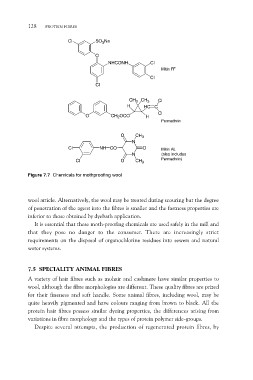
Figure 7.7 Chemicals for mothproofing wool

wool article. Alternatively, the wool may be treated during scouring but the degree
of penetration of the agent into the fibres is smaller and the fastness properties are
inferior to those obtained by dyebath application.

   It is essential that these moth-proofing chemicals are used safely in the mill and
that they pose no danger to the consumer. There are increasingly strict
requirements on the disposal of organochlorine residues into sewers and natural
water systems.

7.5 SPECIALITY ANIMAL FIBRES
A variety of hair fibres such as mohair and cashmere have similar properties to
wool, although the fibre morphologies are different. These quality fibres are prized
for their fineness and soft handle. Some animal fibres, including wool, may be
quite heavily pigmented and have colours ranging from brown to black. All the
protein hair fibres possess similar dyeing properties, the differences arising from
variations in fibre morphology and the types of protein polymer side-groups.

   Despite several attempts, the production of regenerated protein fibres, by

