


Page 28 - Basic Principles of Textile Coloration
P. 28
COLOUR, DYES AND DYEING 17

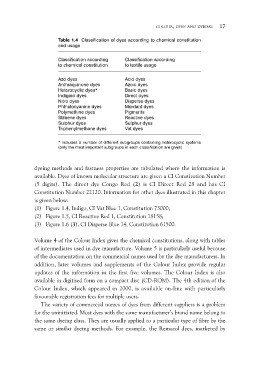
Table 1.4 Classification of dyes according to chemical constitution
and usage

Classification according  Classification according
to chemical constitution  to textile usage

Azo dyes                  Acid dyes
Anthraquinone dyes        Azoic dyes
Heterocyclic dyes*        Basic dyes
Indigoid dyes             Direct dyes
Nitro dyes                Disperse dyes
Phthalocyanine dyes       Mordant dyes
Polymethine dyes          Pigments
Stilbene dyes             Reactive dyes
Sulphur dyes              Sulphur dyes
Triphenylmethane dyes     Vat dyes

* Includes a number of different subgroups containing heterocyclic systems
(only the most important subgroups in each classification are given)

dyeing methods and fastness properties are tabulated where the information is
available. Dyes of known molecular structure are given a CI Constitution Number
(5 digits). The direct dye Congo Red (2) is CI Direct Red 28 and has CI
Constitution Number 22120. Information for other dyes illustrated in this chapter
is given below:
(1) Figure 1.4, Indigo, CI Vat Blue 1, Constitution 73000;
(2) Figure 1.5, CI Reactive Red 1, Constitution 18158;
(3) Figure 1.6 (3), CI Disperse Blue 14, Constitution 61500.

Volume 4 of the Colour Index gives the chemical constitutions, along with tables
of intermediates used in dye manufacture. Volume 5 is particularly useful because
of the documentation on the commercial names used by the dye manufacturers. In
addition, later volumes and supplements of the Colour Index provide regular
updates of the information in the first five volumes. The Colour Index is also
available in digitised form on a compact disc (CD-ROM). The 4th edition of the
Colour Index, which appeared in 2000, is available on-line with particularly
favourable registration fees for multiple users.

   The variety of commercial names of dyes from different suppliers is a problem
for the uninitiated. Most dyes with the same manufacturer’s brand name belong to
the same dyeing class. They are usually applied to a particular type of fibre by the
same or similar dyeing methods. For example, the Remazol dyes, marketed by

