


Page 323 - Basic Principles of Textile Coloration
P. 323
312 DISPERSE DYES

                                 SO3

CH3O   OH                        HC OCH3
               CH2                 CH OH

(a) HO                           SO3      OH            Glucose ring
            CH2CO2H O            CH CH            OCH3

                           CH3O

                                                  OC  O OCH3

                                             CH3O                       CH  OH
                                                   H  HOCH2 CH                      OCH3

                                 CH3 CH CH3                        CH2              OH
                                                 CH2  CH CH                 SO3

(b)    CH3 CH CH3                                      CH2     CH3 CH CH3
  CH2                  CH2                                CH3                  CH2

               SO3                                    CH               SO3
                                                       CH3

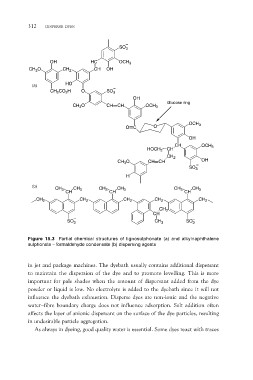
Figure 15.3 Partial chemical structures of lignosulphonate (a) and alkylnaphthalene
sulphonate – formaldehyde condensate (b) dispersing agents

in jet and package machines. The dyebath usually contains additional dispersant
to maintain the dispersion of the dye and to promote levelling. This is more
important for pale shades when the amount of dispersant added from the dye
powder or liquid is low. No electrolyte is added to the dyebath since it will not
influence the dyebath exhaustion. Disperse dyes are non-ionic and the negative
water–fibre boundary charge does not influence adsorption. Salt addition often
affects the layer of anionic dispersant on the surface of the dye particles, resulting
in undesirable particle aggregation.

   As always in dyeing, good quality water is essential. Some dyes react with traces

