


Page 167 - fbkCardioDiabetes_2017
P. 167
Cardio Diabetes Medicine 2017                                    143


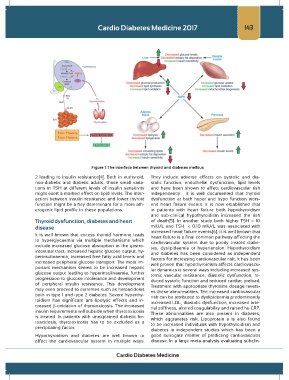
                                         Figure 1 .The interface between thyroid and diabetes mellitus

                 2 leading to insulin resistance[4].  Both in euthyroid,   They  include adverse  effects  on systolic  and dia-
                 non-diabetic  and  diabetic  adults,  those small varia-  stolic function, endothelial dysfunction,  lipid  levels
                 tions in TSH  at different  levels  of  insulin sensitivity   and have been shown to affect  cardiovascular risk
                 might exert a marked effect on lipid levels. The inter-  independently.    It is  well  documented  that  thyroid
                 action  between insulin resistance  and lower  thyroid   dysfunction  at both hyper  and hypo  function  wors-
                 function might be a key determinant for a more ath-  ens heart failure events. It is now established that
                 erogenic lipid profile in these populations.       in patients with heart failure  both hypothyroidism
                                                                    and  sub-clinical hypothyroidism increased the risk
                 Thyroid dysfunction, diabetes and heart            of  death[5].  In another study both higher  TSH  >  10
                 disease                                            mIU/L  and TSH   < 0.10 mIU/L  was associated with
                 It is  well  known that  excess  thyroid  hormone leads   increased heart failure events[6]. It is well known that
                                                                    heart failure is a final common pathway affecting the
                 to hyperglycaemia via multiple  mechanisms  which   cardiovascular system  due to poorly  treated  diabe-
                 include increased  glucose  absorption  in the gastro-  tes, dyslipidaemia  or  hypertension.  Hypothyroidism
                 intestinal tract, increased hepatic glucose output, hy-  and diabetes  has been considered  as independent
                 perinsulinaemia, increased free fatty acid levels and   factors for increasing cardiovascular risk. It has been
                 increased peripheral glucose transport. The most im-  well proven that hypothyroidism affects cardiovascu-
                 portant mechanism  seems  to be  increased  hepatic   lar dynamics is several ways including increased sys-
                 glucose output leading to hyperinsulinaemia, further   temic  vascular resistance, diastolic dysfunction,  re-
                 progression to glucose intolerance and development   duced systolic function and reduced cardiac preload.
                 of  peripheral  insulin resistance. This  development   Treatment with appropriate thyroxine dosage revers-
                 may even proceed to extremes such as ketoacidosis   es these abnormalities. The increased cardiovascular
                 both in type 1 and type 2 diabetes. Severe hyperthy-  risk can be attributed to dyslipidaemia predominantly
                 roidism  has significant anti-lipolytic  effects and in-  increased LDL, diastolic dysfunction, increased arte-
                 creased β-oxidation of thyrotoxicosis. The increased   rial stiffness, altered coagulability and raised hs-CRP.
                 insulin requirements will subside when thyrotoxicosis   These  abnormalities  are  also  present  in  diabetes,
                 is  treated. In patients with  unexplained  diabetic ke-  which  aggravates risk.  Lipoprotein  a is  also  found
                 toacidosis, thyrotoxicosis  has to be excluded as a   to be increased individuals with hypothyroidism and
                 precipitating factor.
                                                                    diabetes in independent studies  which  has been a
                 Hypothyroidism  and diabetes  are  well  known to   good  surrogate marker  of predicting  cardiovascular
                 affect the  cardiovascular system  in  multiple  ways.   disease. In a large meta-analysis evaluating subclin-


                                                    Cardio Diabetes Medicine

