


Page 252 - Hall et al (2015) Principles of Critical Care-McGraw-Hill
P. 252
156     PART 2: General Management of the Patient


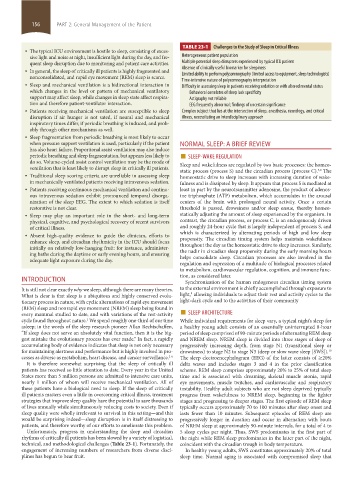
                                                                         TABLE 23-1    Challenges to the Study of Sleep in Critical Illness
                     • The typical ICU environment is hostile to sleep, consisting of exces-
                    sive light and noise at night, insufficient light during the day, and fre-  Heterogeneous patient population
                    quent sleep disruption due to monitoring and patient care activities.  Multiple potential sleep disrupters experienced by typical ICU patient
                     • In general, the sleep of critically ill patients is highly fragmented and   Absence of clinically useful biomarker for sleepiness
                    nonconsolidated, and rapid eye movement (REM) sleep is scarce.  Limited ability to perform polysomnography (limited access to equipment, sleep technologists)
                                                                        Time-intensive nature of polysomnography interpretation
                     • Sleep and mechanical ventilation is a bidirectional interaction in   Difficulty in assessing sleep in patients receiving sedation or with altered mental status
                    which changes in the level or pattern of mechanical ventilatory   Behavioral correlates of sleep lack specificity
                    support may affect sleep, while changes in sleep state affect respira-  Actigraphy not reliable
                    tion and therefore patient-ventilator interaction.    EEG frequently abnormal; findings of uncertain significance
                     • Patients receiving mechanical ventilation are susceptible to sleep   Complex subject that lies at the intersection of sleep, anesthesia, neurology, and critical
                    disruption if air hunger is not sated, if neural and mechanical   illness, necessitating an interdisciplinary approach
                    inspiratory times differ, if periodic breathing is induced, and prob-
                    ably through other mechanisms as well.
                     • Sleep fragmentation from periodic breathing is most likely to occur
                    when pressure support ventilation is used, particularly if the patient   NORMAL SLEEP: A BRIEF REVIEW
                    has also heart failure. Proportional assist ventilation may also induce
                    periodic breathing and sleep fragmentation, but appears less likely to     ■  SLEEP-WAKE REGULATION
                    do so. Volume-cycled assist control ventilation may be the mode of   Sleep and wakefulness are regulated by two basic processes: the homeo-
                    ventilation that is least likely to disrupt sleep in critically ill patients.  static process (process S) and the circadian process (process C).  The
                                                                                                                      7,8
                     • Traditional sleep scoring criteria are unreliable in assessing sleep   homeostatic drive to sleep increases with increasing duration of wake-
                    in mechanically ventilated patients receiving intravenous sedation.  fulness and is dissipated by sleep. It appears that process S is mediated at
                     • Patients receiving continuous mechanical ventilation and continu-  least in part by the neurotransmitter adenosine, the product of adenos-
                    ous intravenous sedation exhibit pronounced temporal disorga-  ine triphosphate (ATP) metabolism, which accumulates in the arousal
                    nization of the sleep EEG. The extent to which sedation is itself   centers of the brain with prolonged neural activity. Once a certain
                    restorative is not clear.                          threshold is passed, drowsiness and/or sleep ensue, thereby homeo-
                     • Sleep may play an important role in the short- and long-term   statically adjusting the amount of sleep experienced by the organism. In
                    physical, cognitive, and psychological recovery of recent survivors   contrast, the circadian process, or process C, is an endogenously driven
                    of critical illness.                               and roughly 24-hour cycle that is largely independent of process S, and
                     • Absent high-quality evidence to guide the clinician, efforts to   which is characterized by alternating periods of high and low sleep
                    enhance sleep, and circadian rhythmicity in the ICU should focus   propensity. The circadian timing system helps maintain wakefulness
                                                                       throughout the day as the homeostatic drive to sleep increases. Similarly,
                    initially on relatively low-hanging fruit: for instance, administer-
                    ing baths during the daytime or early evening hours, and ensuring   the nadir in circadian sleep propensity during the early morning hours
                                                                       helps consolidate sleep. Circadian processes are also involved in the
                    adequate light exposure during the day.
                                                                       regulation and expression of a multitude of biological processes related
                                                                       to metabolism, cardiovascular regulation, cognition, and immune func-
                                                                       tion, as considered later.
                 INTRODUCTION                                            Synchronization of the human endogenous circadian timing system
                 It is still not clear exactly why we sleep, although there are many theories.   to the external environment is chiefly accomplished through exposure to
                                                                           9
                 What is clear is that sleep is a ubiquitous and highly conserved evolu-  light,  allowing individuals to adjust their rest and activity cycles to the
                 tionary process in nature, with cyclic alternations of rapid eye movement   light-dark cycle and to the activities of their community
                 every mammal studied to date, and with variations of the rest-activity   ■  SLEEP ARCHITECTURE
                 (REM) sleep and nonrapid eye movement (NREM) sleep being found in
                 cycle found throughout nature.  We spend roughly one-third of our time   While individual requirements for sleep vary, a typical night’s sleep for
                                       1
                 asleep; in the words of the sleep research pioneer Allan Rechtschaffen,   a healthy young adult consists of an essentially uninterrupted 8-hour
                 “If sleep does not serve an absolutely vital function, then it is the big-  period of sleep comprised of 90-minute periods of alternating REM sleep
                 gest mistake the evolutionary process has ever made.” In fact, a rapidly   and NREM sleep. NREM sleep is divided into three stages of sleep of
                 accumulating body of evidence indicates that sleep is not only necessary   progressively increasing depth, from stage N1 (transitional sleep or
                 for maintaining alertness and performance but is highly involved in pro-  drowsiness) to stage N2 to stage N3 (deep or slow wave sleep [SWS]).
                                                                                                                          10
                 cesses as diverse as metabolism, heart disease, and cancer surveillance. 2-6  The sleep electroencephalogram (EEG) of the latter consists of ≥20%
                   It is therefore somewhat surprising that the sleep of critically ill   delta waves and includes stages 3 and 4 in the prior classification
                 patients has received so little attention to date. Every year in the United   scheme. REM sleep comprises approximately 20% to 25% of total sleep
                 States more than 5 million persons are admitted to intensive care units,   time and is associated with dreaming, skeletal muscle atonia, rapid
                 nearly  1  million of  whom will  receive  mechanical  ventilation.  All  of   eye movements, muscle twitches, and cardiovascular and respiratory
                 these patients have a biological need to sleep. If the sleep of critically   instability. Healthy adult subjects who are not sleep deprived typically
                 ill patients matters even a little in overcoming critical illness, treatment   progress from wakefulness to NREM sleep, beginning in the lighter
                 strategies that improve sleep quality have the potential to save thousands   stages and progressing to deeper stages. The first episode of REM sleep
                 of lives annually while simultaneously reducing costs to society. Even if   typically occurs approximately 70 to 100 minutes after sleep onset and
                 sleep quality were wholly irrelevant to survival in this setting—and this   lasts fewer than 10 minutes. Subsequent episodes of REM sleep are
                 would be surprising indeed—sleep disruption is in itself distressing to   progressively longer in duration and occur in alternation with bouts
                 patients, and therefore worthy of our efforts to ameliorate this problem.  of NREM sleep at approximately 90-minute intervals, for a total of 4 to
                   Unfortunately, progress in understanding the sleep and circadian   5 sleep cycles per night. Thus, SWS predominates in the first part of
                 rhythms of critically ill patients has been slowed by a variety of logistical,   the night while REM sleep predominates in the latter part of the night,
                 technical, and methodological challenges (Table 23-1). Fortunately, the   coincident with the circadian trough in body temperature.
                 engagement of increasing numbers of researchers from diverse disci-  In healthy young adults, SWS constitutes approximately 20% of total
                 plines has begun to bear fruit.                       sleep time. Normal aging is associated with compromised sleep that


            section02.indd   156                                                                                       1/13/2015   2:05:06 PM

