


Page 383 - Hall et al (2015) Principles of Critical Care-McGraw-Hill
P. 383
CHAPTER 33: Shock   253


                                                                          volume resuscitation, cardiac output, hemoglobin, and oxygen satura-
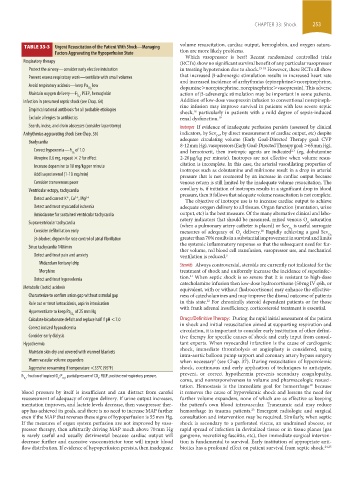
                      TABLE 33-3     Urgent Resuscitation of the Patient With Shock—Managing
                               Factors Aggravating the Hypoperfusion State  tion are more likely problems.
                                                                           Which vasopressor is  best? Recent  randomized  controlled trials
                    Respiratory therapy                                   (RCTs) show no significant survival benefit of any particular vasopressor
                      Protect the airway—consider early elective intubation  in treating hypotension due to shock. 15-18  However, these RCTs all show
                      Prevent excess respiratory work—ventilate with small volumes  that increased β-adrenergic stimulation results in increased heart rate
                                                                          and increased incidence of arrhythmias (epinephrine>norepinephrine,
                      Avoid respiratory acidosis—keep Pa  low
                                          CO 2                            dopamine>norepinephrine, norepinephrine>vasopressin). This adverse
                      Maintain oxygen delivery—Fi , PEEP, hemoglobin      action of β-adrenergic stimulation may be important in some patients.
                                       O 2
                    Infection in presumed septic shock (see Chap. 64)     Addition of low-dose vasopressin infusion to conventional norepineph-
                                                                          rine infusion may improve survival in patients with less severe septic
                      Empirical rational antibiosis for all probable etiologies
                                                                          shock,  particularly in patients with a mild degree of sepsis-induced
                                                                              18
                      Exclude allergies to antibiotics                    renal dysfunction. 19
                      Search, incise, and drain abscesses (consider laparotomy)  Inotropes  If evidence of inadequate perfusion persists (assessed by clinical
                    Arrhythmias aggravating shock (see Chap. 36)          indicators, by Scv , by direct measurement of cardiac output, etc) despite
                                                                                      O 2
                                                                          adequate  circulating  volume  (Early  Goal-Directed  Therapy  goal:  CVP
                      Bradycardia
                                                                          8-12 mm Hg), vasopressors (Early Goal-Directed Therapy goal: >65 mm Hg),
                       Correct hypoxemia—Fi  of 1.0                       and  hemotocrit,  then  inotropic  agents  are  indicated   (eg,  dobutamine
                                                                                                               2,3
                                     O 2
                        Atropine 0.6 mg, repeat × 2 for effect            2-20 µg/kg per minute). Inotropes are not effective when volume resus-
                        Increase dopamine to 10 mg/kg per minute          citation is incomplete. In this case, the arterial vasodilating properties of
                                                                          inotropes such as dobutamine and milrinone result in a drop in arterial
                        Add isoproterenol (1-10 mg/min)                   pressure that is not countered by an increase in cardiac output because
                        Consider transvenous pacer                        venous return is still limited by the inadequate volume resuscitation. The
                      Ventricular ectopy, tachycardia                     corollary is, if initiation of inotropes results in a significant drop in blood
                                                                          pressure, then it follows that adequate volume resuscitation is not complete.
                                   +
                                      2+
                        Detect and correct K , Ca , Mg 2+                  The objective of inotrope use is to increase cardiac output to achieve
                        Detect and treat myocardial ischemia              adequate oxygen delivery to all tissues. Organ function (mentation, urine
                        Amiodarone for sustained ventricular tachycardia  output, etc) is the best measure. Of the many alternative clinical and labo-
                                                                          ratory indicators that should be measured, mixed venous O  saturation
                      Supraventricular tachycardia                                                                   2
                                                                          (when a pulmonary artery catheter is placed) or Scv  is useful surrogate
                                                                                                               O 2
                        Consider defibrillation early                     measures of adequacy of O  delivery.  Rapidly achieving a goal Scv
                                                                                                     20
                                                                                              2
                                                                                                                            O 2
                       β-blocker, digoxin for rate control of atrial fibrillation  greater than 70% results in a substantial improvement in survival and limits
                                                                          the systemic inflammatory response so that the subsequent need for fur-
                      Sinus tachycardia 140/min
                                                                          ther volume, red blood cell transfusion, vasopressor use, and mechanical
                        Detect and treat pain and anxiety                 ventilation is reduced. 3
                        Midazolam fentanyl drip                           Steroids  Always controversial, steroids are currently not indicated for the
                        Morphine                                          treatment of shock and uniformly increase the incidence of superinfec-
                                                                          tion.  When septic shock is so severe that it is resistant to high-dose
                                                                             21
                        Detect and treat hypovolemia
                                                                          catecholamine infusion then low-dose hydrocortisone (50 mg IV q6h, or
                    Metabolic (lactic) acidosis                           equivalent, with or without fludrocortisone) may enhance the effective-
                      Characterize to confirm anion gap without osmolal gap  ness of catecholamines and may improve the dismal outcome of patients
                                                                                   22
                      Rule out or treat ketoacidosis, aspirin intoxication  in this state.  For chronically steroid dependent patients or for those
                                                                          with frank adrenal insufficiency, corticosteroid treatment is essential.
                      Hyperventilate to keep Pa  of 25 mm Hg
                                    CO 2
                      Calculate bicarbonate deficit and replace half if pH <7.0  Drugs/Definitive Therapy:  During the rapid initial assessment of the patient
                                                                          in shock and initial resuscitation aimed at supporting respiration and
                      Correct ionized hypocalcemia
                                                                          circulation, it is important to consider early institution of other defini-
                      Consider early dialysis                             tive therapy for specific causes of shock and early input from consul-
                    Hypothermia                                           tant experts. When myocardial infarction is the cause of cardiogenic
                                                                          shock, immediate thrombolysis or angioplasty  is considered, using
                      Maintain skin dry and covered with warmed blankets
                                                                          intra-aortic balloon pump support and coronary artery bypass surgery
                      Warm vascular volume expanders                      when necessary  (see Chap. 37). During resuscitation of hypovolemic
                                                                                     9
                      Aggressive rewarming if temperature <35°C (95°F)    shock, continuous and early application of techniques to anticipate,
                                                                          prevent, or correct hypothermia prevents secondary coagulopathy,
                    Fi , fraction of inspired O ; P , partial pressure of CO ; PEEP, positive end-expiratory pressure.
                                                                          coma, and nonresponsiveness to volume and pharmacologic resusci-
                    O 2         2  CO 2       2
                                                                          tation. Hemostasis is the immediate goal for hemorrhage  because
                                                                                                                      10
                    blood pressure by itself is insufficient and can distract from careful   it removes the cause of hypovolemic shock and lessens the need for
                      reassessment of adequacy of oxygen delivery. If urine output increases,   further volume expanders, none of which are as effective as keeping
                    mentation improves, and lactate levels decrease, then vasopressor ther-  the patient’s own blood intravascular. Tranexamic acid may reduce
                    apy has achieved its goals, and there is no need to increase MAP further   hemorrhage  in trauma  patients.   Emergent radiologic and surgical
                                                                                                  23
                    even if the MAP that reverses these signs of hypoperfusion is 55 mm Hg.     consultation and intervention may be required. Similarly, when septic
                    If the measures of organ system perfusion are not improved by vaso-  shock is secondary to a perforated viscus, an undrained abscess, or
                    pressor therapy, then arbitrarily driving MAP much above 70 mm Hg   rapid spread of infection in devitalized tissue or in tissue planes (gas
                    is rarely useful and usually detrimental because cardiac output will   gangrene, necrotizing fasciitis, etc), then immediate surgical interven-
                    decrease further and excessive vasoconstrictor tone will impair blood   tion is fundamental to survival. Early institution of appropriate anti-
                    flow distribution. If evidence of hypoperfusion persists, then inadequate   biotics has a profound effect on patient survival from septic shock. 24,25
            section03.indd   253                                                                                       1/23/2015   2:06:54 PM

