


Page 442 - Hall et al (2015) Principles of Critical Care-McGraw-Hill
P. 442
312     PART 3: Cardiovascular Disorders


                                                                         accurate. However in a meta-analysis of 23 studies that included
                   TABLE 38-3    Causes of RV Failure in ICU
                                                                       807 patients, 3D TTE underestimated RV volumes and EF when com-
                  RV Pressure Overload, Pulmonary Hypertension, Any Cause  pared with the gold-standard measurements by cardiac MRI. 43
                    Pulmonary embolism
                                                                       Pulmonary  Artery Catheterization:  Pulmonary artery catheterization
                    ARDS                                               can estimate pulmonary arterial pressures more accurately than echo-
                    Excessive PEEP, tidal volume, and alveolar pressure  cardiography. However, interpretation of mean pulmonary pressures
                                                                       and measurement of tricuspid  regurgitation by thermodilution are
                    Air, amniotic, fat, or tumor microembolism
                                                                       confounded by technical limitations. RV failure is characterized by a
                    Sepsis (rarely)                                    reduced cardiac output (typically cardiac index  <2.5 L/min/m ) and
                                                                                                                      2
                    Pulmonary leukostasis, leukoagglutination          an elevation in  right sided filling pressures (eg, right atrial pressure
                    Extensive lung resection                           >8 mm Hg). A pulmonary artery catheter (PAC) with a fast-response
                                                                       thermistor has been advocated for accurate  measurement of right ven-
                    Drugs (eg, heparin-protamine reaction)             tricular end-diastolic volume (RVEDV) and hemodynamic parameters
                    Hypoxia                                            including RV ejection fraction by thermodilution in the presence of
                  Reduced RV Contractility                             tricuspid regurgitation. However the fast-response  thermistor PAC may
                                                                       systematically overestimate RVEDV in the presence of ischemia  and
                                                                                                                      44
                    RV infarction
                                                                       has not been demonstrated to confer an improvement in survival.
                    Sepsis
                                                                       Circulating Biomarkers:  The utility of cardiac biomarkers for diag-
                    RV cardiomyopathy
                                                                       nosing acute RV injury in RHS has been demonstrated (mainly in
                    Myocarditis pericardial disease; LVAD; post-CPB; postcardiac surgery/transplantation  acute PE) to accurately identify low-risk patients. BNP assay nega-
                  RV-Volume Overload                                   tive predictive values for in-hospital death range from 97% to 100%.
                                                                       RV systolic failure is an independent determinant of serum levels of
                    Tricuspid and pulmonary regurgitation; intracardiac shunts
                                                                       brain natriuretic peptide (BNP) in patients with severe heart failure.
                                                                                                                          35
                 ARDS, acute respiratory distress syndrome; HIV, human immunodeficiency virus; Pa, pulmonary artery;   However, the performance characteristics (positive predictive value
                 PEEP, positive end-expiratory pressure; RV, right ventricular.  and sensitivity) are inconsistent and preclude the use of either BNP
                 Data from Price LC, Wort SJ, Finney SJ, et al. Pulmonary vascular and right ventricular dysfunction in adult critical   or BNP levels across as range of cutoff values for routine diagnosis or
                 care: current and emerging options for management: a systematic literature review. Crit Care. 2010;14(5):R169.  prognosis in patients with moderate to high pretest probability. 5
                 the typical “D” shape of the LV on the short-axis view (Fig. 38-4); para-  SPECIFIC RIGHT HEART SYNDROMES
                 doxical septal motion in systole; right Pa dilation; or loss of respirophasic
                 variation in the inferior vena cava.  RV infarction can usually be readily     ■  ACUTE PULMONARY HYPERTENSION
                                          39
                 distinguished from acute pulmonary hypertension in that high Pa pres-
                 sures are lacking. Right ventricular diastolic dimensions can be obtained   Acute  pulmonary  hypertension  is  caused  by  an  abrupt  increase  in
                 by measuring right ventricular end-diastolic area in the long axis,       pulmonary vascular resistance due to vascular obstruction or surgical
                 from an apical four-chamber view, or by a transesophageal approach in   resection. The prototype of acute pulmonary hypertension is acute
                 the volume-repleted patient. 40                       pulmonary embolism (PE; see Chap. 39), but other forms of embolism
                   Enhanced echo techniques that are independent of geometrical assump-  (eg, air or fat), microvascular injury (eg, ARDS), drug effect, and inflam-
                 tions have been developed to assess acute pathophysiological changes in   mation can acutely raise pulmonary vascular resistance (see Table 38-3).
                 RV function. Tricuspid annular plane systolic excursion (TAPSE),  RV   In its most severe form, acute pulmonary hypertension associated with
                                                                 41
                 systolic and diastolic tissue Doppler imaging (TDI) velocities and Speckle   profound RV dysfunction is termed acute cor pulmonale. 11,45,46  The echo-
                 tracking-derived strain  TAPSE has been demonstrated to be a sensitive   cardiographic diagnosis of acute cor pulmonale consists of the combina-
                                  42
                 marker of acute RV dysfunction in 40 patients with acute PE. 41  tion of RV dilation (reflecting RV diastolic overload) with paradoxical
                   Newer algorithms for assessment of RV volumes and ejection frac-  septal motion during systole (reflecting RV systolic overload). 32
                 tion by real-time three-dimensional TTE are reported to be  reasonably
                                                                       Right Ventricular Infarction:  Right  ventricular  infarction  is a well-
                                                                       recognized and fatal feature of inferior myocardial infarction. 47,48  It
                                                                       is also seen in anterior infarcts. In most cases RV free wall infarction
                                                                       or ischemia is accompanied by varying degrees of septal and pos-
                                                                       teroinferior left ventricular injury, but relatively isolated RV injury is
                                                                       occasionally seen. RV myocardial injury and dysfunction represent-
                                                                       ing noninfarcted hibernating myocardium may be able to sustain
                                                                       long periods of low coronary oxygen delivery and ultimately recover
                                                                       substantial contractile function. 49
                                                                         RV dilation accompanies significant myocardial injury. Concomitant
                                                                       LV infarction involving the interventricular septum may lead to further
                                                                       hemodynamic deterioration in patients with RV infarction because of
                                                                       the loss of LV septal contraction, which can assist RV ejection. Elevation
                                                                       of right atrial pressure on physical examination or direct measurement
                                                                       in a patient with an inferior myocardial infarction and clear lungs by
                                                                       exam and chest x-ray should lead to suspicion of RV infarction. When
                                                                       these features occur in a critically ill patient, the essential distinction is
                                                                       between RHS resulting from acute Pa hypertension and RHS resulting
                                                                       from RV infarction. Confirmatory evidence includes a right precordial
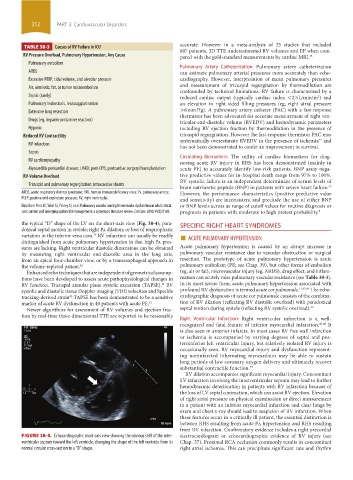
                 FIGURE 38-4.  Echocardiographic short-axis view showing the obvious shift of the inter-  electrocardiogram or echocardiographic evidence of RV injury (see
                 ventricular septum toward the left ventricle, changing the shape of the left ventricle from its   Chap. 37). Proximal RCA occlusion commonly results in concomitant
                 normal circular cross-section to a “D” shape.         right atrial ischemia. This can precipitate significant rate and rhythm


            section03.indd   312                                                                                       1/23/2015   2:07:27 PM

