


Page 445 - Hall et al (2015) Principles of Critical Care-McGraw-Hill
P. 445
CHAPTER 38: Acute Right Heart Syndromes  315


                                                                            decision making. If no benefit can be detected, further fluids should
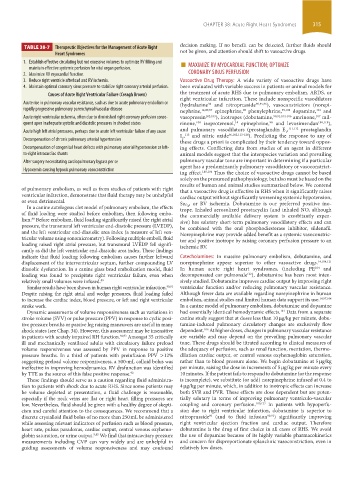
                      TABLE 38-7     Therapeutic Objectives for the Management of Acute Right
                               Heart Syndromes                            not be given, and attention should shift to vasoactive drugs.
                    1.   Establish effective circulating but not excessive volumes to optimize RV filling and     ■  MAXIMIZE RV MYOCARDIAL FUNCTION; OPTIMIZE
                      maintain effective systemic perfusion for vital organ perfusion.
                    2.  Maximize RV myocardial function.                    CORONARY SINUS PERFUSION
                    3.  Reduce right ventricle afterload and RV ischemia.  Vasoactive Drug Therapy:  A wide variety of vasoactive drugs have
                    4.  Maintain optimal coronary sinus pressure to stabilize right coronary arterial perfusion.  been evaluated with variable success in patients or animal models for
                             Causes of Acute Right Ventricular Failure (Creagh Brown)  the treatment of acute RHS due to pulmonary embolism, ARDS, or
                                                                          right ventricular infarction. These include nonspecific  vasodilators
                    Acute rise in pulmonary vascular resistance, such as due to acute pulmonary embolism or   (hydralazine  and nitroprusside 90,95,96 ),  vasoconstrictors (norepi-
                                                                                   94
                    rapidly progressive pulmonary parenchymal/vascular disease  nephrine, 14,89,97  epinephrine,  phenylephrine, 99,100  dopamine,  and
                                                                                               98
                                                                                                                        101
                    Acute right ventricular ischemia, often due to diminished right coronary perfusion conse-  vasopressin 102,103 ), inotropes (dobutamine, 90,91,104-106  amrinone,  mil-
                                                                                                                        107
                                                                               108
                    quent upon inadequate systolic and diastolic pressures in shocked states  rinone,  isoproterenol,  epinephrine,  and levosimendan 109,110 ),
                                                                                                        98
                                                                                            14
                    Acute high left atrial pressures, perhaps due to acute left ventricular failure of any cause  and pulmonary vasodilators (prostaglandin E , 1  111,112  prostaglandin
                                                                          I ,  and nitric oxide 96,102,113-120 ). Predicting the response to any of
                                                                           113
                    Decompensation of chronic pulmonary arterial hypertension  2
                                                                          these drugs a priori is complicated by their tendency toward oppos-
                    Decompensation of congenital heart defects with pulmonary arterial hypertension or left-  ing effects. Conflicting data from studies of an agent in different
                    to-right intracardiac shunts                          animal models suggest that the interspecies variation and prevailing
                    After surgery necessitating cardiopulmonary bypass per se  pulmonary vascular tone are important in determining if a particular
                                                                          agent has a predominantly pulmonary vasodilatory or vasoconstrict-
                    Hypoxemia causing hypoxic pulmonary vasoconstriction
                                                                          ing effect. 105,106  Thus the choice of vasoactive drugs cannot be based
                                                                          solely on the presumed pathophysiology, but also must be based on the
                                                                          results of human and animal studies summarized below. We contend
                    of pulmonary embolism, as well as from studies of patients with right   that a vasoactive drug is effective in RHS when it significantly raises
                    ventricular infarction, demonstrate that fluid therapy may be unhelpful   cardiac output without significantly worsening systemic hypotension,
                    or even detrimental.                                     , or RV ischemia. Dobutamine is our preferred positive ino-
                     In a canine autologous clot model of pulmonary embolism, the effects   Sa O 2
                                                                          trope. Inhaled aerosolized prostacyclin (and inhaled NO, although
                    of fluid loading were studied before embolism, then following embo-  the   commercially available delivery system is exorbitantly expen-
                    lism.  Before embolism, fluid loading significantly raised the right atrial   sive) has salutary short-term pulmonary vasodilatory effects and can
                       88
                    pressure, the transmural left ventricular end-diastolic pressure (LVEDP),   be combined with the oral phosphodiesterase  inhibitor, sildenafil.
                    and the left ventricular end-diastolic area index (a measure of left ven-  Norepinephrine may provide added benefit as a systemic vasoconstric-
                    tricular volume using sonomicrometry). Following multiple emboli, fluid   tor and positive inotrope by raising coronary perfusion pressure to an
                    loading raised right atrial pressure, but transmural LVEDP fell signifi-  ischemic RV.
                    cantly as did the left ventricular end-diastolic area index. These findings
                    indicate that fluid loading following embolism causes further leftward   Catecholamines:  In massive pulmonary embolism, dobutamine, and
                    displacement of the interventricular septum, further compounding LV   norepinephrine appear superior to other vasoactive drugs. 14,104,121
                    diastolic dysfunction. In a canine glass bead embolization model, fluid   In  human  acute  right  heart  syndromes, (including PE   and
                                                                                                                        104
                    loading was found to precipitate right ventricular failure, even when     decompensated cor pulmonale ), dobutamine has been most inten-
                                                                                                122
                    relatively small volumes were infused. 89             sively studied. Dobutamine improves cardiac output by improving right
                     Similar results have been shown in human right ventricular infarction. 90,91    ventricular function  and/or reducing pulmonary vascular resistance.
                    Despite raising the right atrial and wedge pressures, fluid loading failed   Although fewer data are available regarding norepinephrine in human
                    to increase the cardiac index, blood pressure, or left and right ventricular   embolism, animal studies and limited human data support its use. 14,97,104
                    stroke work.                                          In a canine model of pulmonary embolism, dobutamine and dopamine
                                                                                                            101
                     Dynamic assessments of volume responsiveness such as variations in   had essentially identical hemodynamic effects.  Data from a separate
                    stroke volume (SVV) or pulse pressure (PPV) in response to cyclic posi-  canine study suggest that at doses less than 10 µg/kg per minute, dobu-
                    tive pressure breaths or passive leg raising maneuvers are useful in many   tamine-induced pulmonary circulatory changes are exclusively flow
                    shock states (see Chap. 34). However, this assessment may be insensitive   dependent.  At higher doses, changes in pulmonary vascular resistance
                                                                                  106
                    in patients with acutely impaired RH function. 92,93  Amongst 35 critically   are variable and may depend on the prevailing pulmonary vascular
                    ill and mechanically ventilated adults with circulatory failure preload   tone. These drugs should be titrated according to clinical measures of
                    volume  responsiveness  was  assessed  by PPV  in response  to  positive   the adequacy of perfusion, such as renal function, mentation, thermo-
                    pressure breaths. In a third of patients with preinfusion PPV  >12%   dilution cardiac output, or central venous oxyhemoglobin saturation,
                    suggesting preload volume responsiveness, a 500-mL colloid bolus was   rather than to blood pressure alone. We begin dobutamine at 5 µg/kg
                    ineffective in improving hemodynamics. RV dysfunction was identified   per minute, raising the dose in increments of 5 µg/kg per minute every
                    by TTE as the source of this false positive response. 92  10 minutes. If the patient fails to respond to dobutamine (or the response
                     These findings should serve as a caution regarding fluid administra-  is  incomplete), we substitute (or add) norepinephrine infused at 0.4 to
                    tion to patients with shock due to acute RHS. Since some patients may   4 µg/kg per minute, which, in addition to inotropic effects can increase
                    be  volume  depleted  at  presentation,  a  fluid  challenge  is  reasonable,   both SVR and PVR. These effects are dose  dependent but are poten-
                    especially if the neck veins are flat or right heart filling pressures are   tially  salutary  in  terms  of  improving  pulmonary   ventriculo-vascular
                    low. Nevertheless, fluid should be given with a healthy degree of skepti-  coupling and coronary perfusion. 100,123  In patients with hypoperfu-
                    cism and careful attention to the consequences. We recommend that a   sion due to right ventricular infarction, dobutamine is superior to
                    discrete crystalloid fluid bolus of no more than 250 mL be administered   nitroprusside   (and  to  fluid  infusion 90,91 )  significantly  improving
                                                                                    90
                    while assessing relevant indicators of perfusion such as blood pressure,   right ventricular ejection fraction and cardiac output. Therefore
                    heart rate, pulsus paradoxus, cardiac output, central venous oxyhemo-  dobutamine is the drug of first choice in all cases of RHS. We avoid
                    globin saturation, or urine output.  We find that intracavitary pressure    the use of dopamine because of its highly variable pharmacokinetics
                                            5,85
                    measurements including CVP can vary widely and are unhelpful in   and concern for disproportionate splanchnic vasoconstriction, even in
                    guiding  assessments  of  volume  responsiveness  and  may  confound   relatively low doses.


            section03.indd   315                                                                                       1/23/2015   2:07:28 PM

