


Page 69 - Hall et al (2015) Principles of Critical Care-McGraw-Hill
P. 69
38      PART 1: An Overview of the Approach to and Organization of Critical Care


                                                                       demonstrated  benefit  for  patients  with  respiratory  failure,  yet  the
                                                                       therapy is expensive. 11,12  When worth is viewed as opportunity cost,
                                                                       it is equivalent to the activities, procedures, or therapies that could
                                                                       be performed with the same resources—and that cannot now be per-
                                                                       formed—in place of the current activity. Given a constrained budget,
                                                                       which services would go unfunded if inhaled nitric oxide therapy was
                                                                       broadly implemented for neonates with respiratory failure? This second
                                                                       question relates to social policy and requires weighing a given therapy
                                                                       against therapies for other conditions. In our example, although inhaled
                                                                       nitric oxide might be deemed worthwhile in the treatment of neonatal
                                                                       respiratory failure, a state Medicaid agency needs to compare its value
                                                                       to a hepatitis B vaccination program for newborns, influenza vaccina-
                                                                       tions for the elderly, and other public health activities. In other words,
                                                                       we need to know if inhaled nitric oxide is not only cost-effective in the
                                                                       standard management of neonatal respiratory failure, but also whether
                                                                       we can afford it as a society.
                                                                         There are essentially four types of cost studies: cost minimization, cost
                                                                       benefit, cost-effectiveness, and cost utility. Though sounding similar,
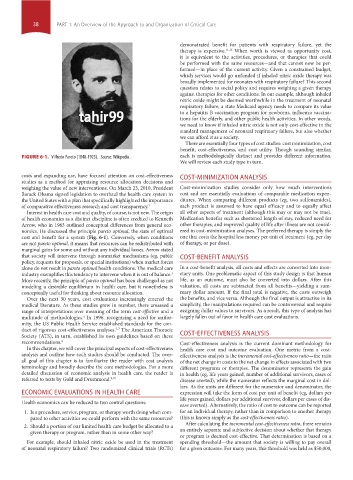
                 FIGURE 6-1.  Vilfredo Pareto (1848-1923).  Source: Wikipedia.  each is methodologically distinct and provides different information.
                                                                       We will review each study type in turn.

                 costs and expanding use, have focused attention on cost-effectiveness   COST-MINIMIZATION ANALYSIS
                 studies as a method for appraising resource allocation decisions and
                 weighing the value of new interventions. On March 23, 2010, President   Cost-minimization studies consider only how much interventions
                 Barack Obama signed legislation to overhaul the health care system in   cost and are essentially evaluations of comparable medication expen-
                 the United States with a plan that specifically highlighted the importance   ditures.  When  comparing  different  products  (eg,  two  sulfonamides),
                 of comparative effectiveness research and cost transparency. 2  each product is assumed to have equal efficacy and to equally affect
                   Interest in health care cost and quality, of course, is not new. The origin   all other aspects of treatment (although this may or may not be true).
                 of health economics as a distinct discipline is often credited to Kenneth   Medication benefits such as shortened length of stay, reduced need for
                 Arrow, who in 1963 outlined conceptual differences from general eco-  other therapies, and improved quality of life after illness are not consid-
                 nomics. He discussed the principle pareto optimal, the state of optimal   ered in cost-minimization analyses. The preferred therapy is simply the
                 cost and benefit for a system (Fig. 6-1). Conversely, when conditions   one that costs the hospital less money per unit of treatment (eg, per day
                 are not pareto optimal, it means that resources can be redistributed with   of therapy, or per dose).
                 marginal gains for some and without any individual losses. Arrow stated
                 that society will intervene through nonmarket mechanisms (eg, public   COST-BENEFIT ANALYSIS
                 policy, requests for proposals, or special institutions) when market forces
                 alone do not result in pareto optimal health conditions. The medical care   In a cost-benefit analysis, all costs and effects are converted into mon-
                 industry exemplifies this tendency to intervene when it is out of balance.    etary units. One problematic aspect of this study design is that human
                                                                    3
                 More recently, the principle of pareto optimal has been challenged as not   life, as an outcome, must also be converted into dollars. After this
                 modeling a desirable equilibrium in health care, but it nonetheless is   valuation, all costs are subtracted from all benefits—yielding a sum-
                 conceptually useful for thinking about resource allocation.  mary   dollar  amount.  If  the  final  total  is  negative,  the  costs  outweigh
                   Over the next 30 years, cost evaluations increasingly entered the   the benefits, and vice versa. Although the final output is attractive in its
                 medical literature. As these studies grew in number, there amassed a   simplicity, the manipulations required can be controversial and require
                 range of interpretations over meaning of the term cost-effective and a   assigning dollar values to survivors. As a result, this type of analysis has
                                      4
                 multitude of methodologies.  In 1996, recognizing a need for unifor-  largely fallen out of favor in health care cost evaluations.
                 mity, the US Public Health Service established standards for the con-
                 duct of rigorous cost-effectiveness analyses.  The American Thoracic
                                                 5-7
                 Society (ATS), in turn, established its own guidelines based on these   COST-EFFECTIVENESS ANALYSIS
                 recommendations. 8                                    Cost-effectiveness analysis is the current dominant methodology for
                   In this chapter, we will cover the principal aspects of cost-effectiveness   health care cost and outcome evaluation. One metric from a cost-
                 analysis and outline how such studies should be conducted. The over-  effectiveness analysis is the incremental cost-effectiveness ratio—the ratio
                 all goal of this chapter is to familiarize the reader with cost analysis   of the net change in costs to the net change in effects associated with two
                 terminology and broadly describe the core methodologies. For a more   different programs or therapies. The denominator represents the gain
                 detailed discussion of economic analysis in health care, the reader is   in health (eg, life years gained, number of additional survivors, cases of
                 referred to texts by Gold and Drummond. 9,10          disease averted), while the numerator reflects the marginal cost in dol-
                                                                       lars. As the units are different for the numerator and denominator, the
                 ECONOMIC EVALUATIONS IN HEALTH CARE                   expression will take the form of cost per unit of benefit (eg, dollars per
                                                                       life years gained, dollars per additional survivor, dollars per cases of dis-
                 Health economics can be reduced to two central questions:
                                                                       ease averted). Alternatively, the ratio of cost to outcome can be reported
                  1. Is a procedure, service, program, or therapy worth doing when com-  for an individual therapy, rather than in comparison to another therapy
                    pared to other activities we could perform with the same resources?  (this is known simply as the cost-effectiveness ratio).
                  2. Should a portion of our limited health care budget be allocated to a  After calculating the incremental cost-effectiveness ratio, there remains
                    given therapy or program, rather than in some other way?  an entirely separate and subjective decision about whether that therapy
                                                                       or program is deemed cost-effective. That determination is based on a
                   For  example, should  inhaled  nitric oxide  be  used  in  the  treatment   spending threshold—the amount that society is willing to pay overall
                 of neonatal respiratory failure? Two randomized clinical trials (RCTs)   for a given outcome. For many years, this threshold was held as $50,000,


            Section01.indd   38                                                                                        1/22/2015   9:36:53 AM

