


Page 67 - Hall et al (2015) Principles of Critical Care-McGraw-Hill
P. 67
36      PART 1: An Overview of the Approach to and Organization of Critical Care


                                                                         2. Walking the process: One of the barriers discovered when inves-
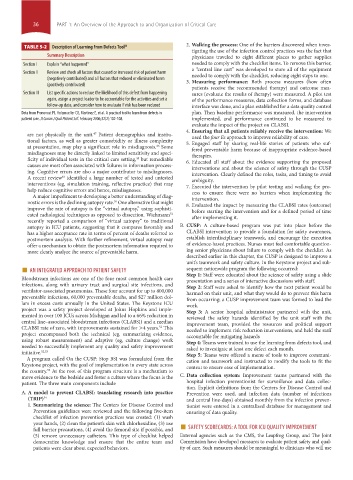
                   TABLE 5-2    Description of Learning From Defects Tool 40
                                                                           tigating the use of the infection control practices was the fact that
                          Summary Description                              physicians  traveled  to  eight  different  places  to  gather  supplies
                  Section I  Explain “what happened”                       needed to comply with the checklist items. To remove this barrier,
                                                                           a “central line cart” was developed to store all of the equipment
                  Section II  Review and check all factors that caused or increased risk of patient harm   needed to comply with the checklist, reducing eight steps to one.
                          (negatively contributed) and all factors that reduced or eliminated harm     3. Measuring performance: Both process  measures (how  often
                          (positively contributed)
                                                                           patients receive the recommended  therapy)  and  outcome  mea-
                  Section III  List specific actions to reduce the likelihood of this defect from happening   sures (evaluate the results of therapy) were measured. A pilot test
                          again, assign a project leader to be accountable for the activities and set a   of the performance measures, data collection forms, and database
                          follow-up date, and consider how to evaluate if risk has been reduced  interface was done, and a plan established for a data quality control
                 Data from Pronovost PJ, Holzmueller CG, Martinez E, et al. A practical tool to learn from defects in   plan. Then baseline performance was measured, the intervention
                 patient care. Jt Comm J Qual Patient Saf. February 2006;32(2):102-108.  implemented, and  performance  continued  to  be measured  to
                                                                           evaluate the impact of the project on CLABSI.
                                                                         4. Ensuring that all patients reliably receive the intervention: We
                   are  not  physically  in  the  unit.   Patient  demographics  and  institu-  used the four Es approach to improve reliability of care.
                                          47
                   tional factors, as well as greater comorbidity or illness complexity     5. Engaged staff by sharing real-life stories of patients who suf-
                   at presentation, may play a significant role in misdiagnosis.  Some   fered preventable harm because of inappropriate evidence-based
                                                               46
                   misdiagnoses may be directly linked to limited sensitivity and speci-    therapies.
                   ficity of individual tests in the critical care setting,  but remediable     6. Educated  all  staff  about  the  evidence  supporting  the  proposed
                                                        48
                   causes are most often associated with failures in information process-  interventions and about the science of safety through the CUSP
                   ing. Cognitive errors are also a major contributor to misdiagnoses.   intervention. Clearly defined the roles, tasks, and timing to avoid
                   A recent review  identified a large number of tested and untested   ambiguity.
                               49
                   interventions (eg, simulation training, reflective practice) that may     7. Executed the intervention by pilot testing and walking the pro-
                   help reduce cognitive errors and hence, misdiagnoses.   cess to ensure there were no barriers when implementing the
                     A major impediment to developing a better understanding of diag-    intervention.
                   nostic errors is the declining autopsy rate.  One alternative that might     8. Evaluated the impact by measuring the CLABSI rates (outcome)
                                                 50
                   improve the rate of autopsy is the “virtual autopsy,” using sophisti-  before starting the intervention and for a defined period of time
                   cated radiological techniques as opposed to dissection. Wichmann    after implementing it.
                                                                    51
                   recently reported a comparison of “virtual autopsy” to traditional
                   autopsy in ICU patients, suggesting that it compares favorably and   B.  CUSP:  A  culture-based  program  was  put  into  place  before  the
                   has a higher acceptance rate in terms of percent of deaths referred to   CLABSI intervention to provide a foundation for safety awareness,
                   postmortem analysis. With further refinement, virtual autopsy may   establish interdisciplinary teamwork, and encourage the execution
                   offer a mechanism to obtain the postmortem information required to   of evidence-based practices. Nurses must feel comfortable question-
                   more clearly analyze the source of preventable harm.  ing senior physicians about failure to comply with the checklist. As
                                                                         described earlier in this chapter, the CUSP is designed to improve a
                     ■  AN INTEGRATED APPROACH TO PATIENT SAFETY         unit’s teamwork and safety culture. In the Keystone project and sub-
                                                                         sequent nationwide program the following occurred:
                 Bloodstream infections are one of the four most common health care   Step 1: Staff were educated about the science of safety using a slide
                                                                         presentation and a series of interactive discussions with staff.
                 infections, along with urinary tract and surgical site infections, and   Step 2: Staff were asked to identify how the next patient would be
                 ventilator-associated pneumonias. These four account for up to 800,000   harmed on their unit, and what they would do to prevent this harm
                 preventable infections, 60,000 preventable deaths, and $27 million dol-  from occurring; a CUSP improvement team was formed to lead the
                 lars  in excess costs annually in  the  United States. The  Keystone  ICU   work.
                 project was a safety project developed at Johns Hopkins and imple-    Step 3: A senior hospital administrator partnered with the unit,
                 mented in over 100 ICUs across Michigan and led to a 66% reduction in   reviewed the safety hazards identified by the unit staff with the
                 central line–associated bloodstream infections (CLABSI) and a median   improvement team, provided the resources and political support
                 CLABSI rate of zero, with improvements sustained for >4 years.  This   needed to implement risk reduction interventions, and held the staff
                                                                52
                 project encompassed both the technical (eg, summarizing evidence,   accountable for mitigating hazards
                 using robust measurement) and adaptive (eg, culture change) work     Step 4: Teams were trained to use the learning from defects tool, and
                 needed to successfully implement any quality and safety improvement   asked to investigate at least one defect each month.
                 initiative. 52,53                                         Step 5: Teams were offered a menu of tools to improve communi-
                   A program called On the CUSP: Stop BSI was formulated from the   cation and teamwork and instructed to modify the tools to fit the
                 Keystone project, with the goal of implementation in every state across   context to ensure ease of implementation.
                 the country.  At the root of this program structure is a mechanism to
                          53
                 move evidence to the bedside and foster a culture where the focus is the   C. Data collection system: Improvement teams partnered with the
                 patient. The three main components include              hospital infection preventionist for surveillance and data collec-
                                                                         tion. Explicit definitions from the Centers for Disease Control and
                 A. A model to prevent CLABSI: translating research into practice   Prevention were used, and infection data (number of infections
                   (TRIP) 54                                             and central line-days) obtained monthly from the infection preven-
                   1. Summarizing the science: The Centers for Disease Control and   tionist were entered in a centralized database for management and
                     Prevention guidelines were reviewed and the following five-item   ensuring of data quality.
                     checklist of infection prevention practices was created: (1) wash
                     full barrier precautions, (4) avoid the femoral site if possible, and   ■  SAFETY SCORECARDS: A TOOL FOR ICU QUALITY IMPROVEMENT
                     your hands, (2) clean the patient’s skin with chlorhexidine, (3) use
                     (5) remove unnecessary catheters. This type of checklist helped   External agencies such as the CMS, the Leapfrog Group, and The Joint
                     democratize  knowledge  and  ensure  that  the  entire  team  and   Commission have developed measures to evaluate patient safety and qual-
                     patients were clear about expected behaviors.     ity of care. Such measures should be meaningful to clinicians who will use


            Section01.indd   36                                                                                        1/22/2015   9:36:52 AM

