


Page 692 - Hall et al (2015) Principles of Critical Care-McGraw-Hill
P. 692
CHAPTER 57: Massive Hemoptysis  511


                     Small  doses  of  codeine  or  morphine  may  be  used  to  attenuate  the   < 35% of the time). CT scanning may be slightly more effective in local-
                    cough reflex to allow for clot formation. However, coughing is an effec-  izing the site of bleeding, but is much better at determining the etiology
                    tive method to clear the airway, and a depressed sensorium may increase   of the bleeding in part because bronchiectasis is much more evident.
                                                                                                                             8
                    the risk of aspiration. Therefore, these medications should be used with   If urgent therapeutic stabilization is required, bronchoscopy is the pre-
                    discretion.                                           ferred initial approach because the procedure also has the potential to
                                                                          be therapeutic (eg, suctioning, endobronchial therapy, balloon tampon-
                    EVALUATION                                            ade). When CT scan is performed, multidetector row CT scan should be
                                                                          utilized as it is very effective at identifying bronchial, nonbronchial and
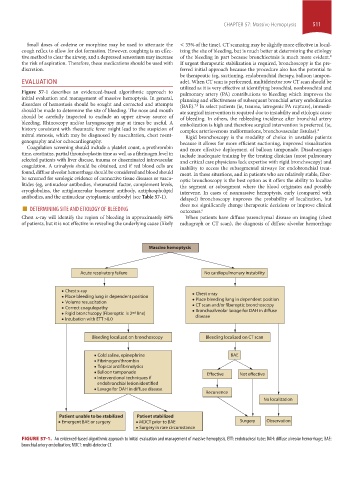
                    Figure 57-1 describes an evidenced-based algorithmic approach to   pulmonary artery (PA) contributions to bleeding which improves the
                    initial evaluation and management of massive hemoptysis. In general,   planning and effectiveness of subsequent bronchial artery embolization
                    disorders of hemostasis should be sought and corrected and attempts   (BAE).  In select patients (ie, trauma, iatrogenic PA rupture), immedi-
                                                                               7,9
                    should be made to determine the site of bleeding. The nose and mouth   ate surgical intervention is required due to instability and etiologic cause
                    should be carefully inspected to exclude an upper airway source of   of bleeding. In others, the rebleeding incidence after bronchial artery
                    bleeding. Rhinoscopy and/or laryngoscopy may at times be useful. A   embolization is high and therefore surgical intervention is preferred (ie,
                    history consistent with rheumatic fever might lead to the suspicion of   complex arteriovenous malformations, bronchovascular fistulas). 6
                    mitral stenosis, which may be diagnosed by auscultation, chest roent-  Rigid  bronchoscopy  is the  modality of  choice  in unstable  patients
                    genography and/or echocardiography.                   because it allows for more efficient suctioning, improved visualization
                     Coagulation screening should include a platelet count, a prothrombin   and more effective deployment of balloon tamponade. Disadvantages
                    time, creatinine, partial thromboplastin time as well as a fibrinogen level in   include inadequate training by the treating clinician (most pulmonary
                    selected patients with liver disease, trauma or disseminated intravascular   and critical care physicians lack expertise with rigid bronchoscopy) and
                    coagulation. A urinalysis should be obtained, and if red blood cells are   inability to access the subsegmental airways for endobronchial treat-
                    found, diffuse alveolar hemorrhage should be considered and blood should   ment. In these situations, and in patients who are relatively stable, fiber-
                    be screened for serologic evidence of connective tissue diseases or vascu-  optic bronchoscopy is the best option as it offers the ability to localize
                    litides (eg, antinuclear antibodies, rheumatoid factor, complement levels,   the segment or subsegment where the blood originates and possibly
                    cryoglobulins, the antiglomerular basement antibody, antiphospholipid   intervene. In cases of nonmassive hemoptysis, early (compared with
                    antibodies, and the antinuclear cytoplasmic antibody) (see Table 57-1).  delayed)  bronchoscopy improves  the probability of  localization, but
                        ■  DETERMINING SITE AND ETIOLOGY OF BLEEDING      does not significantly change therapeutic decisions or improve clinical
                                                                          outcomes.
                                                                                 6
                    Chest x-ray will identify the region of bleeding in approximately 60%    When patients have diffuse parenchymal disease on imaging (chest
                    of patients, but it is not effective in revealing the underlying cause (likely    radiograph or CT scan), the diagnosis of diffuse alveolar hemorrhage


                                                               Massive hemoptysis


                                        Acute respiratory failure                 No cardiopulmonary instability


                                     Chest x-ray                                 Chest x-ray
                                     Place bleeding lung in dependent position
                                     Volume resuscitation                       Place bleeding lung in dependent position
                                                                                 CT scan and/or fiberoptic bronchoscopy
                                    Correct coagulopathy
                                    Rigid bronchscopy (Fiberoptic  is 2 nd  line)     Bronchoalveolar lavage for DAH in diffuse
                                                                                disease
                                     Intubation with ETT >8.0

                                            Bleeding localized on bronchoscopy    Bleeding localized on CT scan


                                               Cold saline, epinephrine                    BAE
                                               Fibrinogen/thrombin
                                               Topical antifibrinolytics
                                               Balloon tamponade                   Effective   Not effective
                                                Interventional techniques if
                                               endobronchial lesion identified
                                               Lavage for DAH in diffuse disease
                                                                                  Recurrence
                                                                                                      No localization


                                Patient unable to be stabilized  Patient stabilized
                                   Emergent BAE or surgery     MDCT prior to BAE              Surgery   Observation
                                                              Surgery in rare circumstance
                    FIGURE 57-1.  An evidenced-based algorithmic approach to initial evaluation and management of massive hemoptysis. ETT: endotracheal tube; DAH: diffuse alveolar hemorrhage; BAE:
                    bronchial artery embolization; MDCT: multi-detector CT.


            section04.indd   511                                                                                       1/23/2015   2:20:24 PM

