


Page 93 - Hall et al (2015) Principles of Critical Care-McGraw-Hill
P. 93
CHAPTER 9: Preparedness for Catastrophe  61


                                                                                                              Notes:
                                                                                                              - All MEMS components
                                                             Medical Control                                  have established
                                                              Center (MCC)                                    communication and
                                                                                                              coordination links.
                                                                                  Community   In Home Care    - The MCC oversees all
                                                                                                              operations.
                                                                                  Outreach (CO)               - The CTS transports
                                                                                                              casualties between all
                                                                                                              MEMS components.
                                                                                                              - If the NEHC operates
                                                                                                              as a POD or VC, then
                                                                                                              the population at risk is
                                                                                                              processed through and
                                            Neighborhood                                           Worried Well  returns to work/home.
                         Casualties &                         Acute Care                                      - Special Needs Shelters
                         Worried Well      Emergency Help     Centers (ACC)   Area Hospitals        Return to  will receive patients
                                            Centers (NEHC)                                         Work/Home
                                                                                                              from ACC based on their
                                                                                                              medical needs.
                                                                                                              - Mass Care Shelters will
                                                                                                              house nonmedical
                                                     Casualty                                                 evacuees.
                                                                                                              Assumptions:
                                                   Transportation                                             - Although the primary
                                                   System (CTS)                                               point of entry into MEMS
                                                                                                    Casualties  is the NEHC, patients
                                                              Hospitals and                         Treated or  will self-present to
                                                                                                              hospitals, ACC, and any
                                                             Clinics Out-of-    Fatality           Convalescing  other available medical
                                                              Area for Non-   Management            at Home   resource.
                                                             Incident Patients
                                           Resources & Patient Flow
                                           Information Flow

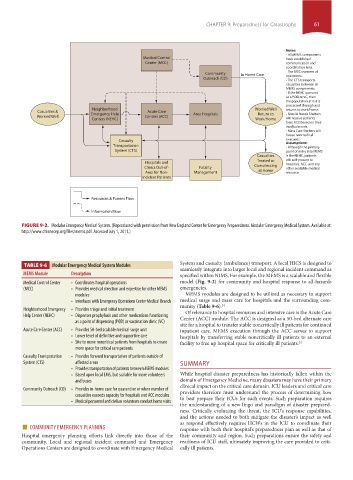
                    FIGURE 9-2.  Modular Emergency Medical System. (Reproduced with permission from New England Center for Emergency Preparedness. Modular Emergency Medical System. Available at:
                    http://www.dmsnecep.org/files/mems.pdf. Accessed July 1, 2011.)


                                                                          System and casualty (ambulance) transport. A local HICS is designed to
                      TABLE 9-6    Modular Emergency Medical System Modules
                                                                          seamlessly integrate into larger local and regional incident command as
                    MEMS Module      Description                          specified within NIMS. For example, the MEMS is a scalable and flexible
                    Medical Control Center   •  Coordinates hospital operations  model (Fig. 9-2) for community and hospital response to all-hazards
                    (MCC)            •  Provides medical direction and expertise for other MEMS   emergencies.
                                      modules                              MEMS modules are designed to be utilized as necessary to support
                                     •  Interfaces with Emergency Operations Center Medical Branch  medical surge and mass care for hospitals and the surrounding com-
                                                                          munity (Table 9-6). 24
                    Neighborhood Emergency  •  Provides triage and initial treatment  Of relevance to hospital resources and intensive care is the Acute Care
                    Help Center (NEHC)  •  Dispenses prophylaxis and other medications functioning   Center (ACC) module. The ACC is designed as a 50-bed alternate care
                                      as a point of dispensing (POD) or vaccination clinic (VC)
                                                                          site for a hospital to transfer stable noncritically ill patients for continued
                    Acute Care Center (ACC)  •  Provides 50-bed scalable medical surge unit  inpatient care. MEMS execution through the ACC serves to support
                                     •  Lower level of definitive and supportive care  hospitals by transferring stable noncritically ill patients to an external
                                     •  Site to move noncritical patients from hospitals to create   facility to free up hospital space for critically ill patients. 24
                                      more space for critical care patients
                    Casualty Transportation   •  Provides forward transportation of patients outside of
                    System (CTS)      affected areas                      SUMMARY
                                     •  Provides transportation of patients between MEMS modules
                                     •  Based upon local EMS, but scalable for more volunteers   While hospital disaster preparedness has historically fallen within the
                                      and buses                           domain of Emergency Medicine, many disasters may have their primary
                                                                          clinical impact on the critical care domain. ICU leaders and critical care
                    Community Outreach (CO)  •  Provides in-home care for quarantine or when number of   providers therefore must understand the process of determining how
                                      casualties exceeds capacity for hospitals and ACC modules  to best prepare their ICUs for such events. Such preparation requires
                                     •  Medical personnel and civilian volunteers conduct home visits
                                                                          the understanding of a new lingo and paradigm of disaster prepared-
                                                                          ness.  Critically  evaluating  the  threat,  the  ICU’s  response  capabilities,
                                                                          and the actions needed to both mitigate the disaster’s impact as well
                        ■  COMMUNITY EMERGENCY PLANNING                   as  respond  effectively  requires  HCWs  in  the  ICU  to  coordinate  their
                                                                          response with both their hospital’s preparedness plan as well as that of
                    Hospital emergency planning efforts link directly into those of the   their community and region. Such preparations ensure the safety and
                    community. Local and regional incident command and Emergency   readiness of ICU staff, ultimately improving the care provided to criti-
                    Operations Centers are designed to coordinate with Emergency Medical   cally ill patients.


            Section01.indd   61                                                                                        1/22/2015   9:37:07 AM

