


Page 151 - Clinical Anatomy
P. 151
ECA2  7/18/06  6:43 PM  Page 136


                 136  The abdomen and pelvis


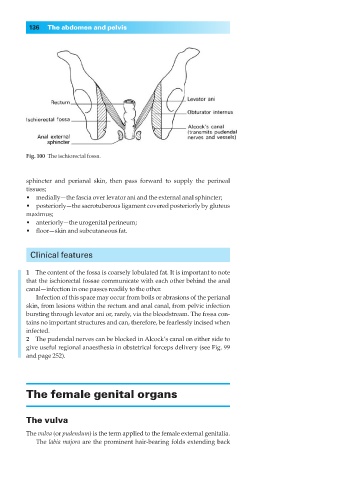
                Fig. 100◊The ischiorectal fossa.


                sphincter and perianal skin, then pass forward to supply the perineal
                tissues;
                •◊◊medially—the fascia over levator ani and the external anal sphincter;
                •◊◊posteriorly—the sacrotuberous ligament covered posteriorly by gluteus
                maximus;
                •◊◊anteriorly—the urogenital perineum;
                •◊◊floor—skin and subcutaneous fat.


                 Clinical features

                1◊◊The content of the fossa is coarsely lobulated fat. It is important to note
                that the ischiorectal fossae communicate with each other behind the anal
                canal—infection in one passes readily to the other.
                   Infection of this space may occur from boils or abrasions of the perianal
                skin, from lesions within the rectum and anal canal, from pelvic infection
                bursting through levator ani or, rarely, via the bloodstream. The fossa con-
                tains no important structures and can, therefore, be fearlessly incised when
                infected.
                2◊◊The pudendal nerves can be blocked in Alcock’s canal on either side to
                give useful regional anaesthesia in obstetrical forceps delivery (see Fig. 99
                and page 252).


                The female genital organs


                The vulva
                The vulva (or pudendum) is the term applied to the female external genitalia.
                   The labia majora are the prominent hair-bearing folds extending back

