


Page 292 - Clinical Anatomy
P. 292
ECA5  7/18/06  6:50 PM  Page 277


                                                                                The pharynx    277


                                                               Hyoglossus


                                           Tongue


                                                                                     Sublingual gland
                                      Genioglossus                                   Submandibular
                                                                                     duct and gland
                                      Lingual artery

                                       Geniohyoid                                    Lingual nerve
                                        Mylohyoid                                    Anterior belly
                                                                                     of digastric

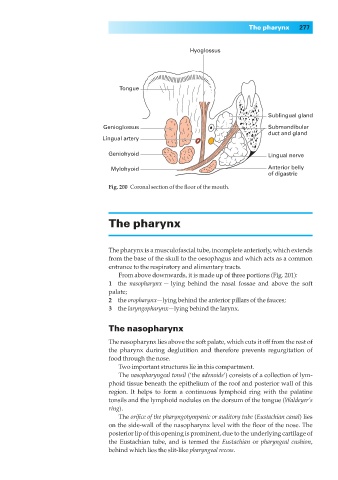
                                        Fig. 200◊Coronal section of the floor of the mouth.


                                       The pharynx


                                       The pharynx is a musculofascial tube, incomplete anteriorly, which extends
                                       from the base of the skull to the oesophagus and which acts as a common
                                       entrance to the respiratory and alimentary tracts.
                                          From above downwards, it is made up of three portions (Fig. 201):
                                       1◊◊the  nasopharynx — lying behind the nasal fossae and above the soft
                                       palate;
                                       2◊◊the oropharynx—lying behind the anterior pillars of the fauces;
                                       3◊◊the laryngopharynx—lying behind the larynx.

                                       The nasopharynx

                                       The nasopharynx lies above the soft palate, which cuts it off from the rest of
                                       the pharynx during deglutition and therefore prevents regurgitation of
                                       food through the nose.
                                          Two important structures lie in this compartment.
                                          The nasopharyngeal tonsil (‘the adenoids’) consists of a collection of lym-
                                        phoid tissue beneath the epithelium of the roof and posterior wall of this
                                        region. It helps to form a continuous lymphoid ring with the palatine
                                        tonsils and the lymphoid nodules on the dorsum of the tongue (Waldeyer’s
                                        ring).
                                          The orifice of the pharyngotympanic or auditory tube (Eustachian canal) lies
                                        on the side-wall of the nasopharynx level with the floor of the nose. The
                                        posterior lip of this opening is prominent, due to the underlying cartilage of
                                        the Eustachian tube, and is termed the Eustachian or pharyngeal cushion,
                                        behind which lies the slit-like pharyngeal recess.

