


Page 293 - Clinical Anatomy
P. 293
ECA5  7/18/06  6:50 PM  Page 278


                 278  The head and neck


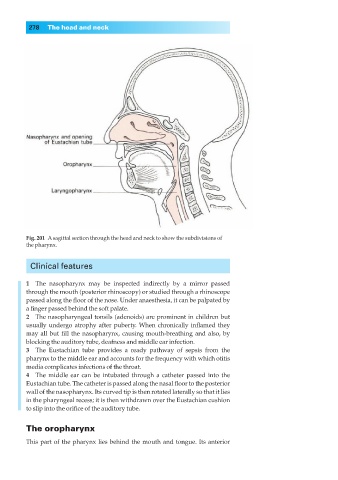
                Fig. 201◊Asagittal section through the head and neck to show the subdivisions of
                the pharynx.


                 Clinical features

                1◊◊The nasopharynx may be inspected indirectly by a mirror passed
                through the mouth (posterior rhinoscopy) or studied through a rhinoscope
                passed along the floor of the nose. Under anaesthesia, it can be palpated by
                a finger passed behind the soft palate.
                2◊◊The nasopharyngeal tonsils (adenoids) are prominent in children but
                usually undergo atrophy after puberty. When chronically inflamed they
                may all but fill the nasopharynx, causing mouth-breathing and also, by
                blocking the auditory tube, deafness and middle ear infection.
                3◊◊The Eustachian tube provides a ready pathway of sepsis from the
                pharynx to the middle ear and accounts for the frequency with which otitis
                media complicates infections of the throat.
                4◊◊The middle ear can be intubated through a catheter passed into the
                Eustachian tube. The catheter is passed along the nasal floor to the posterior
                wall of the nasopharynx. Its curved tip is then rotated laterally so that it lies
                in the pharyngeal recess; it is then withdrawn over the Eustachian cushion
                to slip into the orifice of the auditory tube.

                The oropharynx

                This part of the pharynx lies behind the mouth and tongue. Its anterior

