


Page 409 - Clinical Anatomy
P. 409
ECA6  7/18/06  6:54 PM  Page 394


                 394  The central nervous system


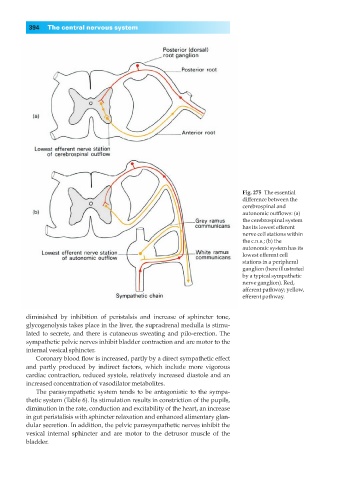
                                                                              Fig. 275◊The essential
                                                                              difference between the
                                                                              cerebrospinal and
                                                                              autonomic outflows: (a)
                                                                              the cerebrospinal system
                                                                              has its lowest efferent
                                                                              nerve cell stations within
                                                                              the c.n.s.; (b) the
                                                                              autonomic system has its
                                                                              lowest efferent cell
                                                                              stations in a peripheral
                                                                              ganglion (here illustrated
                                                                              by a typical sympathetic
                                                                              nerve ganglion). Red,
                                                                              afferent pathway; yellow,
                                                                              efferent pathway.

                diminished by inhibition of peristalsis and increase of sphincter tone,
                glycogenolysis takes place in the liver, the supradrenal medulla is stimu-
                lated to secrete, and there is cutaneous sweating and pilo-erection. The
                sympathetic pelvic nerves inhibit bladder contraction and are motor to the
                internal vesical sphincter.
                   Coronary blood flow is increased, partly by a direct sympathetic effect
                and partly produced by indirect factors, which include more vigorous
                cardiac contraction, reduced systole, relatively increased diastole and an
                increased concentration of vasodilator metabolites.
                   The parasympathetic system tends to be antagonistic to the sympa-
                thetic system (Table 6). Its stimulation results in constriction of the pupils,
                diminution in the rate, conduction and excitability of the heart, an increase
                in gut peristalisis with sphincter relaxation and enhanced alimentary glan-
                dular secretion. In addition, the pelvic parasympathetic nerves inhibit the
                vesical internal sphincter and are motor to the detrusor muscle of the
                bladder.

