


Page 193 - Clinical Application of Mechanical Ventilation
P. 193
Airway Management in Mechanical Ventilation  159


                                                                                           Indentation


                                                                                               Bar


                                                                      Blade


                                                                                                      © Cengage Learning 2014


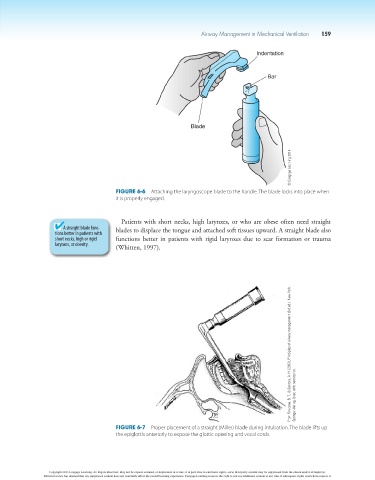
                                             Figure 6-6  Attaching the laryngoscope blade to the handle. The blade locks into place when
                                             it is properly engaged.


                                               Patients with short necks, high larynxes, or who are obese often need straight
                            A straight blade func-  blades to displace the tongue and attached soft tissues upward. A straight blade also
                          tions better in patients with
                          short necks, high or rigid   functions better in patients with rigid larynxes due to scar formation or trauma
                          larynxes, or obesity.
                                             (Whitten, 1997).


                                                                                                        Springer-Verlag. Used with permission. From Finucane, B. T., & Santora, A. H. (2003), Principles of airway management (3rd ed.). New York:


                                             Figure 6-7  Proper placement of a straight (Miller) blade during intubation. The blade lifts up
                                             the epiglottis anteriorly to expose the glottic opening and vocal cords.


                        Copyright 2013 Cengage Learning. All Rights Reserved. May not be copied, scanned, or duplicated, in whole or in part. Due to electronic rights, some third party content may be suppressed from the eBook and/or eChapter(s).
                      Editorial review has deemed that any suppressed content does not materially affect the overall learning experience. Cengage Learning reserves the right to remove additional content at any time if subsequent rights restrictions require it.

