


Page 212 - Clinical Application of Mechanical Ventilation
P. 212
178    Chapter 6


                                                                                        Expired Air


                                                                                                Vocal Cords
                                                                Tracheostomy with
                                                                Cuff Deflated
                                                                        Inspired Air                        Copyright 2003 AARC Times Magazine, a publication of the American Association for Respiratory
                                                                                                 Esophagus
                                                                   Speaking Valve
                                                                                                             Care. Reprinted with permission.
                                                                       Trachea


                                                        A                                   B

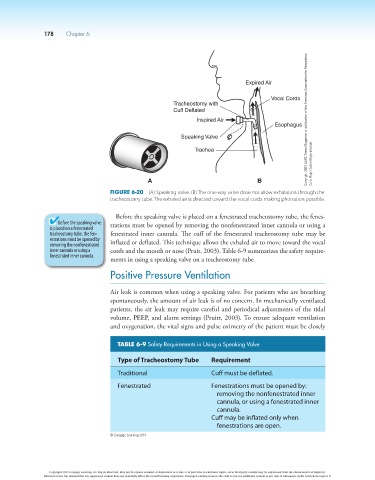
                                            Figure 6-20  (A) Speaking valve. (B) The one-way valve dose not allow exhalation through the
                                            tracheostomy tube. The exhaled air is directed toward the vocal cords making phonation possible.

                                             Before the speaking valve is placed on a fenestrated tracheostomy tube, the fenes-
                           Before the speaking valve   trations must be opened by removing the nonfenestrated inner cannula or using a
                        is placed on a fenestrated
                        tracheostomy tube, the fen-  fenestrated inner cannula. The cuff of the fenestrated tracheostomy tube may be
                        estrations must be opened by   inflated or deflated. This technique allows the exhaled air to move toward the vocal
                        removing the nonfenestrated
                        inner cannula or using a   cords and the mouth or nose (Pruit, 2003). Table 6-9 summarizes the safety require-
                        fenestrated inner cannula.
                                            ments in using a speaking valve on a tracheostomy tube.
                                            Positive Pressure Ventilation


                                            Air leak is common when using a speaking valve. For patients who are breathing
                                            spontaneously, the amount of air leak is of no concern. In mechanically ventilated
                                            patients, the air leak may require careful and periodical adjustments of the tidal
                                            volume, PEEP, and alarm settings (Pruitt, 2003). To ensure adequate ventilation
                                            and oxygenation, the vital signs and pulse oximetry of the patient must be closely


                                              TABLE 6-9 Safety Requirements in Using a Speaking Valve

                                              Type of Tracheostomy Tube      Requirement
                                              Traditional                    Cuff must be deflated.

                                              Fenestrated                    Fenestrations must be opened by:
                                                                              removing the nonfenestrated inner
                                                                              cannula, or using a fenestrated inner
                                                                              cannula.
                                                                             Cuff may be inflated only when
                                                                              fenestrations are open.
                                            © Cengage Learning 2014


                        Copyright 2013 Cengage Learning. All Rights Reserved. May not be copied, scanned, or duplicated, in whole or in part. Due to electronic rights, some third party content may be suppressed from the eBook and/or eChapter(s).
                      Editorial review has deemed that any suppressed content does not materially affect the overall learning experience. Cengage Learning reserves the right to remove additional content at any time if subsequent rights restrictions require it.

