


Page 333 - Clinical Application of Mechanical Ventilation
P. 333
Hemodynamic Monitoring  299


                                                    Z
                                                                     B

                                                          dZ/dt max


                                                                          X
                                                 dZ/dt
                                                                    A       C
                                                                                                                © Cengage Learning 2014
                                                                      TIve

                                                 ECG


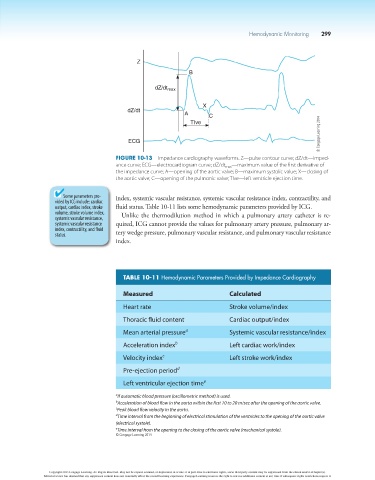
                                             Figure 10-13  Impedance cardiography waveforms. Z—pulse contour curve; dZ/dt—imped-
                                             ance curve; ECG—electrocardiogram curve; dZ/dt max —maximum value of the first derivative of
                                             the impedance curve; A—opening of the aortic valve; B—maximum systolic value; X—closing of
                                             the aortic valve; C—opening of the pulmonic valve; Tlve—left ventricle ejection time.


                            Some parameters pro-  index, systemic vascular resistance, systemic vascular resistance index, contractility, and
                          vided by ICG include: cardiac
                          output, cardiac index, stroke   fluid status. Table 10-11 lists some hemodynamic parameters provided by ICG.
                          volume, stroke volume index,   Unlike the thermodilution method in which a pulmonary artery catheter is re-
                          systemic vascular resistance,
                          systemic vascular resistance   quired, ICG cannot provide the values for pulmonary artery pressure, pulmonary ar-
                          index, contractility, and fluid   tery wedge pressure, pulmonary vascular resistance, and pulmonary vascular resistance
                          status.
                                             index.


                                                TABLE 10-11 Hemodynamic Parameters Provided by Impedance Cardiography

                                                Measured                          Calculated

                                                Heart rate                        Stroke volume/index
                                                Thoracic fluid content            Cardiac output/index

                                                Mean arterial pressure a          Systemic vascular resistance/index

                                                Acceleration index b              Left cardiac work/index
                                                Velocity index c                  Left stroke work/index

                                                Pre-ejection period d

                                                Left ventricular ejection time e
                                             a If automatic blood pressure (oscillometric method) is used.
                                             b Acceleration of blood flow in the aorta within the first 10 to 20 m/sec after the opening of the aortic valve.
                                             c Peak blood flow velocity in the aorta.
                                             d Time interval from the beginning of electrical stimulation of the ventricles to the opening of the aortic valve
                                             (electrical systole).
                                             e Time interval from the opening to the closing of the aortic valve (mechanical systole).
                                             © Cengage Learning 2014


                        Copyright 2013 Cengage Learning. All Rights Reserved. May not be copied, scanned, or duplicated, in whole or in part. Due to electronic rights, some third party content may be suppressed from the eBook and/or eChapter(s).
                      Editorial review has deemed that any suppressed content does not materially affect the overall learning experience. Cengage Learning reserves the right to remove additional content at any time if subsequent rights restrictions require it.

