


Page 42 - Clinical Application of Mechanical Ventilation
P. 42
8      Chapter 1


                                                          A                                B
                                     80
                                    P (cm H 2 O)              P PIP  20 cm H O                P TA  40 cm H O
                                                                                                PIP
                                                                                                         2
                                                                TA
                                                                          2
                                                                                          P
                                                          P PLAT                           PLAT
                                                 1          2         3         4         5         6          7  © Cengage Learning 2014
                                                                        Time (sec)
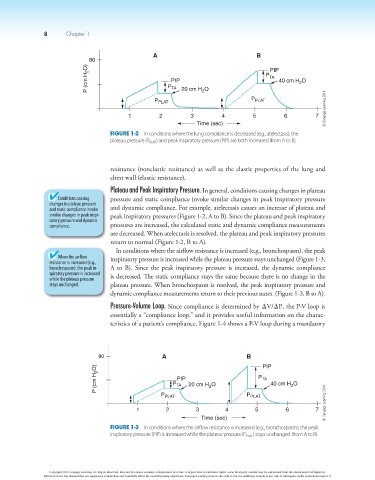
                                            Figure 1-2  In conditions where the lung compliance is decreased (e.g., atelectasis), the
                                            plateau pressure (P PLAT ) and peak inspiratory pressure (PIP) are both increased (from A to B).


                                            resistance (nonelastic resistance) as well as the elastic properties of the lung and
                                            chest wall (elastic resistance).
                                            Plateau and Peak Inspiratory Pressure. In general, conditions causing changes in plateau
                          Conditions causing   pressure and static compliance invoke similar changes in peak inspiratory pressure
                        changes in plateau pressure
                        and static compliance invoke   and dynamic compliance. For example, atelectasis causes an increase of plateau and
                        similar changes in peak inspi-  peak inspiratory pressures (Figure 1-2, A to B). Since the plateau and peak inspiratory
                        ratory pressure and dynamic
                        compliance.         pressures are increased, the calculated static and dynamic compliance measurements
                                            are decreased. When atelectasis is resolved, the plateau and peak inspiratory pressures
                                            return to normal (Figure 1-2, B to A).
                                             In conditions where the airflow resistance is increased (e.g., bronchospasm), the peak
                          When the airflow   inspiratory pressure is increased while the plateau pressure stays unchanged (Figure 1-3,
                        resistance is increased (e.g.,
                        bronchospasm), the peak in-  A to B). Since the peak inspiratory pressure is increased, the dynamic compliance
                        spiratory pressure is increased   is decreased. The static compliance stays the same because there is no change in the
                        while the plateau pressure
                        stays unchanged.    plateau pressure. When bronchospasm is resolved, the peak inspiratory pressure and
                                            dynamic compliance measurements return to their previous states. (Figure 1-3, B to A).

                                            Pressure-Volume Loop. Since compliance is determined by DV/DP, the P-V loop is
                                            essentially a “compliance loop,” and it provides useful information on the charac-
                                            teristics of a patient’s compliance. Figure 1-4 shows a P-V loop during a mandatory


                                        80                   A                          B    PIP
                                       P (cm H 2 O)             P TA  20 cm H O             P TA  40 cm H O

                                                                 PIP
                                                                                                       2
                                                                            2
                                                            P PLAT                      P PLAT

                                                    1         2         3        4         5         6         7  © Cengage Learning 2014
                                                                         Time (sec)
                                            Figure 1-3  In conditions where the airflow resistance is increased (e.g., bronchospasm), the peak
                                            inspiratory pressure (PIP) is increased while the plateau pressure (P PLAT ) stays unchanged (from A to B).


                        Copyright 2013 Cengage Learning. All Rights Reserved. May not be copied, scanned, or duplicated, in whole or in part. Due to electronic rights, some third party content may be suppressed from the eBook and/or eChapter(s).
                      Editorial review has deemed that any suppressed content does not materially affect the overall learning experience. Cengage Learning reserves the right to remove additional content at any time if subsequent rights restrictions require it.

