


Page 164 - Cardiac Nursing
P. 164
LWBK340-c06_p132-152.qxd  09/09/2009  08:25 AM  Page 140 Aptara


                  140    PA R T  II / Physiologic and Pathologic Responses


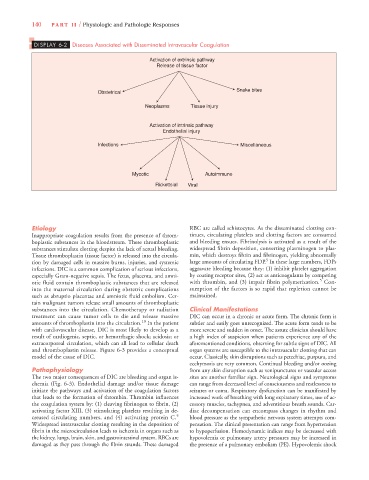
                   DISPLAY 6-2 Diseases Associated with Disseminated Intravascular Coagulation

                                                         Activation of extrinsic pathway
                                                           Release of tissue factor


                                                                                     Snake bites
                                        Obstetrical

                                                       Neoplasms      Tissue injury


                                                         Activation of intrinsic pathway
                                                             Endothelial injury

                                        Infections                                     Miscellaneous


                                                   Mycotic                 Autoimmune
                                                           Rickettsial  Viral


                  Etiology                                            RBC are called schistocytes. As the disseminated clotting con-
                  Inappropriate coagulation results from the presence of throm-  tinues, circulating platelets and clotting factors are consumed
                  boplastic substances in the bloodstream. These thromboplastic  and bleeding ensues. Fibrinolysis is activated as a result of the
                  substances stimulate clotting despite the lack of actual bleeding.  widespread fibrin deposition, converting plasminogen to plas-
                  Tissue thromboplastin (tissue factor) is released into the circula-  min, which destroys fibrin and fibrinogen, yielding abnormally
                                                                                               5
                  tion by damaged cells in massive burns, injuries, and systemic  large amounts of circulating FDP. In these large numbers, FDPs
                  infections. DIC is a common complication of serious infections,  aggravate bleeding because they: (1) inhibit platelet aggregation
                  especially Gram-negative sepsis. The fetus, placenta, and amni-  by coating receptor sites, (2) act as anticoagulants by competing
                                                                                                                 5
                  otic fluid contain thromboplastic substances that are released  with thrombin, and (3) impair fibrin polymerization. Con-
                  into the maternal circulation during obstetric complications  sumption of the factors is so rapid that repletion cannot be
                  such as abruptio placentae and amniotic fluid embolism. Cer-  maintained.
                  tain malignant tumors release small amounts of thromboplastic
                  substances into the circulation. Chemotherapy or radiation  Clinical Manifestations
                  treatment can cause tumor cells to die and release massive  DIC can occur in a chronic or acute form. The chronic form is
                  amounts of thromboplastin into the circulation. 10  In the patient  subtler and easily goes unrecognized. The acute form tends to be
                  with cardiovascular disease, DIC is most likely to develop as a  more severe and sudden in onset. The astute clinician should have
                  result of cardiogenic, septic, or hemorrhagic shock; acidosis; or  a high index of suspicion when patients experience any of the
                  extracorporeal circulation, which can all lead to cellular death  aforementioned conditions, observing for subtle signs of DIC. All
                  and thromboplastin release. Figure 6-3 provides a conceptual  organ systems are susceptible to the intravascular clotting that can
                  model of the cause of DIC.                          occur. Classically, skin disruptions such as petechiae, purpura, and
                                                                      ecchymosis are very common. Continual bleeding and/or oozing
                  Pathophysiology                                     from any skin disruption such as venipunctures or vascular access
                  The two major consequences of DIC are bleeding and organ is-  sites are another familiar sign. Neurological signs and symptoms
                  chemia (Fig. 6-3). Endothelial damage and/or tissue damage  can range from decreased level of consciousness and restlessness to
                  initiate the pathways and activation of the coagulation factors  seizures or coma. Respiratory dysfunction can be manifested by
                  that leads to the formation of thrombin. Thrombin influences  increased work of breathing with long expiratory times, use of ac-
                  the coagulation system by: (1) cleaving fibrinogen to fibrin, (2)  cessory muscles, tachypnea, and adventitious breath sounds. Car-
                  activating factor XIII, (3) stimulating platelets resulting in de-  diac decompensation can encompass changes in rhythm and
                  creased circulating numbers, and (4) activating protein C. 5  blood pressure as the sympathetic nervous system attempts com-
                  Widespread intravascular clotting resulting in the deposition of  pensation. The clinical presentation can range from hypertension
                  fibrin in the microcirculation leads to ischemia in organs such as  to hypoperfusion. Hemodynamic indices may be decreased with
                  the kidney, lungs, brain, skin, and gastrointestinal system. RBCs are  hypovolemia or pulmonary artery pressures may be increased in
                  damaged as they pass through the fibrin strands. These damaged  the presence of a pulmonary embolism (PE). Hypovolemic shock

