


Page 542 - Cardiac Nursing
P. 542
LWBK340-c22_p511-536.qxd  30/06/2009  11:00 AM  Page 518 Aptara


                  518    PA R T  IV / Pathophysiology and Management of Heart Disease


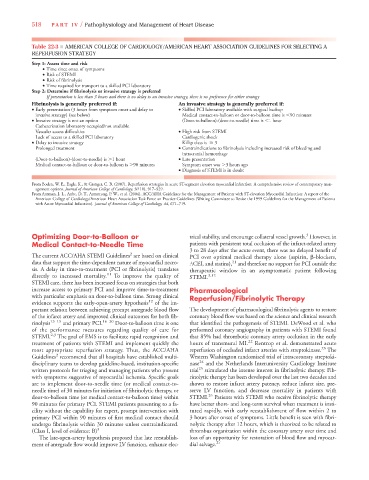
                  Table 22-3 ■ AMERICAN COLLEGE OF CARDIOLOGY/AMERICAN HEART ASSOCIATION GUIDELINES FOR SELECTING A
                  REPERFUSION STRATEGY
                  Step 1: Assess time and risk
                      • Time since onset of symptoms
                      • Risk of STEMI
                      • Risk of fibrinolysis
                      • Time required for transport to a skilled PCI laboratory
                  Step 2: Determine if fibrinolysis or invasive strategy is preferred
                       If presentation is less than 3 hours and there is no delay to an invasive strategy, there is no preference for either strategy
                  Fibrinolysis is generally preferred if:         An invasive strategy is generally preferred if:
                  • Early presentation (3 hours from symptom onset and delay to   • Skilled PCI laboratory available with surgical backup
                    invasive strategy) (see below)                  Medical contact-to-balloon or door-to-balloon time is  90 minutes
                  • Invasive strategy is not an option              (Door-to-balloon)-(door-to-needle) time is  1 hour
                    Catheterization laboratory occupied/not available
                    Vascular access difficulties                   • High risk from STEMI
                    Lack of access to a skilled PCI laboratory      Cardiogenic shock
                  • Delay to invasive strategy                      Killip class is   3
                    Prolonged treatment                           • Contraindications to fibrinolysis including increased risk of bleeding and
                                                                    intracranial hemorrhage
                    (Door-to-balloon)-(door-to-needle) is  1 hour  • Late presentation
                    Medical contact-to-balloon or door-to-balloon is  90 minutes  Symptom onset was  3 hours ago
                                                                  • Diagnosis of STEMI is in doubt

                  From Boden, W. E., Eagle, K., & Granger, C. B. (2007). Reperfusion strategies in acute ST-segment elevation myocardial infarction: A comprehensive review of contemporary man-
                    agement options. Journal of American College of Cardiology, 50(10), 917–929.
                  From Antman, J. L., Anbe, D. T., Armstrong, P. W., et al. (2004). ACC/AHA Guidelines for the Management of Patients with ST-elevation Myocardial Infarction: A report of the
                    American College of Cardiology/American Heart Association Task Force on Practice Guidelines (Writing Committee to Revise the 1999 Guidelines for the Management of Patients
                    with Acute Myocardial Infarction). Journal of American College of Cardiology, 44, 671–719.4 4


                                                                                                            3
                  Optimizing Door-to-Balloon or                       trical stability, and encourage collateral vessel growth. However, in
                  Medical Contact-to-Needle Time                      patients with persistent total occlusion of the infarct-related artery
                                                                      3 to 28 days after the acute event, there was no delayed benefit of
                                                  2
                  The current ACC/AHA STEMI Guidelines are based on clinical  PCI over optimal medical therapy alone (aspirin,   -blockers,
                  data that support the time-dependent nature of myocardial necro-  ACEI, and statins), and therefore no support for PCI outside the
                                                                                    21
                  sis. A delay in time-to-treatment (PCI or fibrinolysis) translates  therapeutic window in an asymptomatic patient following
                  directly to increased mortality. 11  To improve the quality of  STEMI. 3,12
                  STEMI care, there has been increased focus on strategies that both
                  increase access to primary PCI and improve time-to-treatment  Pharmacological
                  with particular emphasis on door-to-balloon time. Strong clinical  Reperfusion/Fibrinolytic Therapy
                  evidence supports the early-open-artery hypothesis 12  of the im-
                  portant relation between achieving prompt antegrade blood flow  The development of pharmacological fibrinolytic agents to restore
                  of the infarct artery and improved clinical outcomes for both fib-  coronary blood flow was based on the science and clinical research
                  rinolysis 13–15  and primary PCI. 16–20  Door-to-balloon time is one  that identified the pathogenesis of STEMI. DeWood et al. who
                  of the performance measures regarding quality of care  for  performed coronary angiography in patients with STEMI found
                  STEMI. 2,3  The goal of EMS is to facilitate rapid recognition and  that 85% had thrombotic coronary artery occlusion in the early
                  treatment of patients with STEMI and implement quickly the  hours of transmural MI.  22  Rentrop et al. demonstrated acute
                  most appropriate reperfusion strategy. Thus, the ACC/AHA  reperfusion of occluded infarct arteries with streptokinase. 23  The
                          2
                  Guidelines recommend that all hospitals have established multi-  Western Washington randomized trial of intracoronary streptoki-
                  disciplinary teams to develop guideline-based, institution-specific  nase 24  and the Netherlands Interuniversity Cardiology Institute
                  written protocols for triaging and managing patients who present  trial 25  stimulated the intense interest in fibrinolytic therapy. Fib-
                  with symptoms suggestive of myocardial ischemia. Specific goals  rinolytic therapy has been developed over the last two decades and
                  are to implement door-to-needle time (or medical contact-to-  shown to restore infarct artery patency, reduce infarct size, pre-
                  needle time) of 30 minutes for initiation of fibrinolytic therapy, or  serve LV  function, and  decrease mortality in patients with
                  door-to-balloon time (or medical contact-to-balloon time) within  STEMI. 26  Patients with STEMI who receive fibrinolytic therapy
                  90 minutes for primary PCI. STEMI patients presenting to a fa-  have better short- and long-term survival when treatment is insti-
                  cility without the capability for expert, prompt intervention with  tuted rapidly, with early reestablishment of flow within 2 to
                  primary PCI within 90 minutes of first medical contact should  3 hours after onset of symptoms. Little benefit is seen with fibri-
                  undergo fibrinolysis within 30 minutes unless contraindicated.  nolytic therapy after 12 hours, which is theorized to be related to
                  (Class I, level of evidence: B) 3                   thrombus organization within the coronary artery over time and
                     The late-open-artery hypothesis proposed that late reestablish-  loss of an opportunity for restoration of blood flow and myocar-
                  ment of antegrade flow would improve LV function, enhance elec-  dial salvage. 27

