


Page 798 - Cardiac Nursing
P. 798
LWBK340-c33_p769-782.qxd  09/09/2009  08:35 AM  Page 774 Aptara


                  774    PA R T  V / Health Promotion and Disease Prevention


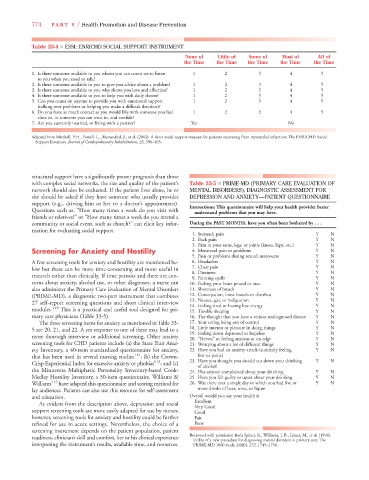
                  Table 33-4 ■ ESSI: ENRICHD SOCIAL SUPPORT INSTRUMENT
                                                                     None of   Little of   Some of   Most of    All of
                                                                    the Time   the Time  the Time   the Time   the Time
                  1. Is there someone available to you whom you can count on to listen  1  2  3        4         5
                    to you when you need to talk?
                  2. Is there someone available to you to give you advice about a problem?  1  2  3    4         5
                  3. Is there someone available to you who shows you love and affection?  1  2  3      4         5
                  4. Is there someone available to you to help you with daily chores?  1  2  3         4         5
                  5. Can you count on anyone to provide you with emotional support  1  2     3         4         5
                    (talking over problems or helping you make a difficult decision)?
                  6. Do you have as much contact as you would like with someone you feel  1  2  3      4         5
                    close to, in someone you can trust in, and confide?
                  7. Are you currently married, or living with a partner?  Yes                        No

                  Adapted from Mitchell, P. H., Powell, L., Blumenthal, J., et al. (2003). A short social support measure for patients recovering from myocardial infarction: The ENRICHD Social
                                                                                      g
                    Support Inventory. Journal of Cardiopulmonary Rehabilitation, 23, 398–403.


                  structural support have a significantly poorer prognosis than those
                  with complex social networks, the size and quality of the patient’s  Table 33-5 ■ PRIME-MD (PRIMARY CARE EVALUATION OF
                  network should also be evaluated. If the patient lives alone, he or  MENTAL DISORDERS), DIAGNOSTIC ASSESSMENT FOR
                  she should be asked if they have someone who usually provides  DEPRESSION AND ANXIETY—PATIENT QUESTIONNAIRE
                  support (e.g., driving him or her to a doctor’s appointment).  Instructions: This questionnaire will help your health provider better
                  Questions such as, “How many times a week do you visit with  understand problems that you may have.
                  friends or relatives?” or “How many times a week do you attend a
                  community or social event, such as church?” can elicit key infor-  During the PAST MONTH, have you often been bothered by . . .
                  mation for evaluating social support.
                                                                       1. Stomach pain                         Y    N
                                                                       2. Back pain                            Y    N
                                                                       3. Pain in your arms, legs, or joints (knees, hips, etc.)  Y  N
                  Screening for Anxiety and Hostility                  4. Menstrual pain or problems           Y    N
                                                                       5. Pain or problems during sexual intercourse  Y  N
                  A few screening tools for anxiety and hostility are mentioned be-  6.Headaches               Y    N
                  low but these can be more time-consuming and more useful in  7. Chest pain                   Y    N
                                                                                                                    N
                                                                                                               Y
                                                                       8. Dizziness
                  research rather than clinically. If time permits and there are con-  9. Fainting spells      Y    N
                  cerns about anxiety, alcohol use, or other diagnoses, a nurse can  10. Feeling your heart pound or race  Y  N
                  also administer the Primary Care Evaluation of Mental Disorders  11. Shortness of breath     Y    N
                  (PRIME-MD), a diagnostic two-part instrument that combines  12. Constipation, loose bowels or diarrhea  Y  N
                  27 self-report screening questions and short clinical interview  13. Nausea, gas, or indigestion  Y  N
                                                                      14. Feeling tired or having low energy
                                                                                                                    N
                                                                                                               Y
                  modules. 110  This is a practical and useful tool designed for pri-  15. Trouble sleeping    Y    N
                  mary care physicians (Table 33-5).                  16. The thought that you have a serious undiagnosed disease  Y  N
                     The three screening items for anxiety as mentioned in Table 33-  17. Your eating being out of control  Y  N
                  5 are 20, 21, and 22. A yes response to one of these may lead to a  18. Little interest or pleasure in doing things  Y  N
                                                                                                                    N
                                                                      19. Feeling down depressed or hopeless
                                                                                                               Y
                  more thorough interview or additional screening. Other anxiety  20. “Nerves” or feeling anxious or on edge  Y  N
                  screening tools for CHD patients include (a) the State Trait Anxi-  21. Worrying about a lot of different things  Y  N
                  ety Inventory, a 40-item standardized questionnaire for anxiety,  22. Have you had an anxiety attack (suddenly feeling  Y  N
                  that has been used in several nursing studies 111 ;(b) the Crown-  fear or panic)
                  Crisp Experiential Index for excessive anxiety or phobias 112 ; and (c)  23. Have you thought you should cut down your drinking  Y  N
                                                                         of alcohol
                  the Minnesota Multiphasic Personality Inventory-based Cook-  24. Has anyone complained about your drinking  Y  N
                  Medley Hostility Inventory, a 50-item questionnaire. Williams &  25. Have you felt guilty or upset about your drinking  Y  N
                  Williams 113  have adapted this questionnaire and scoring method for  26. Was there ever a single day in which you had five or   Y  N
                  lay audiences. Patients can also use this resource for self-assessment  more drinks of beer, wine, or liquor
                  and education.                                      Overall would you say your health is
                     As evident from the description above, depression and social  Excellent
                                                                        Very Good
                  support screening tools are more easily adapted for use by nurses;  Good
                  however, screening tools for anxiety and hostility could be further  Fair
                  refined for use in acute settings. Nevertheless, the choice of a  Poor
                  screening instrument depends on the patient population, patient
                                                                      Borrowed with permission from Spitzer, R., Williams, J. B., Linzer, M., et al. (1994).
                  readiness, clinician’s skill and comfort, her or his clinical experience
                                                                       Utility of a new procedure for diagnosing mental disorders in primary care: The
                  interpreting the instrument’s results, available time, and resources.  PRIME-MD 1000 study. JAMA, 272, 1749–1756.

