


Page 830 - Cardiac Nursing
P. 830
LWBK340-c35_p799-822.qxd  29/06/2009  08:59 PM  Page 806 Aptara


                  806    PA R T  V / Health Promotion and Disease Prevention

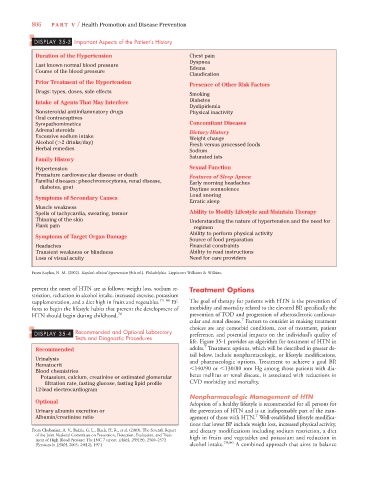
                   DISPLAY 35-3 Important Aspects of the Patient’s History

                    Duration of the Hypertension                      Chest pain
                                                                      Dyspnea
                    Last known normal blood pressure                  Edema
                    Course of the blood pressure
                                                                      Claudication
                    Prior Treatment of the Hypertension
                                                                      Presence of Other Risk Factors
                    Drugs: types, doses, side effects
                                                                      Smoking
                    Intake of Agents That May Interfere               Diabetes
                                                                      Dyslipidemia
                    Nonsteroidal antiinflammatory drugs                Physical inactivity
                    Oral contraceptives
                    Sympathomimetics                                  Concomitant Diseases
                    Adrenal steroids                                  Dietary History
                    Excessive sodium intake                           Weight change
                    Alcohol ( 2 drinks/day)                           Fresh versus processed foods
                    Herbal remedies
                                                                      Sodium
                                                                      Saturated fats
                    Family History
                    Hypertension                                      Sexual Function
                    Premature cardiovascular disease or death         Features of Sleep Apnea
                    Familial diseases: pheochromocytoma, renal disease,  Early morning headaches
                     diabetes, gout                                   Daytime somnolence
                                                                      Loud snoring
                    Symptoms of Secondary Causes
                                                                      Erratic sleep
                    Muscle weakness
                    Spells of tachycardia, sweating, tremor           Ability to Modify Lifestyle and Maintain Therapy
                    Thinning of the skin                              Understanding the nature of hypertension and the need for
                    Flank pain                                         regimen
                                                                      Ability to perform physical activity
                    Symptoms of Target Organ Damage
                                                                      Source of food preparation
                    Headaches                                         Financial constraints
                    Transient weakness or blindness                   Ability to read instructions
                    Loss of visual acuity                             Need for care providers

                  From Kaplan, N. M. (2002). Kaplan’s clinical hypertension (8th ed.). Philadelphia. Lippincott Williams & Wilkins.

                  prevent the onset of HTN are as follows: weight loss, sodium re-  Treatment Options
                  striction, reduction in alcohol intake, increased exercise, potassium
                  supplementation, and a diet high in fruits and vegetables. 74–80  Ef-  The goal of therapy for patients with HTN is the prevention of
                  forts to begin the lifestyle habits that prevent the development of  morbidity and mortality related to the elevated BP, specifically the
                  HTN should begin during childhood. 76               prevention of TOD and progression of atherosclerotic cardiovas-
                                                                                       7
                                                                      cular and renal disease. Factors to consider in making treatment
                                                                      choices are any comorbid conditions, cost of treatment, patient
                   DISPLAY 35-4  Recommended and Optional Laboratory  preference, and potential impacts on the individual’s quality of
                                 Tests and Diagnostic Procedures
                                                                      life. Figure 35-1 provides an algorithm for treatment of HTN in
                                                                           7
                    Recommended                                       adults. Treatment options, which will be described in greater de-
                                                                      tail below, include nonpharmacologic, or lifestyle modifications,
                    Urinalysis                                        and pharmacologic options. Treatment to achieve a goal BP,
                    Hematocrit
                    Blood chemistries                                  140/90 or  130/80 mm Hg among those patients with dia-
                     Potassium, calcium, creatinine or estimated glomerular   betes mellitus or renal disease, is associated with reductions in
                       filtration rate, fasting glucose, fasting lipid profile  CVD morbidity and mortality.
                    12-lead electrocardiogram
                                                                      Nonpharmacologic Management of HTN
                    Optional
                                                                      Adoption of a healthy lifestyle is recommended for all persons for
                    Urinary albumin excretion or                      the prevention of HTN and is an indispensable part of the man-
                                                                                            7
                    Albumin/creatinine ratio                          agement of those with HTN. Well-established lifestyle modifica-
                                                                      tions that lower BP include weight loss, increased physical activity,
                  From Chobanian, A. V., Bakris, G. L., Black, H. R., et al. (2003). The Seventh Report  and dietary modifications including sodium restriction, a diet
                    of the Joint National Committee on Prevention, Detection, Evaluation, and Treat-
                    ment of High Blood Pressure: The JNC 7 report. JAMA, 289(19), 2560–2572.  high in fruits and vegetables and potassium and reduction in
                    (Erratum in JAMA, 2003, 290[2], 197.)             alcohol intake. 79,80  A combined approach that aims to balance

