


Page 230 - ACCCN's Critical Care Nursing
P. 230
Cardiovascular Assessment and Monitoring  207


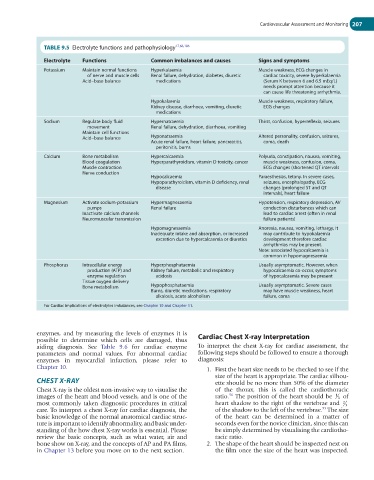
               TABLE 9.5  Electrolyte functions and pathophysiology 17,66,106

               Electrolyte  Functions             Common imbalances and causes        Signs and symptoms
               Potassium    Maintain normal functions   Hyperkalaemia                 Muscle weakness, ECG changes in
                              of nerve and muscle cells  Renal failure, dehydration, diabetes, diuretic   cardiac toxicity, severe hyperkalaemia
                            Acid–base balance       medications                        (Serum K between 6 and 6.5 mEq/L)
                                                                                       needs prompt attention because it
                                                                                       can cause life threatening arrhythmia.
                                                  Hypokalaemia                        Muscle weakness, respiratory failure,
                                                  Kidney disease, diarrhoea, vomiting, diuretic   ECG changes
                                                    medications
               Sodium       Regulate body fluid   Hypernatraemia                      Thirst, confusion, hyperreflexia, seizures
                              movement            Renal failure, dehydration, diarrhoea, vomiting
                            Maintain cell functions
                            Acid–base balance     Hyponatraemia                       Altered personality, confusion, seizures,
                                                  Acute renal failure, heart failure, pancreatitis,   coma, death
                                                    peritonitis, burns
               Calcium      Bone metabolism       Hypercalcaemia                      Polyuria, constipation, nausea, vomiting,
                            Blood coagulation     Hyperparathyroidism, vitamin D toxicity, cancer  muscle weakness, confusion, coma,
                            Muscle contraction                                         ECG changes (shortened QT intervals
                            Nerve conduction
                                                  Hypocalcaemia                       Paraesthesias, tetany. In severe cases,
                                                  Hypoparathyroidism, vitamin D deficiency, renal   seizures, encephalopathy, ECG
                                                    disease                            changes (prolonged ST and QT
                                                                                       intervals), heart failure
               Magnesium    Activate sodium-potassium   Hypermagnesaemia              Hypotension, respiratory depression, AV
                              pumps               Renal failure                        conduction disturbances which can
                            Inactivate calcium channels                                lead to cardiac arrest (often in renal
                            Neuromuscular transmission                                 failure patients)
                                                  Hypomagnesaemia                     Anorexia, nausea, vomiting, lethargy, It
                                                  Inadequate intake and absorption, or increased   may contribute to hypokalaemia
                                                    excretion due to hypercalcaemia or diuretics  development therefore cardiac
                                                                                       arrhythmias may be present.
                                                                                      Note: associated hypocalcaemia is
                                                                                       common in hypomagnesaemia
               Phosphorus   Intracellular energy   Hyperphosphataemia                 Usually asymptomatic. However, when
                              production (ATP) and   Kidney failure, metabolic and respiratory   hypocalcaemia co-occur, symptoms
                              enzyme regulation     acidosis                           of hypocalcaemia may be present
                            Tissue oxygen delivery
                            Bone metabolism       Hypophosphataemia                   Usually asymptomatic. Severe cases
                                                  Burns, diuretic medications, respiratory   may have muscle weakness, heart
                                                    alkalosis, acute alcoholism        failure, coma
               For Cardiac implications of electrolytes imbalances, see Chapter 10 and Chapter 11.


             enzymes,  and  by  measuring  the  levels  of  enzymes  it  is   Cardiac Chest X-ray Interpretation
             possible  to  determine  which  cells  are  damaged,  thus
             aiding  diagnosis.  See  Table  9.6  for  cardiac  enzyme   To  interpret  the  chest  X-ray  for  cardiac  assessment,  the
             parameters  and  normal  values.  For  abnormal  cardiac   following steps should be followed to ensure a thorough
             enzymes  in  myocardial  infarction,  please  refer  to   diagnosis:
             Chapter 10.                                             1.  First the heart size needs to be checked to see if the
                                                                       size of the heart is appropriate. The cardiac silhou-
             CHEST X-RAY                                               ette should be no more than 50% of the diameter
             Chest X-ray is the oldest non-invasive way to visualise the   of  the  thorax,  this  is  called  the  cardiothoracic
                                                                            96
             images of the heart and blood vessels, and is one of the   ratio.  The position of the heart should be   1 3  of
             most commonly taken diagnostic procedures in critical     heart shadow to the right of the vertebrae and   2 3
                                                                                                          93
             care. To interpret a chest X-ray for cardiac diagnosis, the   of the shadow to the left of the vertebrae.  The size
             basic knowledge of the normal anatomical cardiac struc-   of  the  heart  can  be  determined  in  a  matter  of
             ture is important to identify abnormality, and basic under-  seconds even for the novice clinician, since this can
             standing of the how chest X-ray works is essential. Please   be simply determined by visualising the cardiotho-
             review  the  basic  concepts,  such  as  what  water,  air  and   racic ratio.
             bone show on X-ray, and the concepts of AP and PA films,   2.  The shape of the heart should be inspected next on
             in Chapter 13 before you move on to the next section.     the film once the size of the heart was inspected.

