


Page 231 - ACCCN's Critical Care Nursing
P. 231
208  P R I N C I P L E S   A N D   P R A C T I C E   O F   C R I T I C A L   C A R E


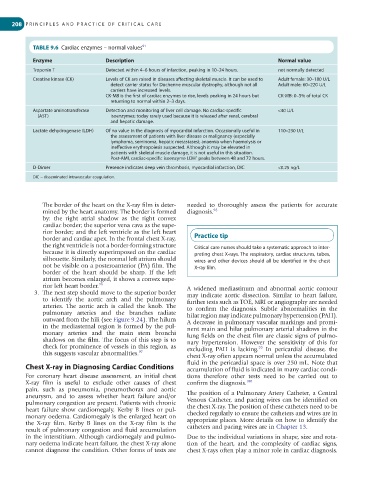
            TABLE 9.6  Cardiac enzymes – normal values 91

            Enzyme                  Description                                             Normal value
            Troponin T              Detected within 4–6 hours of infarction, peaking in 10–24 hours.  not normally detected
            Creatine kinase (CK)    Levels of CK are raised in diseases affecting skeletal muscle. It can be used to   Adult female: 30–180 U/L
                                     detect carrier status for Duchenne muscular dystrophy, although not all   Adult male: 60–220 U/L
                                     carriers have increased levels.
                                    CK-MB is the first of cardiac enzymes to rise, levels peaking in 24 hours but   CK-MB: 0–5% of total CK
                                     returning to normal within 2–3 days.
            Aspartate aminotransferase   Detection and monitoring of liver cell damage. No cardiac-specific   <40 U/L
             (AST)                   isoenzymes; today rarely used because it is released after renal, cerebral
                                     and hepatic damage.
            Lactate dehydrogenase (LDH)  Of no value in the diagnosis of myocardial infarction. Occasionally useful in   110–230 U/L
                                     the assessment of patients with liver disease or malignancy (especially
                                     lymphoma, seminoma, hepatic metastases); anaemia when haemolysis or
                                     ineffective erythropoiesis suspected. Although it may be elevated in
                                     patients with skeletal muscle damage, it is not useful in this situation.
                                     Post-AMI, cardiac-specific isoenzyme LDH  peaks between 48 and 72 hours.
                                                                 1
            D-Dimer                 Presence indicates deep vein thrombosis, myocardial infarction, DIC  <0.25 ng/L
            DIC = disseminated intravascular coagulation.


               The border of the heart on the X-ray film is deter-  needed  to  thoroughly  assess  the  patients  for  accurate
               mined by the heart anatomy. The border is formed   diagnosis. 98
               by:  the  right  atrial  shadow  as  the  right  convex
               cardiac border; the superior vena cava as the supe-
               rior border; and the left ventricle as the left heart
               border and cardiac apex. In the frontal chest X-ray,   Practice tip
               the right ventricle is not a border-forming structure   Critical care nurses should take a systematic approach to inter-
               because it is directly superimposed on the cardiac   preting chest X-rays. The respiratory, cardiac structures, tubes,
               silhouette. Similarly, the normal left atrium should   wires  and  other  devices  should  all  be  identified  in  the  chest
               not be visible on a posteroanterior (PA) film. The   X-ray film.
               border  of  the  heart  should  be  sharp.  If  the  left
               atrium becomes enlarged, it shows a convex supe-
               rior left heart border. 96                     A  widened  mediastinum  and  abnormal  aortic  contour
            3.  The next step should move to the superior border   may  indicate  aortic  dissection.  Similar  to  heart  failure,
               to  identify  the  aortic  arch  and  the  pulmonary     further tests such as TOE, MRI or angiography are needed
               arteries.  The  aortic  arch  is  called  the  knob.  The   to  confirm  the  diagnosis.  Subtle  abnormalities  in  the
               pulmonary  arteries  and  the  branches  radiate   hilar region may indicate pulmonary hypertension (PAH).
               outward from the hili (see Figure 9.24). The hilum   A decrease in pulmonary vascular markings and promi-
               in the mediasternal region is formed by the pul-  nent main and hilar pulmonary arterial shadows in the
               monary  arteries  and  the  main  stem  bronchi   lung fields on the chest film are classic signs of pulmo-
               shadows on the film. The focus of this step is to   nary  hypertension.  However  the  sensitivity  of  this  for
               check for prominence of vessels in this region, as   excluding  PAH  is  lacking.   In  pericardial  disease,  the
                                                                                      99
               this suggests vascular abnormalities. 97
                                                              chest X-ray often appears normal unless the accumulated
                                                              fluid in the pericardial space is over 250 mL. Note that
         Chest X-ray in Diagnosing Cardiac Conditions         accumulation of fluid is indicated in many cardiac condi-
         For  coronary  heart  disease  assessment,  an  initial  chest   tions  therefore  other  tests  need  to  be  carried  out  to
         X-ray  film  is  useful  to  exclude  other  causes  of  chest   confirm the diagnosis. 100
         pain,  such  as  pneumonia,  pneumothorax  and  aortic
         aneurysm,  and  to  assess  whether  heart  failure  and/or   The position of a Pulmonary Artery Catheter, a Central
         pulmonary congestion are present. Patients with chronic   Venous Catheter, and pacing wires can be identified on
         heart  failure  show  cardiomegaly,  Kerby  B  lines  or  pul-  the chest X-ray. The position of these catheters need to be
         monary oedema. Cardiomegaly is the enlarged heart on   checked regularly to ensure the catheters and wires are in
         the  X-ray  film.  Kerby  B  lines  on  the  X-ray  film  is  the   appropriate places. More details on how to identify the
         result of pulmonary congestion and fluid accumulation   catheters and pacing wires are in Chapter 13.
         in the interstitium. Although cardiomegaly and pulmo-  Due to the individual variations in shape, size and rota-
         nary oedema indicate heart failure, the chest X-ray alone   tion  of  the  heart,  and  the  complexity  of  cardiac  signs,
         cannot diagnose the condition. Other forms of tests are   chest X-rays often play a minor role in cardiac diagnosis.

