


Page 381 - ACCCN's Critical Care Nursing
P. 381
358  P R I N C I P L E S   A N D   P R A C T I C E   O F   C R I T I C A L   C A R E

                                                              recommended  systems  that  produce  scores  and  assess
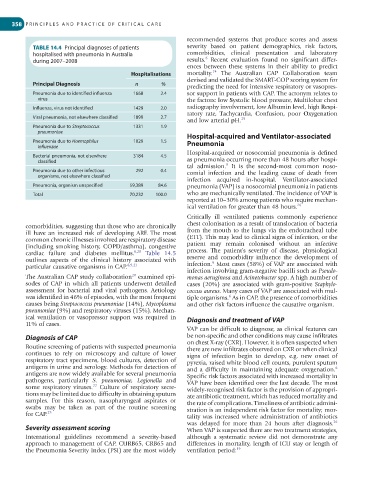
            TABLE 14.4  Principal diagnoses of patients       severity  based  on  patient  demographics,  risk  factors,
            hospitalised with pneumonia in Australia          comorbidities,  clinical  presentation  and  laboratory
                                                                    6
            during 2007–2008                                  results.   Recent  evaluation  found  no  significant  differ-
                                                              ences  between  these  systems  in  their  ability  to  predict
                                                                       24
                                            Hospitalisations  mortality.   The  Australian  CAP  Collaboration  team
                                                              devised and validated the SMART-COP scoring system for
            Principal Diagnosis              n        %       predicting the need for intensive respiratory or vasopres-
            Pneumonia due to identified influenza   1668  2.4  sor support in patients with CAP. The acronym relates to
             virus                                            the factors: low Systolic blood pressure, Multilobar chest
            Influenza, virus not identified  1429     2.0     radiography involvement, low Albumin level, high Respi-
                                                              ratory  rate,  Tachycardia,  Confusion,  poor  Oxygenation
            Viral pneumonia, not elsewhere classified  1899  2.7                25
                                                              and low arterial pH.
            Pneumonia due to Streptococcus   1331     1.9
             pneumoniae                                       Hospital-acquired and Ventilator-associated
            Pneumonia due to Haemophilus     1029     1.5     Pneumonia
             influenzae
                                                              Hospital-acquired or nosocomial pneumonia is defined
            Bacterial pneumonia, not elsewhere   3184  4.5
             classified                                       as pneumonia occurring more than 48 hours after hospi-
                                                              tal  admission.   It  is  the  second-most  common  noso-
                                                                           9
            Pneumonia due to other infectious   292   0.4     comial  infection  and  the  leading  cause  of  death  from
             organisms, not elsewhere classified
                                                              infection  acquired  in-hospital.  Ventilator-associated
            Pneumonia, organism unspecified  59,389  84.6     pneumonia (VAP) is a nosocomial pneumonia in patients
            Total                          70,232   100.0     who are mechanically ventilated. The incidence of VAP is
                                                              reported at 10–30% among patients who require mechan-
                                                              ical ventilation for greater than 48 hours. 26

                                                              Critically  ill  ventilated  patients  commonly  experience
         comorbidities, suggesting that those who are chronically   chest colonisation as a result of translocation of bacteria
         ill  have  an  increased  risk  of  developing  ARF.  The  most   from the mouth to the lungs via the endotracheal tube
         common chronic illnesses involved are respiratory disease   (ETT). This may lead to clinical signs of infection, or the
         (including  smoking  history,  COPD/asthma),  congestive   patient  may  remain  colonised  without  an  infective
         cardiac  failure  and  diabetes  mellitus. 6,20   Table  14.5   process.  The  patient’s  severity  of  disease,  physiological
         outlines  aspects  of  the  clinical  history  associated  with   reserve  and  comorbidity  influence  the  development  of
                                                                      6
         particular causative organisms in CAP. 6,9,21        infection.  Most cases (58%) of VAP are associated with
                                                              infection involving gram-negative bacilli such as Pseudo-
                                            20
         The Australian CAP study collaboration  examined epi-  monas aeruginosa and Acinetobacter spp. A high number of
         sodes  of  CAP  in  which  all  patients  underwent  detailed   cases (20%) are associated with gram-positive Staphylo-
         assessment  for  bacterial  and  viral  pathogens.  Aetiology   coccus aureus. Many cases of VAP are associated with mul-
         was identified in 46% of episodes, with the most frequent   tiple organisms.  As in CAP, the presence of comorbidities
                                                                            6
         causes being Streptococcus pneumoniae (14%), Mycoplasma   and other risk factors influence the causative organism.
         pneumoniae (9%) and respiratory viruses (15%). Mechan-
         ical  ventilation  or  vasopressor  support  was  required  in   Diagnosis and treatment of VAP
         11% of cases.
                                                              VAP can be difficult to diagnose, as clinical features can
         Diagnosis of CAP                                     be non-specific and other conditions may cause infiltrates
         Routine screening of patients with suspected pneumonia   on chest X-ray (CXR). However, it is often suspected when
                                                              there are new infiltrates observed on CXR or when clinical
         continues  to  rely  on  microscopy  and  culture  of  lower   signs  of  infection  begin  to  develop,  e.g.  new  onset  of
         respiratory tract specimens, blood cultures, detection of   pyrexia, raised white blood cell counts, purulent sputum
         antigens in urine and serology. Methods for detection of   and  a  difficulty  in  maintaining  adequate  oxygenation.
                                                                                                               6
         antigens are now widely available for several pneumonia   Specific risk factors associated with increased mortality in
         pathogens,  particularly  S.  pneumoniae,  Legionella  and   VAP have been identified over the last decade. The most
                               22
         some  respiratory  viruses.   Culture  of  respiratory  secre-  widely-recognised risk factor is the provision of appropri-
         tions may be limited due to difficulty in obtaining sputum   ate antibiotic treatment, which has reduced mortality and
         samples.  For  this  reason,  nasopharyngeal  aspirates  or   the rate of complications. Timeliness of antibiotic admini-
         swabs  may  be  taken  as  part  of  the  routine  screening    stration is an independent risk factor for mortality; mor-
         for CAP. 23                                          tality was increased where administration of antibiotics
                                                                                                              26
                                                              was  delayed  for  more  than  24  hours  after  diagnosis.
         Severity assessment scoring                          When VAP is suspected there are two treatment strategies,
         International  guidelines  recommend  a  severity-based   although  a  systematic  review  did  not  demonstrate  any
         approach to management of CAP. CURB65, CRB65 and     differences in mortality, length of ICU stay or length of
         the Pneumonia Severity Index (PSI) are the most widely   ventilation period: 19

