


Page 109 - Concise Pathology for Exam Preparation ( PDFDrive )
P. 109
94    SECTION I    General Pathology


                              DP        DO        DR         Complement
                                                                         TNF LT     B C A

                          �   �   �   �   �   �   �   �   �  �


                                      Class ll                Class lll   Cytokine   Class l
                                     molecules                molecules    genes   molecules
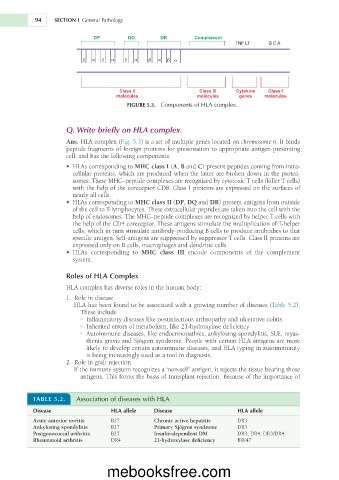
                                        FIGURE 5.3.    Components of HLA complex.


                     Q.   Write briefly on HLA complex.
                     Ans.   HLA complex (Fig. 5.3) is a set of multiple genes located on chromosome 6. It binds
                     peptide fragments of foreign proteins for presentation to appropriate antigen-presenting
                     cell, and has the following components:

                        •	�HLAs corresponding to MHC class I (A, B and C) present peptides coming from intra-


                       cellular proteins,   which are produced when the latter are broken down in the protea-


                       somes.   These MHC–peptide complexes are recognized by cytotoxic T cells (killer T cells)


                       with   the help of the coreceptor CD8. Class I proteins are expressed on the surfaces of

                       nearly     l cells.
                             a
                              l


                        •	�HLAs corresponding to MHC class II (DP, DQ and DR) present antigens from outside
                       of the cell to T-lymphocytes. These extracellular peptides are taken into the cell with the
                       help of endosomes. The MHC–peptide complexes are recognized by helper T cells with
                       the help of the CD4 coreceptor. These antigens stimulate the multiplication of T-helper
                       cells, which in turn stimulate antibody-producing B cells to produce antibodies to that
                       specific antigen. Self-antigens are suppressed by suppressor T cells. Class II proteins are
                       expressed only on B cells, macrophages and dendritic cells.


                        •	�HLAs  corresponding  to  MHC  class  III  encode  components  of  the  complement


                       system.
                     Roles of HLA Complex
                     HLA complex has diverse roles in the human body:
                         Role in disease
                     1.
                        HLA has been found to be associated with a growing number of diseases (Table 5.2).
                          These include
                             •	�Inflammatory diseases like postinfectious arthropathy and ulcerative colitis.
                             •	�Inherited errors of metabolism, like 21-hydroxylase deficiency
                             •	�Autoimmune diseases, like endocrinopathies, ankylosing spondylitis, SLE, myas-
                            thenia gravis and Sjögren syndrome. People with certain HLA antigens are more
                            likely to develop certain autoimmune diseases, and HLA typing in autoimmunity
                            is being increasingly used as a tool in diagnosis.
                     2.
                         Role in graft rejection
                        If the immune system recognizes a ‘non-self’ antigen, it rejects the tissue bearing those
                          antigens. This forms the basis of transplant rejection. Because of the importance of
           TABLE   5.2.   Association of diseases with HLA
           Disease                 HLA allele   Disease 	                 HLA allele
           Acute anterior uveitis   B27         Chronic active hepatitis   DR3
           Ankylosing spondylitis   B27         Primary Sjögren syndrome   DR3
           Postgonococcal arthritis   B27       Insulin-dependent DM      DR3, DR4, DR3/DR4
           Rheumatoid arthritis    DR4          21-hydroxylase deficiency   BW47
                                  mebooksfree.com

