


Page 112 - Concise Pathology for Exam Preparation ( PDFDrive )
P. 112
5 Diseases of Immunity 97
Q. Define hypersensitivity and write in detail on type I hypersensitivity.
Ans. Hypersensitivity is defined as an excessive and potentially harmful reaction to an en-
o
n
i
I
dogenous r exogenous antigen. t generally occurs a previously sensitized individual
when the balance between the effecter and control immune mechanisms gets disturbed. It is
usually associated with inheritance of susceptibility genes (both HLA and non-HLA). HS is
classified into four types based on the underlying immune mechanism.
Type I Hypersensitivity
Definition
An immunologic reaction, developing within minutes after combination of an antigen with
antibody bound on mast cells or basophils, in already sensitized individuals. Based on the
portal of entry type I hypersensitivity is classified into two types:
�Local (atopy): Occurs when the antigen is confined to a particular site. Manifests with
1.
skin allergy, hives, nasal and conjunctival discharge, hay fever, bronchial asthma and
allergic gastroenteritis. May have two distinct phases, immediate (occurs within min-
utes of exposure to the antigen and subsides in a few hours) and a late phase (starts
2–24 h later and lasts for days).
.
�Systemic: Mostly follows parenteral administration (bee venom or an intravenous
2
f
injection antisera, hormones, enzymes, drugs, etc.) but can also result from inges-
o
tion of the allergen (peanuts). Results in systemic anaphylaxis within minutes f
o
exposure (urticaria, laryngeal oedema, pulmonary bronchoconstriction, vomiting,
abdominal cramps and diarrhoea).
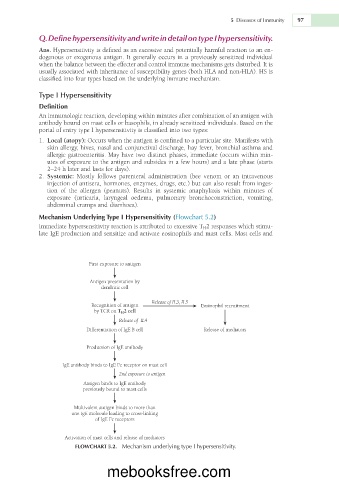
Mechanism Underlying Type I Hypersensitivity (Flowchart 5.2)
Immediate hypersensitivity reaction is attributed to excessive T H 2 responses which stimu-
late IgE production and sensitize and activate eosinophils and mast cells. Mast cells and
First exposure to antigen
Antigen presentation by
dendritic cell
Release of IL3, IL5
Recognition of antigen Eosinophil recruitment
by TCR on T H 2 cell
Release of IL4
Differentiation of IgE B cell Release of mediators
Production of IgE antibody
IgE antibody binds to IgE Fc receptor on mast cell
2nd exposure to antigen
Antigen binds to IgE antibody
previously bound to mast cells
Multivalent antigen binds to more than
one IgE molecule leading to crosslinking
of IgE Fc receptors
Activation of mast cells and release of mediators
FLOWCHART 5.2. Mechanism underlying type I hypersensitivity.
mebooksfree.com

