


Page 375 - Concise Pathology for Exam Preparation ( PDFDrive )
P. 375
360    SECTION II  Diseases of Organ Systems


                                          Respiratory bronchiole
                               Terminal bronchiole      Alveolar duct

                                                                      Alveolus
                                                Normal


                                                                      Alveolus


                                                    Respiratory bronchiole
                                             Centriacinar

                                       Respiratory bronchiole  Alveolus


                                               Panacinar
                                      Irregular dilatation of respiratory bronchiole


                                                                       Dilated alveolus

                                                Irregular
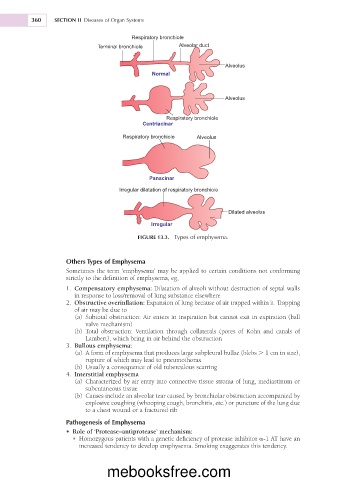
                                           FIGURE 13.3.  Types of emphysema.


                     Others Types of Emphysema
                     Sometimes the term ‘emphysema’ may be applied to certain conditions not conforming
                     strictly to the definition of emphysema, eg,
                       1.  Compensatory emphysema: Dilatation of alveoli without destruction of septal walls
                        in response to loss/removal of lung substance elsewhere
                      2.  Obstructive overinflation: Expansion of lung because of air trapped within it. Trapping
                        of air may be due to
                         (a)  Subtotal obstruction: Air enters in inspiration but cannot exit in expiration (ball
                           valve mechanism)
                         (b)  Total  obstruction:  Ventilation  through  collaterals  (pores  of  Kohn  and  canals  of
                           Lambert), which bring in air behind the obstruction
                       3.  Bullous emphysema:
                         (a)  A form of emphysema that produces large subpleural bullae (blebs . 1 cm in size),
                           rupture of which may lead to pneumothorax
                         (b)  Usually a consequence of old tuberculous scarring
                       4.  Interstitial emphysema
                         (a)  Characterized by air entry into connective tissue stroma of lung, mediastinum or
                           subcutaneous tissue
                         (b)  Causes include an alveolar tear caused by bronchiolar obstruction accompanied by
                           explosive coughing (whooping cough, bronchitis, etc.) or puncture of the lung due
                           to a chest wound or a fractured rib
                     Pathogenesis of Emphysema
                     •  Role of ‘Protease–antiprotease’ mechanism:
                       •  Homozygous patients with a genetic deficiency of protease inhibitor a-1 AT have an
                         increased tendency to develop emphysema. Smoking exaggerates this tendency.


                                  mebooksfree.com

