


Page 412 - Concise Pathology for Exam Preparation ( PDFDrive )
P. 412
14  The Oral Cavity and Gastrointestinal Tract  397


             •	 Autoimmunity:  Presence  of  autoantibodies,  to  gastric  parietal  cells,  mainly  to  the  acid-
               producing  enzyme  H1/K1-ATPase  leading  to  loss  of  both  acid-producing  and  intrinsic
               factor-producing cells. The gastric corpus (body) undergoes progressive atrophy. Its sequelae
               include development of pernicious anaemia, adenocarcinoma and gastric carcinoid.
             •	 Toxic substances: Alcohol intake and tobacco smoking
             •	 Iatrogenic causes: Postsurgical (antrectomy and gastroenterostomy)
             •	 Radiation exposure: Radiation-induced gastritis is an infrequent cause of gastrointestinal
               bleeding.
             •	 Infectious  granulomatous  gastritis:  Granulomatous  gastritis  is  a  rare  entity  caused  by
               organisms like M. tuberculosis and fungi usually in patients who are immunosuppressed.
             •	 Chronic reactive chemical gastropathy: Gastritis may result from long-term intake of
               aspirin or NSAIDs. It also develops when bile-containing intestinal contents reflux into
               the stomach.
             •	 Others: Amyloidosis and graft versus host reactions


             Gross Morphology
             Mucosa reddened, coarse with thick rugal folds in early, and thinned with flattened rugal
             folds in long-standing disease

             Microscopic Features

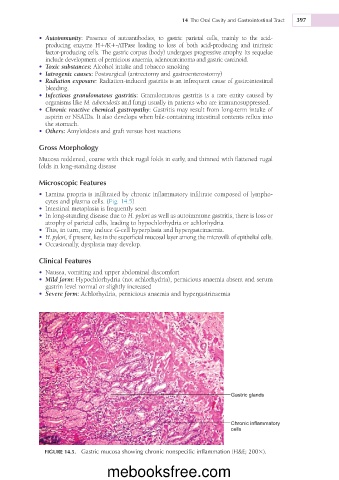
             •	 Lamina propria is infiltrated by chronic inflammatory infiltrate composed of lympho-
               cytes and plasma cells. (Fig. 14.5)
             •	 Intestinal metaplasia is frequently seen
             •	 In long-standing disease due to H. pylori as well as autoimmune gastritis, there is loss or
               atrophy of parietal cells, leading to hypochlorhydria or achlorhydria
             •	 This, in turn, may induce G-cell hyperplasia and hypergastrinaemia.
             •	 H. pylori, if present, lies in the superficial mucosal layer among the microvilli of epithelial cells.
             •	 Occasionally, dysplasia may develop.

             Clinical Features

             •	 Nausea, vomiting and upper abdominal discomfort
             •	 Mild form: Hypochlorhydria (not achlorhydria), pernicious anaemia absent and serum
               gastrin level normal or slightly increased
             •	 Severe form: Achlorhydria, pernicious anaemia and hypergastrinaemia


                                                                        Gastric glands


                                                                        Chronic inflammatory
                                                                        cells


               FIGURE 14.5.  Gastric mucosa showing chronic nonspecific inflammation (H&E; 2003).


                                  mebooksfree.com

