


Page 496 - Concise Pathology for Exam Preparation ( PDFDrive )
P. 496
16  Diseases of the Kidney and Lower Urinary Tract  481


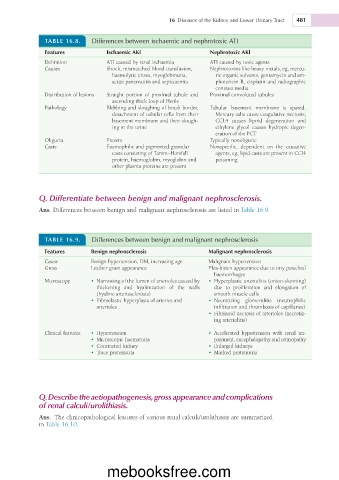
               TABLE 16.8.   Differences between ischaemic and nephrotoxic ATI
               Features           Ischaemic AKI                   Nephrotoxic AKI
               Definition         ATI caused by renal ischaemia   ATI caused by toxic agents
               Causes             Shock, mismatched blood transfusion,   Nephrotoxins like heavy metals, eg, mercu-
                                    haemolytic crises, myoglobinuria,   ric organic solvents, gentamycin and am-
                                    acute pancreatitis and septicaemia  photericin B, cisplatin and radiographic
                                                                   contrast media
               Distribution of lesions  Straight  portion  of  proximal  tubule  and   Proximal convoluted tubules
                                    ascending thick loop of Henle
               Pathology          Blebbing and sloughing of brush border,   Tubular  basement  membrane  is  spared.
                                    detachment of tubular cells from their   Mercury salts cause coagulative necrosis,
                                    basement membrane and their slough-  CCL4  causes  lipoid  degeneration  and
                                    ing in the urine               ethylene  glycol  causes  hydropic  degen-
                                                                   eration of the PCT
               Oliguria           Present                         Typically nonoliguric
               Casts              Eosinophilic and pigmented granular   Nonspecific;  dependent  on  the  causative
                                    casts consisting of Tamm–Horsfall   agents, eg, lipid casts are present in CCl4
                                    protein, haemoglobin, myoglobin and   poisoning
                                    other plasma proteins are present


             Q. Differentiate between benign and malignant nephrosclerosis.

             Ans. Differences between benign and malignant nephrosclerosis are listed in Table 16.9.


               TABLE 16.9.   Differences between benign and malignant nephrosclerosis

               Features      Benign nephrosclerosis              Malignant nephrosclerosis
               Cause         Benign hypertension, DM, increasing age  Malignant hypertension
               Gross         Leather grain appearance            Flea-bitten appearance due to tiny petechial
                                                                   haemorrhages
               Microscopy    •  Narrowing of the lumen of arterioles caused by   •  Hyperplastic arteriolitis (onion-skinning)
                               thickening  and  hyalinization  of  the  walls    due  to  proliferation  and  elongation  of
                               (hyaline arteriosclerosis)          smooth muscle cells
                             •  Fibroelastic hyperplasia of arteries and   •  Necrotizing  glomerulitis  (neutrophilic
                               arterioles                          infiltration and thrombosis of capillaries)
                                                                 •  Fibrinoid necrosis of arterioles (necrotiz-
                                                                   ing arteriolitis)
               Clinical features  •  Hypertension                •  Accelerated  hypertension  with  renal  im-
                             •  Microscopic haematuria             pairment, encephalopathy and retinopathy
                             •  Contracted kidney                •  Enlarged kidneys
                             •  Trace proteinuria                •  Marked proteinuria


             Q. Describe the aetiopathogenesis, gross appearance and complications
             of renal calculi/urolithiasis.

             Ans.  The clinicopathological features of various renal calculi/urolithiasis are summarized
             in Table 16.10.


                                  mebooksfree.com

