


Page 1249 - Hematology_ Basic Principles and Practice ( PDFDrive )
P. 1249
Chapter 68  The Polycythemias  1095


                 Normal signal pattern  Abnormal signal pattern                                         JAK2 (9p24.1)
                                                                               +9          +i(9)(p10)    Amplification

                                 CEP1 1q12
                              RP11-307C12 1q21


                                                                    9
                                                                              +der(9)t(1;9)  +der(9)t(9;13)  +der(9)t(9;18)
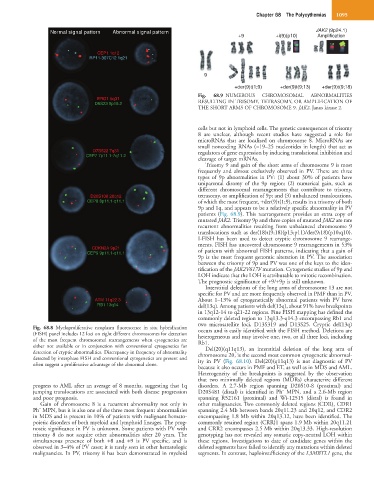
                                                                  Fig.   68.9  NUMEROUS   CHROMOSOMAL   ABNORMALITIES
                                 ERG1 5q31
                                D5S23 5p15.2                      RESULTING IN TRISOMY, TETRASOMY, OR AMPLIFICATION OF
                                                                  THE SHORT ARMS OF CHROMOSOME 9. JAK2, Janus kinase 2.


                                                                  cells but not in lymphoid cells. The genetic consequences of trisomy
                                                                  8  are  unclear,  although  recent  studies  have  suggested  a  role  for
                                                                  microRNAs  that  are  localized  on  chromosome  8.  MicroRNAs  are
                                                                  small noncoding RNAs (≈19–25 nucleotides in length) that act as
                               D7S522 7q31                        regulators of gene expression by inducing translational inhibition and
                             CEP7 7p11.1-7q11.2
                                                                  cleavage of target mRNAs.
                                                                    Trisomy 9 and gain of the short arms of chromosome 9 is most
                                                                  frequently  and  almost  exclusively  observed  in  PV. There  are  three
                                                                  types  of  9p  abnormalities  in  PV:  (1)  about  30%  of  patients  have
                                                                  uniparental  disomy  of  the  9p  region;  (2)  numerical  gain,  such  as
                                                                  different  chromosomal  rearrangements  that  contribute  to  trisomy,
                               D20S108 20q12                      tetrasomy, or amplification of 9p; and (3) unbalanced translocations,
                              CEP8 8p11.1-q11.1                   of which the most frequent, +der(9)t(1;9), results in a trisomy of both
                                                                  9p and 1q, and appears to be a relatively specific abnormality in PV
                                                                  patients (Fig. 68.9). This rearrangement provides an extra copy of
                                                                  mutated JAK2. Trisomy 9p and three copies of mutated JAK2 are rare
                                                                  recurrent  abnormalities  resulting  from  unbalanced  chromosome  9
                                                                  translocations such as der(18)t(9;18)(p13;p11)/der(9;18)(p10;q10).
                                                                  I-FISH  has  been  used  to  detect  cryptic  chromosome  9  rearrange-
                                                                  ments. FISH has uncovered chromosome 9 rearrangements in 53%
                               CDKN2A 9p21
                              CEP9 9p11.1-q11.1                   of patients with abnormal FISH patterns, indicating that a gain of
                                                                  9p is the most frequent genomic alteration in PV. The association
                                                                  between the trisomy of 9p and PV was one of the keys to the iden-
                                                                  tification of the JAK2V617F mutation. Cytogenetic studies of 9p and
                                                                  LOH indicate that the LOH is attributable to mitotic recombination.
                                                                  The prognostic significance of +9/+9p is still unknown.
                                                                    Interstitial deletions of the long arms of chromosome 13 are not
                                                                  specific for PV and are more frequently observed in PMF than in PV.
                                ATM 11q22.3                       About  1–13%  of  cytogenetically  abnormal  patients  with  PV  have
                                 RB1 13q14                        del(13q). Among patients with del(13q), about 91% have breakpoints
                                                                  in 13q12-14 to q21-22 regions. Fine FISH mapping has defined the
                                                                  commonly deleted region to 13q13.3-q14.3 encompassing Rb1 and
                                                                  two  microsatellite  loci,  D13S319  and  D13S25.  Cryptic  del(13q)
            Fig.  68.8  Myeloproliferative  neoplasm  fluorescence  in  situ  hybridization   occurs and is easily identified with the FISH method. Deletions are
            (FISH) panel includes 12 loci on eight different chromosomes for detection   heterogeneous and may involve one, two, or all three loci, including
            of  the  most  frequent  chromosomal  rearrangements  when  cytogenetics  are   Rb1.
            either  not  available  or  in  conjunction  with  conventional  cytogenetics  for   Del(20)(q11q13),  an  interstitial  deletion  of  the  long  arm  of
            detection of cryptic abnormalities. Discrepancy in frequency of abnormality   chromosome 20, is the second most common cytogenetic abnormal-
            detected by interphase FISH and conventional cytogenetics are present and   ity  in  PV  (Fig.  68.10).  Del(20)(q11q13)  is  not  diagnostic  of  PV
            often suggest a proliferative advantage of the abnormal clone.
                                                                  because it also occurs in PMF and ET, as well as in MDS and AML.
                                                                  Heterogeneity  of  the  breakpoints  is  suggested  by  the  observation
                                                                  that  two  minimally  deleted  regions  (MDRs)  characterize  different
            progress to AML after an average of 8 months, suggesting that 1q   disorders.  A  2.7-Mb  region  spanning  D20S10-8  (proximal)  and
                                                                                             −
            jumping translocations are associated with both disease progression   D20S481 (distal) is identified in Ph  MPN, and a 2.6-Mb region
            and poor prognosis.                                   spanning  R52161  (proximal)  and  Wi-12515  (distal)  is  found  in
              Gain  of  chromosome  8  is  a  recurrent  abnormality  not  only  in   other malignancies. Two commonly deleted regions (CDR), CDR1
              −
            Ph  MPN, but it is also one of the three most frequent abnormalities   spanning 2.4 Mb between bands 20q11.23 and 20q12, and CDR2
            in MDS and is present in 10% of patients with malignant hemato-  encompassing 1.8 Mb within 20q13.12, have been identified. The
            poietic disorders of both myeloid and lymphoid lineages. The prog-  commonly retained region (CRR)1 spans 1.9 Mb within 20q11.21
            nostic significance in PV is unknown. Some patients with PV with   and CRR2 encompasses 2.5 Mb within 20q13.33. High-resolution
            trisomy  8  do  not  acquire  other  abnormalities  after  20  years. The   genotyping has not revealed any somatic copy-neutral LOH within
            simultaneous  presence  of  both  +8  and  +9  is  PV  specific,  and  is   these regions. Investigations to date of candidate genes within the
            observed in 3–4% of PV cases; it is rarely seen in other hematologic   deleted segments have failed to identify any mutations within deleted
            malignancies. In PV, trisomy 8 has been demonstrated in myeloid   segments. In contrast, haploinsufficiency of the L3MBTL1 gene, the

