


Page 1426 - Hematology_ Basic Principles and Practice ( PDFDrive )
P. 1426
1272   Part VII  Hematologic Malignancies


           1.0  + + +  + + + + + + +  + + +                      1.0                         CR + Hb and Pit higher
          Proportion of patients disease free  0.7  +  Cladribine  +  + + + + + + +  + + + +  + + + Pentostatin  +  Proportion of patients remaining relapse free  0.8  PR + Hb and Pit higher
           0.9
                    +
                                                                 0.9
           0.8
                                                                                             (n = 88)
                             +
                               +
                               +
                                                                 0.7
                                 ++
                                 + + +
                                +
                            +
                               +
           0.6
                                                                                             CR + Hb and/or Pit lower
                                                                 0.6
                                              + + + + + +
                                            + + + + + + +
                                                 +
                                               +
                                                                                             (n = 90)
           0.5
                                                                 0.5
           0.4
                                                                 0.4
           0.3
                                                                                        (n = 15)
           0.2
                                        Relapse or HCL death
                                                                 0.2
           0.1
                                                                 0.1
           0.0                         + Censored                0.3                PR + Hb and/or Pit lower (n = 19)
                                                                                                         P <0.0001
               0   2   4   6    8   10  12  14  16   18  20      0.0
         A                      Time in years                       0    2   4   6    8  10   12  14  16   18  20
                                                              A            Years from first purine analogue treatment
           120
                                                 CR    PR        1.0            Second to sixth line:
           100                                                   0.9            purine analogue + rituximab (n = 12)
          Percentage of patients  80                            Proportion of patients remaining relapse free  0.7  Second/third line:
                                                                 0.8
                                                                                               CR (n = 61)
            60
                                                                 0.6
                                                                 0.5
                                                                                                    First line:
            40
                                                                                                    CR (n = 186)
            20                                                   0.4                             First line:
                                                                 0.3
             0                                                   0.2      Second/third line:     PR (n = 37)
                      1              2             3             0.1      PR (n = 29)                    P <0.0001
        B                Course of purine analogue therapy       0.0
                                                                    0    2   4   6    8  10   12  14  16   18  20
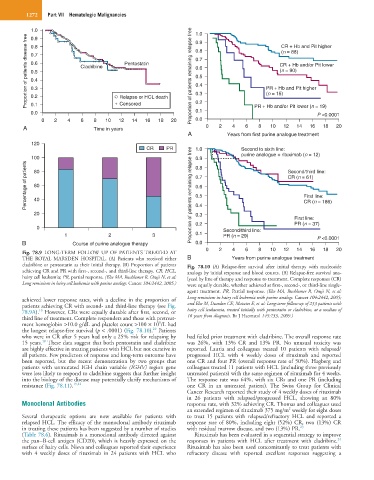
        Fig.  78.9  LONG-TERM  FOLLOW  UP  OF  PATIENTS TREATED  AT
        THE  ROYAL  MARSDEN  HOSPITAL.  (A)  Patients  who  received  either   B  Years from purine analogue treatment
        cladribine or pentostatin as their initial therapy. (B) Proportion of patients   Fig.  78.10  (A)  Relapse-free  survival  after  initial  therapy  with  nucleoside
        achieving CR and PR with first-, second-, and third-line therapy. CR, HCL,   analogs by initial response and blood counts. (B) Relapse-free survival ana-
        hairy cell leukemia; PR, partial response. (Else MA, Ruchlemer R, Osuji N, et al:   lyzed by line of therapy and response to treatment. Complete responses (CR)
        Long remissions in hairy cell leukemia with purine analogs. Cancer 104:2442, 2005.)  were equally durable, whether achieved at first-, second-, or third-line single-
                                                              agent treatment. PR, Partial response. (Else MA, Ruchlemer R, Osuji N, et al:
        achieved lower response rates, with a decline in the proportion of   Long remissions in hairy cell leukemia with purine analogs. Cancer 104:2442, 2005;
        patients achieving CR with second- and third-line therapy (see Fig.   and Else M, Dearden CE, Matutes E, et al: Long-term follow-up of 233 patients with
              10
        78.9A).  However, CRs were equally durable after first, second, or   hairy cell leukaemia, treated initially with pentostatin or cladribine, at a median of
        third line of treatment. Complete responders and those with pretreat-  16 years from diagnosis. Br J Haematol 145:733, 2009.)
                                                     9
        ment hemoglobin >10.0 g/dL and platelet count >100 × 10 /L had
                                                   10
        the longest relapse-free survival (p < .0001) (Fig. 78.10).  Patients
        who were in CR after 5 years had only a 25% risk for relapsing by   had failed prior treatment with cladribine. The overall response rate
               10
        15 years.  These data suggest that both pentostatin and cladribine   was  26%,  with  13%  CR  and  13%  PR.  No  unusual  toxicity  was
        are highly effective in treating patients with HCL but not curative in   reported.  Lauria  and  colleagues  treated  10  patients  with  relapsed/
        all patients. Few predictors of response and long-term outcome have   progressed  HCL  with  4  weekly  doses  of  rituximab  and  reported
        been  reported,  but  the  recent  demonstration  by  two  groups  that   one CR and four PR (overall response rate of 50%). Hagberg and
        patients  with  unmutated  IGH  chain  variable  (IGHV)  region  gene   colleagues treated 11 patients with HCL (including three previously
        were less likely to respond to cladribine suggests that further insight   untreated patients) with the same regimen of rituximab for 4 weeks.
        into the biology of the disease may potentially clarify mechanisms of   The response rate was 64%, with six CRs and one PR (including
        resistance (Fig. 78.11). 19,22                        one  CR  in  an  untreated  patient).  The  Swiss  Group  for  Clinical
                                                              Cancer Research reported their study of 4 weekly doses of rituximab
                                                              in  26  patients  with  relapsed/progressed  HCL,  showing  an  80%
        Monoclonal Antibodies                                 response rate, with 32% achieving CR. Thomas and colleagues used
                                                                                               2
                                                              an extended regimen of rituximab 375 mg/m  weekly for eight doses
        Several  therapeutic  options  are  now  available  for  patients  with   to  treat  15  patients  with  relapsed/refractory  HCL  and  reported  a
        relapsed HCL. The efficacy of the monoclonal antibody rituximab   response rate of 80%, including eight (52%) CR, two (13%) CR
        in treating these patients has been suggested by a number of studies   with residual marrow disease, and two (13%) PR. 23
        (Table 78.6). Rituximab is a monoclonal antibody directed against   Rituximab has been evaluated in a sequential strategy to improve
                                                                                                               24
        the pan−B-cell antigen (CD20), which is heavily expressed on the   responses  in  patients  with  HCL  after  treatment  with  cladribine.
        surface of hairy cells. Nieva and colleagues reported their experience   Rituximab has also been used concomitantly to treat patients with
        with  4  weekly  doses  of  rituximab  in  24  patients  with  HCL  who   refractory  disease  with  reported  excellent  responses  suggesting  a

