


Page 1451 - Hematology_ Basic Principles and Practice ( PDFDrive )
P. 1451
Chapter 80  Clinical Manifestations, Staging, and Treatment of Follicular Lymphoma  1291


                  1.00                                                  1.00

                 Cumulative survival  0.75                             Cumulative risk of transformation  0.75  N = 547

                                                                        0.50
                  0.50

                  0.25
                                                                                                     transformation
                                                                                                     in 151
                                                     N = 547            0.25                         Documented
                  0.00                                                  0.00
                       0       10       20      30       40                  0         10        20        30
                                 Years from diagnosis                                  Years from diagnosis
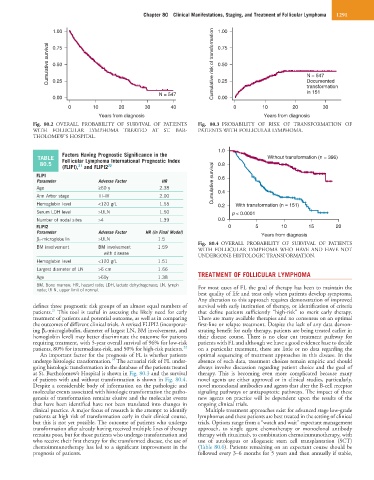
            Fig.  80.2  OVERALL  PROBABILITY  OF  SURVIVAL  OF  PATIENTS   Fig.  80.3  PROBABILITY  OF  RISK  OF  TRANSFORMATION  OF
            WITH  FOLLICULAR  LYMPHOMA  TREATED  AT  ST.  BAR-    PATIENTS WITH FOLLICULAR LYMPHOMA.
            THOLOMEW’S HOSPITAL.

                                                                        1.0
                     Factors Having Prognostic Significance in the
             TABLE   Follicular Lymphoma International Prognostic Index                  Without transformation (n = 396)
              80.5                                                      0.8
                     (FLIPI),  and FLIPI2 22
                           21
             FLIPI                                                      0.6
             Parameter           Adverse Factor       HR               Cumulative survival
             Age                 ≥60 y               2.38               0.4
             Ann Arbor stage     III–IV              2.00
             Hemoglobin level    <120 g/L            1.55               0.2   With transformation (n = 151)
             Serum LDH level     >ULN                1.50                    p < 0.0001
             Number of nodal sites  >4               1.39               0.0
             FLIPI2                                                         0        5       10       15       20
             Parameter           Adverse Factor  HR (in Final Model)                  Years from diagnosis
             β 2 -microglobulin  >ULN                1.5
             BM involvement      BM involvement      1.59         Fig.  80.4  OVERALL  PROBABILITY  OF  SURVIVAL  OF  PATIENTS
                                                                  WITH  FOLLICULAR  LYMPHOMA  WHO  HAVE  AND  HAVE  NOT
                                   with disease                   UNDERGONE HISTOLOGIC TRANSFORMATION.
             Hemoglobin level    <120 g/L            1.51
             Largest diameter of LN  >6 cm           1.66
             Age                 >60y                1.38         TREATMENT OF FOLLICULAR LYMPHOMA
             BM, Bone marrow; HR, hazard ratio; LDH, lactate dehydrogenase; LN, lymph   For most cases of FL the goal of therapy has been to maintain the
             node; ULN, upper limit of normal.
                                                                  best quality of life and treat only when patients develop symptoms.
                                                                  Any alteration to this approach requires demonstration of improved
            defines three prognostic risk groups of an almost equal numbers of   survival with early institution of therapy, or identification of criteria
                  21
            patients.  This  tool  is  useful  in  assessing  the  likely  need  for  early   that  define  patients  sufficiently  “high-risk”  to  merit  early  therapy.
            treatment of patients and potential outcome, as well as in comparing   There are many available therapies and no consensus on an optimal
            the outcomes of different clinical trials. A revised FLIPI2 (incorporat-  first-line or relapse treatment. Despite the lack of any data demon-
            ing β 2 -microglobulin, diameter of largest LN, BM involvement, and   strating benefit for early therapy, patients are being treated earlier in
            hemoglobin level) may better discriminate the outcome for patients   their  disease  course.  There  is  no  clear  cut  treatment  pathway  for
            requiring treatment, with 5-year overall survival of 96% for low-risk   patients with FL and although we have a good evidence base to decide
            patients, 80% for intermediate-risk, and 50% for high-risk patients. 22  on a particular treatment, there are little or no data regarding the
              An important factor for the prognosis of FL is whether patients   optimal sequencing of treatment approaches in this disease. In the
                                      14
            undergo histologic transformation.  The actuarial risk of FL under-  absence of such data, treatment choices remain empiric and should
            going histologic transformation in the database of the patients treated   always involve discussion regarding patient choice and the goal of
            at St. Bartholomew’s Hospital is shown in Fig. 80.3 and the survival   therapy.  This  is  becoming  even  more  complicated  because  many
            of patients with and without transformation is shown in Fig. 80.4.   novel agents are either approved or in clinical studies, particularly,
            Despite a considerable body of information on the pathologic and   novel monoclonal antibodies and agents that alter the B-cell receptor
            molecular events associated with histologic transformation the patho-  signaling pathways or antiapoptotic pathways. The impact of these
            genesis of transformation remains elusive and the molecular events   new  agents  on  practice  will  be  dependent  upon  the  results  of  the
            that have been identified have not been translated into changes in   ongoing clinical trials.
            clinical practice. A major focus of research is the attempt to identify   Multiple treatment approaches exist for advanced stage low-grade
            patients at high risk of transformation early in their clinical course,   lymphomas and these patients are best treated in the setting of clinical
            but this is not yet possible. The outcome of patients who undergo   trials. Options range from a “watch and wait” expectant management
            transformation after already having received multiple lines of therapy   approach,  to  single  agent  chemotherapy  or  monoclonal  antibody
            remains poor, but for those patients who undergo transformation and   therapy with rituximab, to combination chemoimmunotherapy, with
            who receive their first therapy for the transformed disease, the use of   use  of  autologous  or  allogeneic  stem  cell  transplantation  (SCT)
            chemoimmunotherapy has led to a significant improvement in the   (Table 80.6). Patients remaining on an expectant course should be
            prognosis of patients.                                followed every 3–6 months for 5 years and then annually if stable,

