


Page 1612 - Hematology_ Basic Principles and Practice ( PDFDrive )
P. 1612
Chapter 88  Immunoglobulin Light Chain Amyloidosis (Primary Amyloidosis)  1433


                                                                    Chromosomal aberrations of the plasma cells in amyloidosis have
                                                                  also  been  recognized.  Interphase  fluorescence  in  situ  hybridization
                                                                  (FISH) has detected a gain of 1q21, predicting a poor overall survival,
                                                                  and is an independent prognostic factor. Patients with t(11;14) have
                                                                  a longer median overall survival. Deletion 13q14 and hyperdiploidy
                                                                  are prognostically neutral.
                                                                    The pathobiology of organ dysfunction associated with amyloi-
                                                                  dosis  has  long  been  assumed  to  be  caused  by  the  direct  effect  of
                                                                  amyloid protein deposition in tissues. However, there is increasing
                                                                  evidence that the light chains themselves have a toxic effect on tissues
                                                                  as a soluble mediator. A zebrafish model of human light-chain car-
                                                                  diotoxicity has demonstrated that injection of light chains results in
                                                                  impaired  cardiac  function,  pericardial  edema,  and  increased  cell
                                                                  death.  Mitogen-activated  protein  (MAP)  kinase  activation  may
                                                                  mediate this cardiotoxicity, and p38 MAP kinase inhibition reduces
                                                                  cell death and improves cardiac function.
                                                                    Amyloidosis and multiple myeloma both share the presence in the
                                                                  bone marrow of a clonal population of plasma cells. The number of
                                                                  plasma cells and the immunoglobulin light chains that they produce
                                                                  are  both  important  for  prognosis.  Patients  who  have  an  increased
                                                                  number of plasma cells in the bone marrow with light-chain amyloi-
                                                                  dosis have a worse prognosis and a shorter overall survival, regardless
                                                                  of whether they manifest any of the clinical criteria associated with
                                                                  multiple myeloma, such as hypercalcemia, renal insufficiency, anemia,
                                                                  or destructive bone lesions. There appears to be no survival difference
                                                                  between patients who have an elevated plasma cell count in their bone
                                                                  marrow  and whether they  have  overt  symptoms of myeloma. The
                                                                  therapeutic import of this finding is still being investigated.
            Fig.  88.1  ELECTRON  MICROGRAPH  DEMONSTRATING  THE
            CLASSIC FIBRILS OF AMYLOID.                           CLINICAL MANIFESTATIONS

                                                                  Patient 1
               40                                  AL
                                                   Myeloma        Patient 1 is a 46-year-old man who, 10 months prior to diagnosis,
                                                   MGUS           began to develop cramping abdominal pain associated with an unex-
               30                                                 plained 45-lb weight loss. Four months later, he began to develop
                                                                  episodes  of  orthostatic  syncope  and  was  documented  to  have  an
             Percentage  20                                       to  66 mmHg  when  standing.  As  a  consequence  of  his  abdominal
                                                                  orthostatic drop in blood pressure from systolic 110 mmHg in supine
                                                                  cramping, the patient underwent endoscopy and colonoscopy. Biop-
                                                                  sies were obtained from the duodenum, proximal jejunum, colon, and
                                                                  rectum, all of which demonstrated amyloid deposits. Subsequently, a
               10                                                 bone marrow biopsy was performed that showed 4% clonal plasma
                                                                  cells. A subcutaneous fat aspirate was positive for amyloid. The plasma
                                                                  cells showed a CCND1/IgH fusion t(11;14). The patient’s hemoglo-
                0                                                 bin level was normal, as were his creatinine, alkaline phosphatase, and
                   None lgG   Free  lgG   lgA Free    lgD  lgM Biclonal  urinary protein. The patient had a λ free light chain level of 92.8 mg/L,
                                                                  κ free light chain of 10.9 mg/L, and a ratio of 0.12.
                                  Serum M Protein
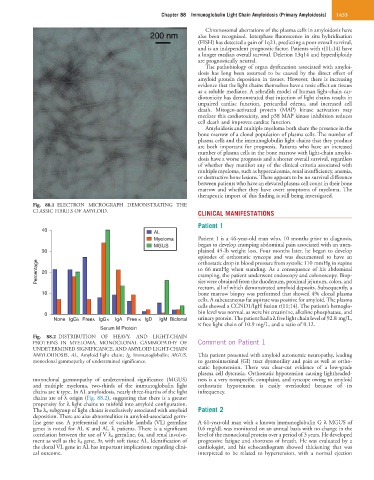
            Fig.  88.2  DISTRIBUTION  OF  HEAVY-  AND  LIGHT-CHAIN
            PROTEINS  IN  MYELOMA,  MONOCLONAL  GAMMOPATHY  OF    Comment on Patient 1
            UNDETERMINED SIGNIFICANCE, AND AMYLOID LIGHT-CHAIN
            AMYLOIDOSIS.  AL,  Amyloid  light  chain;  Ig,  Immunoglobulin;  MGUS,   This patient presented with amyloid autonomic neuropathy, leading
            monoclonal gammopathy of undetermined significance.   to gastrointestinal (GI) tract dysmotility and pain as well as ortho-
                                                                  static  hypotension.  There  was  clear-cut  evidence  of  a  low-grade
                                                                  plasma cell dyscrasia. Orthostatic hypotension causing lightheaded-
            monoclonal  gammopathy  of  undetermined  significance  (MGUS)   ness is a very nonspecific complaint, and syncope owing to amyloid
            and  multiple  myeloma,  two-thirds  of  the  immunoglobulin  light   orthostatic  hypotension  is  easily  overlooked  because  of  its
            chains are κ type. In AL amyloidosis, nearly three-fourths of the light   infrequency.
            chains are of λ origin (Fig. 88.2), suggesting that there is a greater
            propensity for λ light chains to misfold into amyloid configuration.
            The λ 6 subgroup of light chains is exclusively associated with amyloid   Patient 2
            deposition. There are also abnormalities in amyloid-associated germ-
            line gene use. A preferential use of variable lambda (VL) germline   A 61-year-old man with a known immunoglobulin G λ MGUS of
            genes is noted for AL κ and AL λ patients. There is a significant   0.6 mg/dL was monitored on an annual basis with no change in the
            correlation between the use of V λ 6 germline, 6a, and renal involve-  level of the monoclonal protein over a period of 3 years. He developed
            ment as well as the λ 3 gene, 3r, with soft tissue AL. Identification of   progressive fatigue and shortness of breath. He was evaluated by a
            the clonal VL gene in AL has important implications regarding clini-  cardiologist,  and  his  echocardiogram  showed  thickening  that  was
            cal outcome.                                          interpreted  to  be  related  to  hypertension,  with  a  normal  ejection

