


Page 1614 - Hematology_ Basic Principles and Practice ( PDFDrive )
P. 1614
Chapter 88  Immunoglobulin Light Chain Amyloidosis (Primary Amyloidosis)  1435


            and be placed on corticosteroids without appropriate screening. The   with the specific inclusion of Doppler studies that accurately measure
            rarest physical finding in amyloidosis is periarticular infiltration of   the restricted filling that occurs with amyloid infiltration (stiff heart
            the synovium in the upper extremities, leading to the “shoulder pad”   syndrome). It may also include magnetic resonance imaging of the
            sign. This causes a continuous, chronic, low-grade pain caused by the   heart, which can show distinct endomyocardial enhancement follow-
            periarticular infiltration. Diagnosis in this setting requires arthrocen-  ing  gadolinium  injection,  as  well  as  myocardial  nulling,  which  is
            tesis and the demonstration of Congo red–positive deposits in the   specific for light-chain amyloidosis.
            synovial fluid.                                         A patient with unexplained hepatomegaly who has a monoclonal
                                                                  protein can often avoid a liver biopsy, which rarely is associated with
                                                                  bleeding  and  occasionally  with  hepatic  rupture.  Fat  aspiration  is
            LABORATORY MANIFESTATIONS                             positive in over 75% of patients with hepatic amyloidosis.
                                                                    In a patient with peripheral neuropathy who is found to have a
            If the symptoms of amyloidosis are so vague as not to be helpful and   monoclonal protein, consideration of amyloidosis in the differential
            the physical findings are specific but not sensitive, when should a   diagnosis  can  prevent  interventions  such  as  plasma  exchange  or
            clinician suspect amyloidosis and aggressively pursue this rare disor-  intravenous  immunoglobulin  infusions,  which  are  ineffective  in
            der? Amyloidosis should be considered in any patient who presents   patients  with  light-chain  amyloidosis  but  are  often  attempted  in
            with (1) nephrotic range proteinuria; (2) fatigue, which may have a   patients  who  have  a  monoclonal  gammopathy  and  a  peripheral
            cardiac basis, including heart failure with preserved ejection fraction   neuropathy (presumed CIDP) if amyloidosis is not considered in the
            or restrictive cardiomyopathy; (3) unexplained hepatomegaly; (4) a   differential diagnosis.
            peripheral neuropathy resembling chronic inflammatory demyelinat-  All patients with MGUS need to be monitored for life for the
            ing polyneuropathy (CIDP); and (5) “atypical” multiple myeloma or   development of myeloma and amyloidosis. Over 25 years, approxi-
            MGUS with unexplained fatigue, weight loss, and edema. Consulting   mately 25% of patients will go on to develop a more serious plasma
            patients  with  any  one  of  these  five  syndromes  should  lead  to  the   cell dyscrasia. In 21%, this represents multiple myeloma, but 4% of
            placement of light-chain amyloid in the differential diagnosis, and   patients with MGUS will develop light-chain amyloidosis during the
            screening should commence.                            course of observation. If screening is limited to detection of changes
              Because  all  patients  with  systemic  immunoglobulin  light-chain   consistent with multiple myeloma, such as anemia, bone pain, and
            amyloidosis have a plasma cell dyscrasia, the initial step should be   hypercalcemia,  amyloidosis  will  be  overlooked  because  all  three  of
            screening by performing immunofixation of the serum, immunofixa-  these  findings  are  unusual  in  light-chain  amyloidosis.  Patient  2,
            tion  of  the  urine,  and  an  immunoglobulin  free  light-chain  assay.   described above, was being followed by a hematologist for a mono-
            Results of one of these three tests will be abnormal in 99% of patients   clonal gammopathy, and when he developed fatigue in the absence
            with light-chain amyloidosis. If results of these three tests are nega-  of progressive anemia, amyloidosis was not considered.
            tive, the likelihood is that one of the following conditions exists: (1)   Any patient with one of the five compatible clinical syndromes
            The patient does not have amyloidosis; (2) the chance of immuno-  listed in Table 88.1 should be screened for monoclonal protein. If a
            globulin light-chain amyloidosis is only 1%; (3) the patient has sys-  monoclonal  protein  is  not  found,  the  likelihood  of  light-chain
            temic amyloidosis, but it is not of immunoglobulin light-chain origin   amyloidosis  is  very  small.  However,  if  a  monoclonal  gammopathy
            (familial amyloid or senile systemic amyloid); or (4) the amyloidosis   exists with an appropriate clinical syndrome, histologic demonstra-
            is localized.                                         tion of amyloid should be sought.
              Alternatively, if a patient with nephrotic range proteinuria has a   In patients who have renal, cardiac, hepatic, and peripheral nerve
            monoclonal protein or an abnormal free light-chain ratio, the diag-  amyloid, biopsy of the affected organs has a very high sensitivity of
            nosis,  which  often  includes  minimal  change  glomerulopathy  and   demonstrating amyloid. However, these biopsies are not required if
            membranoproliferative glomerulopathy, suddenly shifts to either (1)   amyloid is considered in the differential diagnosis.
            myeloma cast nephropathy, (2) immunoglobulin light-chain amyloi-  The first diagnostic studies that should be performed in patients
            dosis of the kidney (Fig. 88.5), or (3) κ light-chain deposition disease   with a compatible clinical syndrome and an immunoglobulin light-
            of the kidney. In this situation, a kidney biopsy could be avoided by   chain abnormality are a subcutaneous fat aspirate and a bone marrow
            doing less invasive diagnostic testing.               biopsy. Subcutaneous fat aspirate in an experienced laboratory will
              In a patient with fatigue, weight loss, or dyspnea on exertion, the   demonstrate amyloid deposits in 75% of patients tested (Fig. 88.6).
            finding of an immunoglobulin abnormality raises the suspicion of   In a patient with light-chain amyloidosis, staining of the bone marrow
            amyloid. Evaluation can be redirected to include echocardiography   biopsy for amyloid deposition in blood vessels is positive in 50%. A
                                                                  second advantage of the bone marrow biopsy is it provides the per-
                                                                  centage of plasma cells in the bone marrow, which is prognostic and
                                                                  is  an  essential  evaluation  in  patients  with  immunoglobulin  light-
                                                                  chain abnormalities. When combining the subcutaneous fat aspirate
                                                                  and the bone marrow biopsy, nearly 85% of patients with light-chain
                                                                  amyloidosis will be identified. For the remaining 15%, direct biopsy
                                                                  of the involved organ would be indicated if the index of suspicion
                                                                  for  light-chain  amyloidosis  remained  high.  Other  centers  have


                                                                   TABLE   Syndromes in Primary Amyloidosis
                                                                    88.1
                                                                   Syndrome                                Patients (%)
                                                                   Nephrotic or nephrotic and renal failure   30
                                                                   Hepatomegaly                               24
                                                                   Congestive heart failure                   22
                                                                   Carpal tunnel                              21
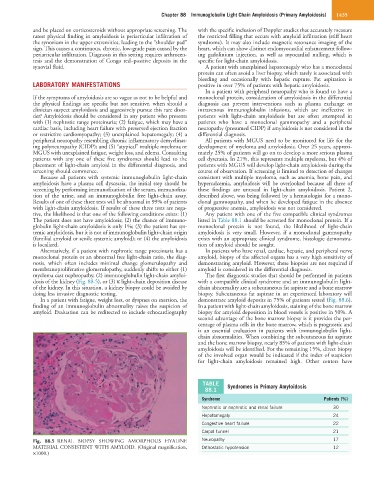
            Fig.  88.5  RENAL  BIOPSY  SHOWING  AMORPHOUS  HYALINE   Neuropathy                               17
            MATERIAL CONSISTENT WITH AMYLOID. (Original magnification,   Orthostatic hypotension              12
            ×1000.)

