


Page 2217 - Hematology_ Basic Principles and Practice ( PDFDrive )
P. 2217
1964   Part XII  Hemostasis and Thrombosis


                                   66 F: Admission for prosthetic valve endocarditis
                                300
                                                                    Plt
                                250
                                                                    tfns
                                200                                IVIg
                              Platelet count (mean × 10 9 /L)  100  4 × 10 /L
                                                                    x 2
                                150
                                                                 Nadir
                                                                     9
                                 50

                                 0
                                                                               Heparin
                                                       Heparin
                                                  Ranitidine
                                                                           Omeprazole
                                            Carbamazepine, phenytoin    Carbamazepine, valproate
                                            Gentamicin and vancomycin              Teicoplanin
                                                    Digoxin                 Digoxin
                                   –2    0     2    4     6    8    10    12   14    16
                             A                      Days after starting multiple drugs


                                              Normal serum                     Normal serum
                                 60             + buffer         60          + drug (vancomycin)
                               Events  40                       Events  40


                                 20                              20
                                 0                                0
                                         1    10   100  1000              1    10   100  1000
                                          Fluorescence                     Fluorescence

                                              Patient serum             Patient serum
                                 60             + buffer         60  + drug (vancomycin)
                               Events  40                       Events  40

                                 20                              20

                                 0                                0
                                         1    10   100  1000              1    10   100  1000
                             B            Fluorescence                     Fluorescence
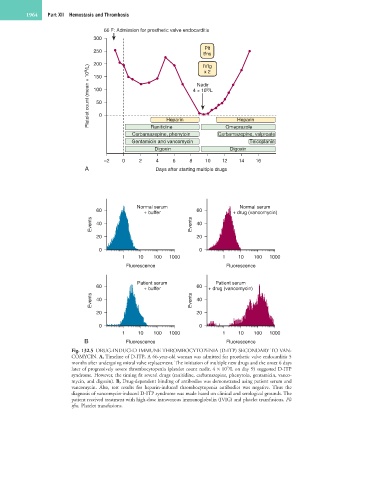
                        Fig. 132.5  DRUG-INDUCED IMMUNE THROMBOCYTOPENIA (D-ITP) SECONDARY TO VAN-
                        COMYCIN. A, Timeline of D-ITP. A 66-year-old woman was admitted for prosthetic valve endocarditis 5
                        months after undergoing mitral valve replacement. The initiation of multiple new drugs and the onset 6 days
                        later of progressively severe thrombocytopenia (platelet count nadir, 4 × 10 /L on day 9) suggested D-ITP
                                                                           9
                        syndrome. However, the timing fit several drugs (ranitidine, carbamazepine, phenytoin, gentamicin, vanco-
                        mycin, and digoxin). B, Drug-dependent binding of antibodies was demonstrated using patient serum and
                        vancomycin.  Also,  test  results  for  heparin-induced  thrombocytopenia  antibodies  was  negative.  Thus  the
                        diagnosis of vancomycin-induced D-ITP syndrome was made based on clinical and serological grounds. The
                        patient received treatment with high-dose intravenous immunoglobulin (IVIG) and platelet transfusions. Plt
                        tfns, Platelet transfusions.

