


Page 2230 - Hematology_ Basic Principles and Practice ( PDFDrive )
P. 2230
Chapter 133  Heparin-Induced Thrombocytopenia  1977


            stimulation, as well as the inclusion of negative and positive HIT sera   Three enzyme(-linked) immuno(sorbent) assays (EIAs or ELISAs)
            of variable reactivity to ensure that the test platelets identify weaker   are commercially available for detecting antibodies that recognize PF4
            HIT  sera.  The  characteristic  activation  profile  produced  by  HIT   bound to heparin, to the polyanion, polyvinyl sulfonate, or to PF4
            serum includes increased platelet activation at low heparin concentra-  (from platelet lysate) bound to protamine. These assays are very sensi-
            tions (0.05–0.3 units/mL), but background platelet activation at high   tive  for  detecting  HIT  antibodies  but  are  much  more  likely  than
                                             9
            heparin concentrations (10–100 units/mL).  Strong platelet activa-  washed  platelet  activation  assays  to  detect  clinically  insignificant
            tion  induced  by  HIT  sera  even  in  the  absence  of  pharmacologic   anti-PF4/heparin antibodies. 2,3,5  Thus results of laboratory tests must
            heparin is a feature of delayed-onset HIT and may generally indicate   be interpreted in the clinical context—that is, HIT is a “clinicopatho-
                                                                              4
            more severe HIT. 18                                   logic” syndrome.  Activation and antigen assays are not 100% con-
                                                                  cordant, and there are advantages if reference laboratories are able to
                                                                  perform both types of assay. In general, serum or plasma from patients
                                                                  with clinical HIT have strongly positive assay results, whereas clini-
                                                                                                     2,5
                                                                  cally insignificant antibodies give weaker results.  Indeed, if the EIA
              Number of patients (arbitrary scale)  Bleeding  Thrombosis  units), the probability of HIT exceeds 90%.  Table 133.4  provides
                     D-ITP
                                      HIT
                                9
                                               9
                                                                  yields  only  a  weakly  positive  result  (e.g.,  0.40  to  1.0  absorbance
                           <10x10 /L
                                           60x10 /L
                                           (median)
                            (median)
                                                                  units), the corresponding probability of “true” HIT is 5% to 10% at
                                                                  most. In contrast, if the EIA yields a strongly positive result (>2.0
                                                                                                   5
                                                                                                            25
                                                                  evidence from three studies supporting the greater diagnostic specific-
                                                                  ity  of  the  SRA  compared  with  the  EIA:  importantly,  EIA+/SRA–
                                                                  status does not support a diagnosis of HIT.
                                                                  PROGNOSIS
                                                                  Approximately  half  of  all  patients  with  SRA+  HIT  have  clinically
                                                                                                             11
                                                                  evident thrombosis at the time of initial diagnosis of HIT.  Among
               3   5    10    20     50   100  200  500   1000    patients without thrombosis at diagnosis, there appears to be a high
                                                                  risk (approximately 25%–50%) for subsequent thrombosis if heparin
                                               9
                              Platelet count nadir x10 /L         is  simply  discontinued.   It  is  increasingly  accepted  that  further
                                                                                    11
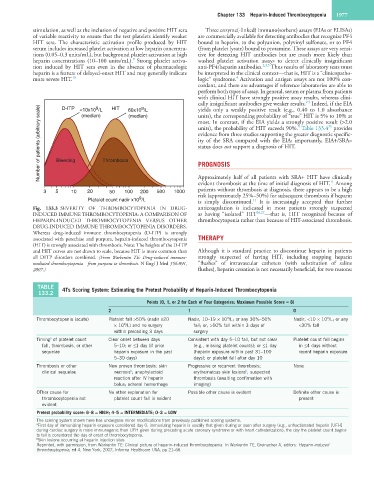
            Fig.  133.3  SEVERITY  OF  THROMBOCYTOPENIA  IN  DRUG-  anticoagulation  is  indicated  in  most  patients  strongly  suspected
            INDUCED IMMUNE THROMBOCYTOPENIA: A COMPARISON OF      as  having  “isolated”  HIT 26,27 —that  is,  HIT  recognized  because  of
            HEPARIN-INDUCED  THROMBOCYTOPENIA  VERSUS  OTHER      thrombocytopenia rather than because of HIT-associated thrombosis.
            DRUG-INDUCED IMMUNE THROMBOCYTOPENIA DISORDERS.
            Whereas  drug-induced  immune  thrombocytopenia  (D-ITP)  is  strongly
            associated with petechiae and purpura, heparin-induced thrombocytopenia   THERAPY
            (HIT) is strongly associated with thrombosis. Note: The heights of the D-ITP
            and HIT curves are not drawn to scale, because HIT is more common than   Although it is standard practice to discontinue heparin in patients
            all  DITP  disorders  combined.  (From  Warkentin  TE:  Drug-induced  immune-  strongly  suspected  of  having  HIT,  including  stopping  heparin
            mediated thrombocytopenia—from purpura to thrombosis. N Engl J Med 356:891,   “flushes”  of  intravascular  catheters  (with  substitution  of  saline
            2007.)                                                flushes), heparin cessation is not necessarily beneficial, for two reasons:
             TABLE   4Ts Scoring System: Estimating the Pretest Probability of Heparin-Induced Thrombocytopenia
              133.2
                                                 Points (0, 1, or 2 for Each of Four Categories: Maximum Possible Score = 8)
                                     2                         1                                 0
             Thrombocytopenia (acute)  Platelet fall >50% (nadir ≥20   Nadir, 10–19 × 10 /L; or any 30%–50%   Nadir, <10 × 10 /L; or any
                                                                                                            9
                                                                           9
                                      × 10 /L) and no surgery   fall; or, >50% fall within 3 days of   <30% fall
                                          9
                                      within preceding 3 days   surgery
                 a
             Timing  of platelet count   Clear onset between days   Consistent with day 5–10 fall, but not clear   Platelet count fall begins
               fall, thrombosis, or other   5–10; or ≤1 day (if prior   (e.g., missing platelet counts); or ≤1 day   in ≤4 days without
               sequelae               heparin exposure in the past   (heparin exposure within past 31–100   recent heparin exposure
                                      5–30 days)                days); or platelet fall after day 10
             Thrombosis or other     New proven thrombosis; skin   Progressive or recurrent thrombosis;   None
                                                                                 b
                                            b
               clinical sequelae      necrosis ; anaphylactoid   erythematous skin lesions ; suspected
                                      reaction after IV heparin   thrombosis (awaiting confirmation with
                                      bolus; adrenal hemorrhage  imaging)
             OTher cause for         No other explanation for   Possible other cause is evident  Definite other cause is
               thrombocytopenia not   platelet count fall is evident                               present
               evident
             Pretest probability score: 6–8 = HIGH; 4–5 = INTERMEDIATE; 0–3 = LOW
             The scoring system shown here has undergone minor modifications from previously published scoring systems.
             a First day of immunizing heparin exposure considered day 0; immunizing heparin is usually that given during or soon after surgery (e.g., unfractionated heparin [UFH]
             during cardiac surgery is more immunogenic than UFH given during preceding acute coronary syndrome or with heart catheterization); the day the platelet count begins
             to fall is considered the day of onset of thrombocytopenia.
             b Skin lesions occurring at heparin injection sites.
             Reprinted, with permission, from Warkentin TE: Clinical picture of heparin-induced thrombocytopenia. In Warkentin TE, Greinacher A, editors: Heparin-induced
             thrombocytopenia, ed 4, New York, 2007, Informa Healthcare USA, pp 21–66.

