


Page 2235 - Hematology_ Basic Principles and Practice ( PDFDrive )
P. 2235
1982   Part XII  Hemostasis and Thrombosis


                         3
                               Immunizing heparin exposure
                        HIT-Ab (OD)  2


                         1
                         0
                            0        2       4        6        8        10      12       14       16
                                                              Days
                        300
                                                                Macrovascular to microvascular thrombosis
                                Postoperative
                                thrombocytopenia,
                                day 1-4 (hemo-
                                dilution, platelet
                                consumption)
                      Platelet count (x10 9  L –1 )  “Delayed-onset” or  Thrombotic potential  Progressive platelet activation
                        200
                                                                              Consumptive coagulopathy
                                                                              intensifies during 2nd week
                                                                              INR ↑, aPTT ↑, ↓ fibrinogen
                                                 “autoimmune” HIT
                             UFH
                                                                              Protein C pathway activation
                        100
                             (intra- or
                             perioperative)                                  and PF4 release (vicious cycle)
                              ± UFH or LMWH
                                prophylaxis                    ± Heparin “flushes”

                         0
                            0        2       4        6        8        10      12       14       16
                                                              Days
                              Indirect (AT-mediated)  1. Long half-life achieves stable levels of anticoagulation.
                               factor Xa inhibitors  2. No interference with activation of the protein C pathway.
                            (danaparoid, fondaparinux)  3. Specific assays accurately measure drug levels (anti-Xa activity).
                                                  4. Inhibition of HIT-Ab-induced platelet activation (danaparoid only).
                                Direct thrombin   1. PTT monitoring can be unreliable, e.g., DIC, liver disease, warfarin.
                                inhibitors (DTIs)  2. Short half-lives — risk for “rebound” hypercoagulability.
                               (hirudin, argatroban,  3. Interfere with thrombin-induced activation of protein C pathway.
                                  bivalirudin)    4. Reversible DTIs (argatroban, bivalirudin) could block thrombin
                                                      inhibition by AT.
                              Vitamin K antagonists  1. Vitamin K antagonists do not inhibit thrombin or its generation.
                             (warfarin, acenocoumarol,  2. Predispose to protein C depletion (vitamin K–dependent factor).
                                phenprocoumon)    3. Raise the PTT, thus risking DTI underdosing or interruption.
                                                  4. Long half-lives, thus any adverse effects could persist for days.
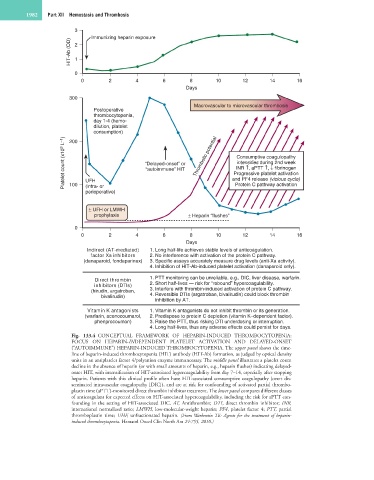
                        Fig.  133.4  CONCEPTUAL  FRAMEWORK  OF  HEPARIN-INDUCED  THROMBOCYTOPENIA:
                        FOCUS  ON  HEPARIN-INDEPENDENT  PLATELET  ACTIVATION  AND  DELAYED-ONSET
                        (“AUTOIMMUNE”) HEPARIN-INDUCED THROMBOCYTOPENIA. The upper panel shows the time-
                        line of heparin-induced thrombocytopenia (HIT) antibody (HIT-Ab) formation, as judged by optical density
                        units in an antiplatelet factor 4/polyanion enzyme immunoassay. The middle panel illustrates a platelet count
                        decline in the absence of heparin (or with small amounts of heparin, e.g., heparin flushes) indicating delayed-
                        onset HIT, with intensification of HIT-associated hypercoagulability from day 7–14, especially after stopping
                        heparin. Patients with this clinical profile often have HIT-associated consumptive coagulopathy (overt dis-
                        seminated intravascular coagulopathy [DIC]), and are at risk for confounding of activated partial thrombo-
                        plastin time (aPTT)-monitored direct thrombin inhibitor treatment. The lower panel compares different classes
                        of anticoagulant for expected effects on HIT-associated hypercoagulability, including the risk for aPTT con-
                        founding in the setting of HIT-associated DIC. AT, Antithrombin; DTI, direct thrombin inhibitor; INR,
                        international normalized ratio; LMWH, low-molecular-weight heparin; PF4, platelet factor 4; PTT, partial
                        thromboplastin  time;  UHF,  unfractionated  heparin.  (From Warkentin TE:  Agents  for  the  treatment  of  heparin-
                        induced thrombocytopenia. Hematol Oncol Clin North Am 24:755, 2010.)

