


Page 2243 - Hematology_ Basic Principles and Practice ( PDFDrive )
P. 2243
1990   Part XII  Hemostasis and Thrombosis


                       A                                         B


                       C                                      D
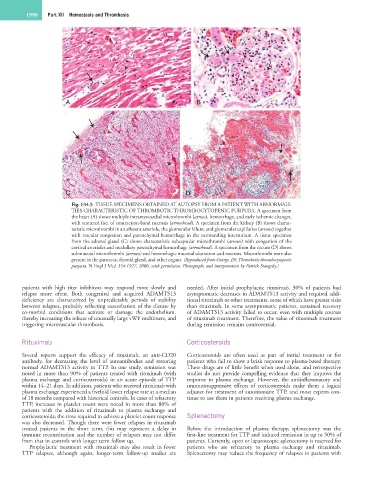
                        Fig. 134.5  TISSUE SPECIMENS OBTAINED AT AUTOPSY FROM A PATIENT WITH ABNORMALI-
                        TIES CHARACTERISTIC OF THROMBOTIC THROMBOCYTOPENIC PURPURA. A specimen from
                        the heart (A) shows multiple intramyocardial microthrombi (arrow), hemorrhage, and early ischemic changes,
                        with scattered foci of contraction-band necrosis (arrowhead). A specimen from the kidney (B) shows charac-
                        teristic microthrombi in an afferent arteriole, the glomerular hilum, and glomerular capillaries (arrows) together
                        with vascular congestion and parenchymal hemorrhage in the surrounding interstitium. A tissue specimen
                        from the adrenal gland (C) shows characteristic subcapsular microthrombi (arrows) with congestion of the
                        cortical arterioles and medullary parenchymal hemorrhage (arrowhead). A specimen from the cecum (D) shows
                        submucosal microthrombi (arrows) and hemorrhagic mucosal ulceration and necrosis. Microthrombi were also
                        present in the pancreas, thyroid gland, and other organs. (Reproduced from George, JN: Thrombotic thrombocytopenic
                        purpura. N Engl J Med 354:1927, 2006, with permission. Photographs and interpretation by Patrick Stangeby.)


        patients  with  high  titer  inhibitors  may  respond  more  slowly  and   needed.  After  initial  prophylactic  rituximab,  30%  of  patients  had
        relapse  more  often.  Both  congenital  and  acquired  ADAMTS13   asymptomatic decreases in ADAMTS13 activity and required addi-
        deficiency  are  characterized  by  unpredictable  periods  of  stability   tional rituximab or other treatments, some of which have greater risks
        between relapses, probably reflecting exacerbation of the disease by   than rituximab. In some asymptomatic patients, sustained recovery
        co-morbid  conditions  that  activate  or  damage  the  endothelium,   of ADAMTS13 activity failed to occur, even with multiple courses
        thereby increasing the release of unusually large vWF multimers, and   of rituximab treatment. Therefore, the value of rituximab treatment
        triggering microvascular thrombosis.                  during remission remains controversial.

        Rituximab                                             Corticosteroids

        Several  reports  support  the  efficacy  of  rituximab,  an  anti-CD20   Corticosteroids  are  often  used  as  part  of  initial  treatment  or  for
        antibody,  for  decreasing  the  level  of  autoantibodies  and  restoring   patients who fail to show a brisk response to plasma-based therapy.
        normal  ADAMTS13  activity  in TTP.  In  one  study,  remission  was   These drugs are of little benefit when used alone, and retrospective
        noted in more than 90% of patients treated with rituximab (with   studies do not provide compelling evidence that they improve the
        plasma  exchange  and  corticosteroids)  in  an  acute  episode  of TTP   response  to  plasma  exchange.  However,  the  antiinflammatory  and
        within 14–21 days. In addition, patients who received rituximab with   immunosuppressive  effects  of  corticosteroids  make  them  a  logical
        plasma exchange experienced a fivefold lower relapse rate at a median   adjunct for treatment of autoimmune TTP, and most experts con-
        of 18 months compared with historical controls. In cases of refractory   tinue to use them in patients receiving plasma exchange.
        TTP, increases in platelet count were noted in more than 80% of
        patients  with  the  addition  of  rituximab  to  plasma  exchange  and
        corticosteroids; the time required to achieve a platelet count response   Splenectomy
        was also decreased. Though there were fewer relapses in rituximab
        treated  patients  in  the  short  term,  this  may  represent  a  delay  in   Before  the  introduction  of  plasma  therapy,  splenectomy  was  the
        immune reconstitution and the number of relapses may not differ   first-line treatment for TTP and induced remission in up to 50% of
        from that in controls with longer term follow up.     patients. Currently, open or laparoscopic splenectomy is reserved for
           Prophylactic treatment with rituximab may also result in fewer   patients  who  are  refractory  to  plasma  exchange  and  rituximab.
        TTP  relapses,  although  again,  longer-term  follow-up  studies  are   Splenectomy may reduce the frequency of relapses in patients with

