


Page 2238 - Hematology_ Basic Principles and Practice ( PDFDrive )
P. 2238
Chapter 134  Thrombotic Thrombocytopenic Purpura and the Hemolytic Uremic Syndromes  1985


                                   Thrombotic microangiopathies            HUS with coexisting
                                                                           disease
                                                                           - Bone Marrow transplant
                                                                           - Solid organ transplant
             TMA with coexisting  Thrombotic                               - Drugs
             disease/condition    Thrombocytopenic  HELLP    Hemolytic       Calcineurin inhbitors,
             - Autoimmune disease  Purpura         Syndrome  uremic         Quinine, etc.
               SLE, Antiphospholipid,  -ADAMTS13 <10%        syndrome      - Malignant hypertension
               etc
             - Drugs (Ticlopidine,                                         Infection-associated
               chemotherapy, etc)                                          - STEC HUS
             - Sepsis                                                      - Shigella dysenteriae-HUS
             - DIC                Congenital  Anti-                        - Strep pneumoniae-HUS
             - Malignancy         ADAMTS13   ADAMTS13                      - H1N1-HUS
             - HIV                deficiency  antibody                     - HIV, EBV, etc

                                                                           DGKE Mutation-HUS       Mutation CFH, CFI,
                                                                                                   CFB, C3, MCP, THBD
                                                                           Alternative complement
                                                                           pathway dysregulation
                                                                                                    Anti-CFH antibody
                                                                           Cobalamin C defect

                                                                           Unexplained HUS

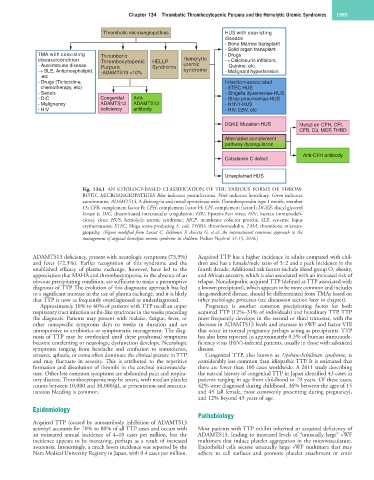
                            Fig.  134.1  AN  ETIOLOGY-BASED  CLASSIFICATION  OF THE  VARIOUS  FORMS  OF THROM-
                            BOTIC MICROANGIOPATHIES Blue indicates postinfectious. Pink indicates hereditary. Green indicates
                            autoimmune. ADAMTS13, A disintegrin and metalloproteinase with Thrombospondin type 1 motifs, member
                            13; CFB, complement factor B; CFH, complement factor H; CFI, complement factor I; DGKE, diacyl glycerol
                            kinase ε; DIC, disseminated intravascular coagulation; EBV, Epstein-Barr virus; HIV, human immunodefi-
                            ciency  virus;  HUS,  hemolytic  uremic  syndrome;  MCP,  membrane  cofactor  protein;  SLE,  systemic  lupus
                            erythematosus; STEC, Shiga toxin-producing E. coli; THBD, thrombomodulin; TMA, thrombotic microan-
                            giopathy.  (Figure  modified  from  Loriat  C,  Fakhouri  F,  Ariceta  G,  et al:  An  international  consensus  approach  to  the
                            management of atypical hemolytic uremic syndrome in children. Pediatr Nephrol 31:15, 2016.)


            ADAMTS13 deficiency, present with neurologic symptoms (73.9%)   Acquired TTP has a higher incidence in adults compared with chil-
            and  fever  (72.3%).  Earlier  recognition  of  this  syndrome  and  the   dren and has a female/male ratio of 3 : 2 and a peak incidence in the
            established  efficacy  of  plasma  exchange,  however,  have  led  to  the   fourth decade. Additional risk factors include blood group O, obesity,
            appreciation that MAHA and thrombocytopenia, in the absence of an   and African ancestry, which is also associated with an increased risk of
            obvious precipitating condition, are sufficient to make a presumptive   relapse. Nonidiopathic acquired TTP (defined as TTP associated with
            diagnosis of TTP. The evolution of this diagnostic approach has led   a known precipitant), which appears to be more common and includes
            to a significant increase in the use of plasma exchange, and it is likely   drug-mediated disease, should be differentiated from TMAs based on
            that TTP is now as frequently overdiagnosed as underdiagnosed.  other pathologic processes (see discussion section later in chapter).
              Approximately 10% to 40% of patients with TTP recall an upper   Pregnancy  is  another  common  precipitating  factor  for  both
            respiratory tract infection or flu-like syndrome in the weeks preceding   acquired TTP (12%–31% of individuals) and hereditary TTP. TTP
            the diagnosis. Patients may present with malaise, fatigue, fever, or   most frequently develops in the second or third trimester, with the
            other  nonspecific  symptoms  days  to  weeks  in  duration  and  are   decrease in ADAMTS13 levels and increase in vWF and factor VIII
            unresponsive to antibiotics or symptomatic management. The diag-  that occur in normal pregnancy perhaps acting as precipitants. TTP
            nosis of TTP may be overlooked until these prodromal symptoms   has also been reported in approximately 0.3% of human immunode-
            become unrelenting or neurologic dysfunction develops. Neurologic   ficiency virus (HIV)-infected patients, usually in those with advanced
            symptoms  ranging  from  headache  and  confusion  to  somnolence,   disease.
            seizures, aphasia, or coma often dominate the clinical picture in TTP   Congenital TTP,  also  known  as  Upshaw-Schülman  syndrome,  is
            and  may  fluctuate  in  severity.  This  is  attributed  to  the  repetitive   considerably less common than idiopathic TTP. It is estimated that
            formation and dissolution of thrombi in the cerebral microvascula-  there are fewer than 100 cases worldwide. A 2011 study describing
            ture. Other less common symptoms are abdominal pain and respira-  the natural history of congenital TTP in Japan identified 43 cases in
            tory distress. Thrombocytopenia may be severe, with median platelet   patients ranging in age from childhood to 79 years. Of these cases,
            counts between 10,000 and 30,000/µL at presentation and mucocu-  42% were diagnosed during childhood, 36% between the ages of 15
            taneous bleeding is common.                           and 45 (all female, most commonly presenting during pregnancy),
                                                                  and 12% beyond 45 years of age.

            Epidemiology
                                                                  Pathobiology
            Acquired TTP (caused by autoantibody inhibition of ADAMTS13
            activity) accounts for 70% to 80% of all TTP cases and occurs with   Most patients with TTP exhibit inherited or acquired deficiency of
            an  estimated  annual  incidence  of  4–10  cases  per  million,  but  the   ADAMTS13, leading to increased levels of “unusually large” vWF
            incidence appears to be increasing, perhaps as a result of increased   multimers that induce platelet aggregation in the microvasculature.
            awareness. Interestingly, a much lower incidence was reported by the   Endothelial  cells  secrete  unusually  large  vWF  multimers  that  may
            Nara Medical University Registry in Japan, with 0.4 cases per million.   adhere  to  cell  surfaces  and  promote  platelet  attachment  or  enter

