


Page 2545 - Hematology_ Basic Principles and Practice ( PDFDrive )
P. 2545
2268   Part XIII  Consultative Hematology


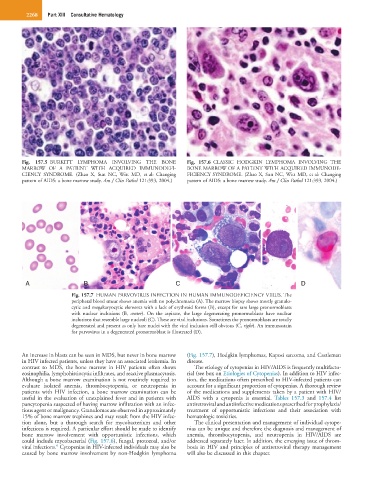
        Fig.  157.5  BURKITT  LYMPHOMA  INVOLVING  THE  BONE   Fig.  157.6  CLASSIC  HODGKIN  LYMPHOMA  INVOLVING  THE
        MARROW  OF  A  PATIENT  WITH  ACQUIRED  IMMUNODEFI-   BONE MARROW OF A PATIENT WITH ACQUIRED IMMUNODE-
        CIENCY  SYNDROME.  (Zhao  X,  Sun  NC,  Witt  MD,  et al:  Changing   FICIENCY SYNDROME. (Zhao X, Sun NC, Witt MD, et al: Changing
        pattern of AIDS: a bone marrow study. Am J Clin Pathol 121:393, 2004.)   pattern of AIDS: a bone marrow study. Am J Clin Pathol 121:393, 2004.)


         A                  B                              C                                        D

                        Fig. 157.7  HUMAN PARVOVIRUS INFECTION IN HUMAN IMMUNODEFICIENCY VIRUS. The
                        peripheral blood smear shows anemia with no polychromasia (A). The marrow biopsy shows mostly granulo-
                        cytic and megakaryocytic elements with a lack of erythroid forms (B), except for rare large pronormoblasts
                        with  nuclear  inclusions  (B,  center).  On  the  aspirate,  the  large  degenerating  pronormoblasts  have  nuclear
                        inclusions that resemble large nucleoli (C). These are viral inclusions. Sometimes the pronormoblasts are totally
                        degenerated and present as only bare nuclei with the viral inclusion still obvious (C, right). An immunostain
                        for parvovirus in a degenerated pronormoblast is illustrated (D).


        An increase in blasts can be seen in MDS, but never in bone marrow   (Fig. 157.7), Hodgkin lymphomas, Kaposi sarcoma, and Castleman
        in HIV infected patients, unless they have an associated leukemia. In   disease.
        contrast  to  MDS,  the  bone  marrow  in  HIV  patients  often  shows   The etiology of cytopenias in HIV/AIDS is frequently multifacto-
        eosinophilia, lymphohistiocytic infiltrates, and reactive plasmacytosis.   rial (see box on Etiologies of Cytopenias). In addition to HIV infec-
        Although a bone marrow examination is not routinely required to   tion, the medications often prescribed to HIV-infected patients can
        evaluate  isolated  anemia,  thrombocytopenia,  or  neutropenia  in   account for a significant proportion of cytopenias. A thorough review
        patients  with  HIV  infection,  a  bone  marrow  examination  can  be   of the medications and supplements taken by a patient with HIV/
        useful in the evaluation of unexplained fever and in patients with   AIDS  with  a  cytopenia  is  essential.  Tables  157.3  and  157.4  list
        pancytopenia suspected of having marrow infiltration with an infec-  antiretroviral and antiinfective medications prescribed for prophylaxis/
        tious agent or malignancy. Granulomas are observed in approximately   treatment  of  opportunistic  infections  and  their  association  with
        15% of bone marrow trephines and may result from the HIV infec-  hematologic toxicities.
        tion  alone,  but  a  thorough  search  for  mycobacterium  and  other   The clinical presentation and management of individual cytope-
        infections is required. A particular effort should be made to identify   nias can be unique and therefore the diagnosis and management of
        bone  marrow  involvement  with  opportunistic  infections,  which   anemia,  thrombocytopenia,  and  neutropenia  in  HIV/AIDS  are
        could include mycobacterial (Fig. 157.6), fungal, protozoal, and/or   addressed separately later. In addition, the emerging issue of throm-
                   6
        viral infections.  Cytopenias in HIV-infected individuals may also be   bosis  in  HIV  and  principles  of  antiretroviral  therapy  management
        caused  by  bone  marrow  involvement  by  non-Hodgkin  lymphoma   will also be discussed in this chapter.

