


Page 696 - Hematology_ Basic Principles and Practice ( PDFDrive )
P. 696
588    Part V  Red Blood Cells


                                                                              Hb F:
                              O 2  Deoxygenation                           Hydroxyurea, decitabine?,
                                                                           HDAC inhibitor?
                          Avoid                           Hb polymerization
                         dehydration  Hb S concentration                   Replace Hb S with Hb A:
                                                                           Exchange transfusion,
                                     Acidosis                              Stem cell transplant


                                         RBC rigidity  RBC adhesion    Hemolysis


                                      Endothelial damage                Anemia         Nitric oxide
                                                                     Erythropoietin?  Antioxidants?
                                                                                      Iron chelation?

                                Coagulation    Inflammatory
                              pathway activation  pathway activation
                                 Aspirin?


                                      Vasoocclusion


                               Splenic, cerebral, pulmonary, renal,  Renal, cardiac,   Pulmonary
                             muscle, bone, retinal, skin complications  skin complications  hypertension

                          Vaccination, penicillin, vitamin supplementation,
                            analgesia, wound care, laser for retinopathy
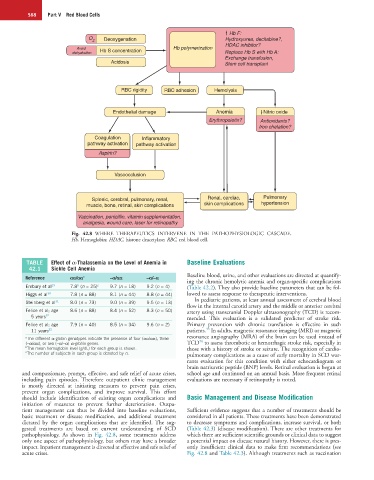
                        Fig.  42.8  WHERE  THERAPEUTICS  INTERVENE  IN  THE  PATHOPHYSIOLOGIC  CASCADE.
                        Hb, Hemoglobin; HDAC, histone deacetylase; RBC, red blood cell.


          TABLE   Effect of α-Thalassemia on the Level of Anemia in   Baseline Evaluations
          42.1    Sickle Cell Anemia
         Reference      αα/αα a      −α/αα       −α/−α        Baseline blood, urine, and other evaluations are directed at quantify-
                                                              ing the chronic hemolytic anemia and organ-specific complications
         Embury et al 29  7.8  (n = 25) c  9.7 (n = 18)  9.2 (n = 4)  (Table 42.2). They also provide baseline parameters that can be fol-
                          b
         Higgs et al 30  7.8 (n = 88)  8.1 (n = 44)  8.8 (n = 44)  lowed to assess response to therapeutic interventions.
                                                                 In pediatric patients, at least annual assessment of cerebral blood
         Steinberg et al 31  8.0 (n = 73)  9.0 (n = 39)  9.5 (n = 13)
                                                              flow in the internal carotid artery and the middle or anterior cerebral
         Felice et al; age   8.6 (n = 88)  8.4 (n = 52)  8.3 (n = 50)  artery using transcranial Doppler ultrasonography (TCD) is recom-
           5 years 32                                         mended.  This  evaluation  is  a  validated  predictor  of  stroke  risk.
         Felice et al; age   7.9 (n = 40)  8.5 (n = 34)  9.6 (n = 2)  Primary  prevention  with  chronic  transfusion  is  effective  in  such
                                                                    33
           11 years 32                                        patients.  In adults, magnetic resonance imaging (MRI) or magnetic
         a The different α-globin genotypes indicate the presence of four (αα/αα), three   resonance angiography (MRA) of the brain can be used instead of
                                                                  34
         (−α/αα), or two (−α/−α) α-globin genes.              TCD  to assess thrombotic or hemorrhagic stroke risk, especially in
         b The mean hemoglobin level (g/dL) for each group is shown.  those with a history of stroke or seizure. The recognition of cardio-
         c The number of subjects in each group is denoted by n.  pulmonary complications as a cause of early mortality in SCD war-
                                                              rants  evaluation  for  this  condition  with  either  echocardiogram  or
                                                              brain natriuretic peptide (BNP) levels. Retinal evaluation is begun at
        and compassionate, prompt, effective, and safe relief of acute crises,   school age and continued on an annual basis. More frequent retinal
        including  pain  episodes.  Therefore  outpatient  clinic  management   evaluations are necessary if retinopathy is noted.
        is  mostly  directed  at  initiating  measures  to  prevent  pain  crises,
        prevent  organ  complications,  and  improve  survival.  This  effort
        should  include  identification  of  existing  organ  complications  and   Basic Management and Disease Modification
        initiation  of  measures  to  prevent  further  deterioration.  Outpa-
        tient  management  can  thus  be  divided  into  baseline  evaluations,   Sufficient evidence suggests that a number of treatments should be
        basic  treatment  or  disease  modification,  and  additional  treatment   considered in all patients. These treatments have been demonstrated
        dictated  by  the  organ  complications  that  are  identified. The  sug-  to decrease symptoms and complications, increase survival, or both
        gested  treatments  are  based  on  current  understanding  of  SCD   (Table 42.3) (disease modification). There are other treatments for
        pathophysiology.  As  shown  in  Fig.  42.8,  some  treatments  address   which there are sufficient scientific grounds or clinical data to suggest
        only one aspect of pathophysiology, but others may have a broader   a potential impact on disease natural history. However, there is pres-
        impact. Inpatient management is directed at effective and safe relief of    ently insufficient clinical data to make firm recommendations (see
        acute crises.                                         Fig. 42.8 and Table 42.3). Although treatments such as vaccination

