


Page 807 - Hematology_ Basic Principles and Practice ( PDFDrive )
P. 807
Chapter 50  Disorders of Phagocyte Function  693


                                        • Recurrent deep tissue infection        Initial evaluation
                                          (e.g., lymphadenitis, pneumonia,  • CBC, ESR, r/o lymphopenia
                                          osteomyelitis, liver abscess)   • Quantitative immunoglobulins
                                      Infections    (e.g., Staph. aureus, Pseudomonas,  • lgE
                                        • Unusual or resistant infection
                                                                          • Immunoglobulin subsets
                                          Klebsiella, Serratia, Candida,
                                                                          • T+B cell quantitation and subsets
                            Unusual frequency  or type of infection  • Periodontal disease or tooth loss  • Response to tetanus immunization
                                          Aspergillus, Nocardia)
                                                                          • PHA stimulation
                                        • Omphalitis
                                                                          • HIV
                                                                              Neutrophil evaluation
                                        • Family history of recurrent infection
                                      History and physical  • Chronic diarrhea  • NBT slide test or DHR by FACS
                                        • Gingivitis
                                                                          • CBC
                                        • Infections with absence of
                                                                          • CD18/CD11b by FACS
                                          neutrophilic infiltration
                                                                          • CD15a by FACS
                                        • ↑ CRP/SED rate
                                                                          • Bombay blood group
                                        • Splenomegaly or hepatomegaly
                                                                          • (Chemotaxis)
                                        • Moderate lymphadenopathy
                                        • Inflammatory anemia
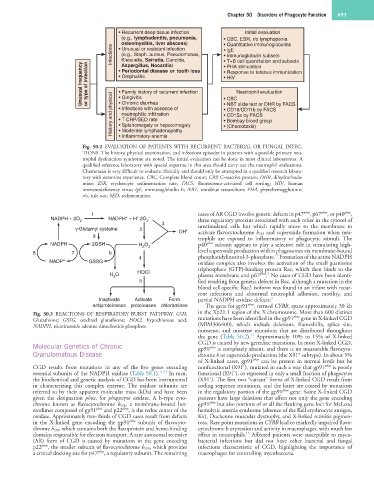
                            Fig.  50.2  EVALUATION  OF  PATIENTS WITH  RECURRENT  BACTERIAL  OR  FUNGAL  INFEC-
                            TIONS. The history, physical examination, and infections episodes in patients with a possible primary neu-
                            trophil dysfunction syndrome are noted. The initial evaluation can be done in most clinical laboratories. A
                            qualified reference laboratory with special expertise in this area should carry out the neutrophil evaluations.
                            Chemotaxis is very difficult to evaluate clinically and should only be attempted in a qualified research labora-
                            tory with extensive experience. CBC, Complete blood count; CRP, C-reactive protein; DHR, dihydrorhoda-
                            mine;  ESR,  erythrocyte  sedimentation  rate;  FACS,  fluorescence-activated  cell  sorting;  HIV,  human
                            immunodeficiency virus; IgE, immunoglobulin E; NBT, nitroblue tetrazolium; PHA, phytohemagglutinin;
                            r/o, rule out; SED, sedimentation.
                               1                                  cases of AR CGD involve genetic defects in p47 phox , p67 phox , or p40 phox ,
                                              +
                                          +
                  NADPH + 2O        NADPH  + H 2O  –
                           2                     2                three regulatory proteins associated with each other in the cytosol of
                                                      3
                          γ-Glutamyl cysteine  2            OH •  unstimulated  cells  but  which  rapidly  move  to  the  membrane  to
                                                                  activate flavocytochrome b 558  and superoxide formation when neu-
                               9                                  trophils  are  exposed  to  inflammatory  or  phagocytic  stimuli.  The
                 NADPH         2GSH           H O 2               p40 phox  subunit appears to play a selective role in stimulating high-
                                                2
            8           7            6                            level superoxide production within phagosomes via membrane-bound
                                                                                           10
                                              4                   phosphatidylinositol-3-phosphate.  Formation of the active NADPH
                 NADP +       GSSG                                oxidase complex also involves the activation of the small guanosine
                                                                  triphosphate (GTP)-binding protein Rac, which then binds to the
                                     H O      HOCI                plasma membrane and p67 phox 3
                                                                                        .  No cases of CGD have been identi-
                                      2
                                               5                  fied resulting from genetic defects in Rac, although a mutation in the
                                                                  blood cell-specific Rac2 isoform was found in an infant with recur-
                                                                  rent  infections  and  abnormal  neutrophil  adhesion,  motility,  and
                                 Inactivate  Activate   Form      partial NADPH oxidase defects. 3
                               antiproteinases proteinases  chloramines  The gene for gp91 phox , termed CYBB, spans approximately 30 kb
            Fig.  50.3  REACTIONS  OF  RESPIRATORY BURST  PATHWAY.  GSH,   in the Xp21.1 region of the X chromosome. More than 600 distinct
                                                                                                 phox
            Glutathione;  GSSG,  oxidized  glutathione;  HOCl,  hypochlorous  acid;   mutations have been identified in the gp91   gene in X-linked CGD
            NADPH, nicotinamide adenine dinucleotide phosphate.   (MIM306400),  which  include  deletions,  frameshifts,  splice  site,
                                                                  nonsense,  and  missense  mutations  that  are  distributed  throughout
                                                                                   11
                                                                  the  gene  (Table  50.2).   Approximately  10%  to  15%  of  X-linked
            Molecular Genetics of Chronic                         CGD is caused by new germline mutations. In most X-linked CGD,
                                                                      phox
                                                                        is completely absent, and there is no measurable flavocyto-
                                                                  gp91
            Granulomatous Disease                                 chrome b or superoxide production (the X91° subtype). In about 5%
                                                                  of  X-linked  cases,  gp91 phox   can  be  present  in  normal  levels  but  be
                                                                                 +
            CGD  results  from  mutations  in  any  of  the  five  genes  encoding   nonfunctional (X91 ), mutated in such a way that gp91 phox  is poorly
                                                                             −
            essential subunits of the NADPH oxidase (Table 50.1). 11,12  In turn,   functional (X91 ), or expressed in only a small fraction of phagocytes
                                                                      +
            the biochemical and genetic analysis of CGD has been instrumental   (X91 ). The first two “variant” forms of X-linked CGD result from
            in  characterizing  this  complex  enzyme.  The  oxidase  subunits  are   coding sequence mutations, and the latter are caused by mutations
            referred to by their apparent molecular mass (kDa) and have been   in the regulatory portion of the gp91 phox  gene. Some X-linked CGD
            given  the  designation  phox,  for  phagocyte  oxidase.  A  b-type  cyto-  patients have large deletions that affect not only the gene encoding
            chrome  known  as  flavocytochrome  b 558,  a  membrane-bound  het-  gp91 phox  but also portions of or all the flanking gene loci for McLeod
            erodimer composed of gp91 phox  and p22 phox , is the redox center of the   hemolytic anemia syndrome (absence of the Kell erythrocyte antigen,
            oxidase. Approximately two-thirds of CGD cases result from defects   Kx), Duchenne muscular dystrophy, and X-linked retinitis pigmen-
            in  the  X-linked  gene  encoding  the  gp91 phox   subunit  of  flavocyto-  tosa. Rare point mutations in CYBB lead to markedly impaired flavo-
            chrome b 558, which contains both the flavoprotein and heme-binding   cytochrome b expression and activity in macrophages, with much less
                                                                                  13
            domains responsible for electron transport. A rare autosomal recessive   effect in neutrophils.  Affected patients were susceptible to myco-
            (AR)  form  of  CGD  is  caused  by  mutations  in  the  gene  encoding   bacterial  infections  but  did  not  have  other  bacterial  and  fungal
            p22 phox , the smaller subunit of flavocytochrome b 558, which provides   infections  characteristic  of  CGD,  highlighting  the  importance  of
            a critical docking site for p47 phox , a regulatory subunit. The remaining   macrophages for controlling mycobacteria.

