


Page 808 - Hematology_ Basic Principles and Practice ( PDFDrive )
P. 808
694    Part VI  Non-Malignant Leukocytes


                          CYBB                                 Clinical Approach to Patients With Disorders of Phagocyte Function
                   –      ~65%
           O 2    O 2    (X-linked)  Flavocytochrome b 558
                                                                Index of Suspicion
                                                                Patients  with  disorders  of  phagocyte  function  usually  present  at  a
                                                       CYB      young age with recurrent, deep-seated bacterial and fungal infections.
                e–                gp91 phox  p22 phox  A        Unlike patients with severe neutropenia caused by bone marrow (BM)
                       Membrane    (Nox2)              ~5%      failure, these patients usually do not have sepsis. Blood cultures are
                                                                often negative. The major diagnostic problem faced by the clinician is
                         Cytosol                                to determine if the history of infection is unusual enough to warrant
                                                                consideration of an underlying neutrophil dysfunction defect. The first
             NADPH                                   NCF1       point  to  remember  is  that  primary  immunodeficiency  disorders  are
                                                     ~25%       rare and primary neutrophil dysfunction syndromes form only a small
             NADP +                                             percentage of all primary immunodeficiency syndromes. The patient
                                                                is more likely to have recurrent community-acquired Staphylococcus
                            Rac        p67 phox  p47 phox       infection than CGD.
                                                                 Specific features that may suggest a phagocytic defect are shown in
                               NCF2           phox  NCF4        Fig. 50.2. Excellent discussions of this problem have been published
                                ~5%        p40      1 patient   (see Kyono and Coates , and Dinauer, Newburger and Borregaard ).
                                                                                2
                                                                                                              3
                                                                Four aspects of each patient’s infection history should be considered:
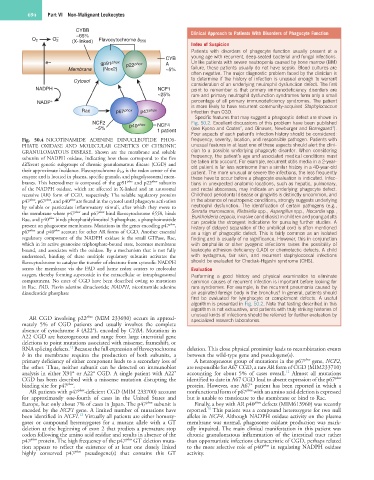
        Fig.  50.4  NICOTINAMIDE  ADENINE  DINUCLEOTIDE  PHOS-  frequency, severity, location, and responsible pathogen. Patients with
        PHATE  OXIDASE  AND  MOLECULAR  GENETICS  OF  CHRONIC   unusual features in at least one of these aspects should alert the clini-
        GRANULOMATOUS  DISEASE.  Shown  are  the  membrane  and  soluble   cian to a possible underlying phagocyte disorder. When considering
        subunits of NADPH oxidase, indicating how these correspond to the five   frequency, the patient’s age and associated medical conditions must
        different  genetic  subgroups  of  chronic  granulomatous  disease  (CGD)  and   be taken into account. For example, recurrent otitis media in a 2-year-
                                                                old patient is far less worrisome than a similar history in a 40-year-old
        their approximate incidence. Flavocytochrome b 558 is the redox center of the   patient. The more unusual or severe the infections, the less frequently
        enzyme and is located in plasma, specific granule, and phagolysosomal mem-  these have to occur before a phagocyte evaluation is indicated. Infec-
        branes. This heterodimer is composed of the gp91 phox  and p22 phox  subunits   tions in unexpected anatomic locations, such as hepatic, pulmonary,
        of the NADPH oxidase, which are affected in X-linked and an autosomal   and rectal abscesses, may indicate an underlying phagocyte defect.
        recessive (AR) form of CGD, respectively. The soluble regulatory proteins   Childhood periodontal disease or gingivitis is distinctly uncommon, and
        p47 phox , p67 phox , and p40 phox  are found in the cytosol until phagocyte activation   in the absence of neutropenic conditions, strongly suggests underlying
        by  soluble  or  particulate  inflammatory  stimuli,  after  which  they  move  to   neutrophil  dysfunction.  The  identification  of  certain  pathogens  (e.g.,
        the membrane where p47 phox  and p67 phox  bind flavocytochrome b558, binds   Serratia marcescens, Klebsiella spp., Aspergillus spp., Nocardia spp.,
        Rac, and p40 phox  binds phosphatidylinositol 3-phosphate, a phosphoinositide   Burkholderia cepacia, invasive candidiasis) in children and young adults
                                                                can provide the strongest indications for pursuing further studies. A
        present on phagosome membranes. Mutations in the genes encoding p47 phox ,   history of delayed separation of the umbilical cord is often mentioned
        p67 phox  and p40 phox  account for other AR forms of CGD. Another essential   as a sign of phagocytic defect. This is fairly common as an isolated
        regulatory  component  of  the  NADPH  oxidase  is  the  small  GTPase,  Rac,   finding and is usually of no significance. However, this in conjunction
        which in its active guanosine triphosphate-bound state, becomes membrane   with  omphalitis  or  other  pyogenic  infections  raises  the  possibility  of
        bound,  and  associates  with  the  oxidase.  By  a  mechanism  that  is  not  fully   leukocyte adhesion deficiency (LAD) or chemotactic defects. A child
        understood,  binding  of  these  multiple  regulatory  subunits  activates  the   with  nystagmus,  fair  skin,  and  recurrent  staphylococcal  infections
        flavocytochrome to catalyze the transfer of electrons from cytosolic NADPH   should be evaluated for Chediak-Higashi syndrome (CHS).
        across  the  membrane  via  the  FAD  and  heme  redox  centers  to  molecular   Evaluation
        oxygen, thereby forming superoxide in the extracellular or intraphagosomal   Performing  a  good  history  and  physical  examination  to  eliminate
        compartment. No cases of CGD have been described owing to mutations   common causes of recurrent infection is important before looking for
        in Rac. FAD, Flavin adenine dinucleotide; NADPH, nicotinamide adenine   rare syndromes. For example, is the recurrent pneumonia caused by
        dinucleotide phosphate                                  an aspirated foreign body in the bronchus? In general, patients should
                                                                first  be  evaluated  for  lymphocyte  or  complement  defects.  A  useful
                                                                algorithm is presented in Fig. 50.2. Note that testing described in this
                                                                algorithm is not exhaustive, and patients with truly striking histories of
                                                                unusual kinds of infections should be referred for further evaluation by
                             phox
           AR  CGD  involving  p22    (MIM  233690)  occurs  in  approxi-  specialized research laboratories.
        mately  5%  of  CGD  patients  and  usually  involves  the  complete
        absence of cytochrome b (A22°), encoded by CYBA. Mutations in
        A22 CGD are heterogeneous and range from large interstitial gene
        deletions to point mutations associated with missense, frameshift, or
                        12
        RNA splicing defects.  Because the full expression of flavocytochrome   deletion. This close physical proximity leads to recombination events
        b  in  the  membrane  requires  the  production  of  both  subunits,  a   between the wild-type gene and pseudogene(s).
        primary deficiency of either component leads to a secondary loss of   A heterogeneous group of mutations in the p67 phox  gene, NCF2,
        the  other. Thus,  neither  subunit  can  be  detected  on  immunoblot   are responsible for A67 CGD, a rare AR form of CGD (MIM233710)
                                                          +
                                                                                               12
        analysis in either X91° or A22° CGD. A single patient with A22    accounting  for  about  5%  of  cases  overall.   Almost  all  mutations
        CGD has been described with a missense mutation disrupting the   identified to date in A67 CGD lead to absent expression of the p67 phox
                                                                                   +
        binding site for p47 phox .                           protein. However, one A67  patient has been reported in which a
           AR patients with p47 phox -deficient CGD (MIM 233700) account   nonfunctional form of p67 phox  with an amino acid deletion is expressed
        for  approximately  one-fourth  of  cases  in  the  United  States  and   but is unable to translocate to the membrane or bind to Rac.
        Europe, but only about 7% of cases in Japan. The p47 phox  subunit is   Finally, a boy with AR p40 phox  defects (MIM613960) was recently
                                                                     10
        encoded by the NCF1 gene. A limited number of mutations have   reported.  This patient was a compound heterozygote for two null
                           12
        been identified in NCF1.  Virtually all patients are either homozy-  alleles in NCF4. Although NADPH oxidase activity on the plasma
        gotes  or  compound  heterozygotes  for  a  mutant  allele  with  a  GT   membrane was normal, phagosome oxidant production was mark-
        deletion at the beginning of exon 2 that predicts a premature stop   edly impaired. The main clinical manifestation in this patient was
        codon following the amino acid residue and results in absence of the   chronic  granulomatous  inflammation  of  the  intestinal  tract  rather
        p47 phox  protein. The high frequency of the p47 phox  GT deletion muta-  than opportunistic infections characteristic of CGD, perhaps related
        tion  appears  to  reflect  the  existence  of  at  least  one  closely  linked   to the more selective role of p40 phox  in regulating NADPH oxidase
        highly  conserved  p47 phox   pseudogene(s)  that  contains  this  GT   activity.

