


Page 866 - Hematology_ Basic Principles and Practice ( PDFDrive )
P. 866
Chapter 54  Infectious Mononucleosis and Other Epstein-Barr Virus–Associated Diseases  749


                                     Latency/malignancy    Latent gene expression  Immunogenicity
                                     Type III
                                     Lymphoproliferative disease  LP
                                       after solid organ or stem   EBNAs
                                       cell transportation
                                     HIV-associated immunoblastic
                                       lymphoma ∗
                                     Type II
                                     Hodgkin disease             EBNA1
                                     Nasopharyngeal carcinoma
                                     T/NK-cell lymphoma


                                     Type I
                                     Burkitt lymphoma            EBNA1
                                     Gastric adenocarcinoma ∗∗


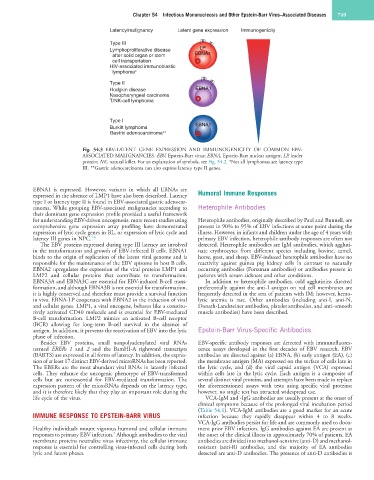
                            Fig.  54.3  EBV-LATENT  GENE  EXPRESSION  AND  IMMUNOGENICITY  OF  COMMON  EBV-
                            ASSOCIATED MALIGNANCIES. EBV, Epstein-Barr virus; EBNA, Epstein-Barr nuclear antigen; LP, leader
                            protein; NK, natural killer. For an explanation of symbols, see Fig. 54.2. *Not all lymphomas are latency type
                            III. **Gastric adenocarcinoma can also express latency type II genes.


            EBNA1  is  expressed.  However,  variants  in  which  all  EBNAs  are
            expressed in the absence of LMP1 have also been described. Latency   Humoral Immune Responses
            type I or latency type II is found in EBV-associated gastric adenocar-
            cinoma. While grouping EBV-associated malignancies according to   Heterophile Antibodies
            their dominant gene expression profile provided a useful framework
            for understanding EBV-driven oncogenesis, more recent studies using   Heterophile antibodies, originally described by Paul and Bunnell, are
            comprehensive  gene  expression  array  profiling  have  demonstrated   present in 90% to 95% of EBV infections at some point during the
            expression of lytic cycle genes in BL, or expression of lytic cycle and   illness. However, in infants and children under the age of 4 years with
            latency III genes in NPC. 5,6                         primary EBV infection, heterophile antibody responses are often not
              The EBV proteins expressed during type III latency are involved   detected. Heterophile antibodies are IgM antibodies, which aggluti-
            in the transformation and growth of EBV-infected B cells. EBNA1   nate  erythrocytes  from  different  species  including  bovine,  camel,
            binds to the origin of replication of the latent viral genome and is   horse, goat, and sheep. EBV-induced heterophile antibodies have no
            responsible for the maintenance of the EBV episome in host B cells.   reactivity  against  guinea  pig  kidney  cells  in  contrast  to  naturally
            EBNA2 upregulates the expression of the viral proteins LMP1 and   occurring antibodies (Forssman antibodies) or antibodies present in
            LMP2  and  cellular  proteins  that  contribute  to  transformation.   patients with serum sickness and other conditions.
            EBNA3A and EBNA3C are essential for EBV-induced B-cell trans-  In  addition  to  heterophile  antibodies,  cold  agglutinins  directed
            formation, and although EBNA3B is not essential for transformation,   preferentially against the anti-I antigen on red cell membranes are
            it is highly conserved and therefore must provide a survival function   frequently detected in the sera of patients with IM; however, hemo-
            in vivo. EBNA-LP cooperates with EBNA2 in the induction of viral   lytic  anemia  is  rare.  Other  antibodies  (including  anti-I,  anti-N,
            and cellular genes. LMP1, a viral oncogene, behaves like a constitu-  Donath-Landsteiner antibodies, platelet antibodies, and anti–smooth
            tively activated CD40 molecule and is essential for EBV-mediated   muscle antibodies) have been described.
            B-cell  transformation.  LMP2  mimics  an  activated  B-cell  receptor
            (BCR)  allowing  for  long-term  B-cell  survival  in  the  absence  of
            antigen. In addition, it prevents the reactivation of EBV into the lytic   Epstein-Barr Virus-Specific Antibodies
            phase of infection.
              Besides  EBV  proteins,  small  nonpolyadenylated  viral  RNAs   EBV-specific antibody responses are detected with immunofluores-
            termed  EBERs  1  and  2  and  the  BamHI-A  rightward  transcripts   cence  assays  developed  in  the  first  decades  of  EBV  research.  EBV
            (BARTS) are expressed in all forms of latency. In addition, the expres-  antibodies are directed against (a) EBNA, (b) early antigen (EA), (c)
            sion of at least 17 distinct EBV-derived microRNAs has been reported.   the membrane antigen (MA) expressed on the surface of cells late in
            The EBERs are the most abundant viral RNAs in latently infected   the  lytic  cycle,  and  (d)  the  viral  capsid  antigen  (VCA)  expressed
            cells. They enhance the oncogenic phenotype of EBV-transformed   within  cells  late  in  the  lytic  cycle.  Each  antigen  is  a composite  of
            cells  but  are  nonessential  for  EBV-mediated  transformation.  The   several distinct viral proteins, and attempts have been made to replace
            expression pattern of the microRNAs depends on the latency type,   the  aforementioned  assays  with  tests  using  specific  viral  proteins;
            and it is therefore likely that they play an important role during the   however, no single test has attracted widespread use.
            life cycle of the virus.                                VCA-IgM and -IgG antibodies are usually present at the onset of
                                                                  clinical symptoms because of the prolonged viral incubation period
                                                                  (Table 54.1). VCA-IgM antibodies are a good marker for an acute
            IMMUNE RESPONSE TO EPSTEIN-BARR VIRUS                 infection  because  they  rapidly  disappear  within  4  to  8  weeks.
                                                                  VCA-IgG antibodies persist for life and are commonly used to docu-
            Healthy individuals mount vigorous humoral and cellular immune   ment prior EBV infection. IgG antibodies against EA are present at
                                      7
            responses to primary EBV infection.  Although antibodies to the viral   the onset of the clinical illness in approximately 70% of patients. EA
            membrane proteins neutralize virus infectivity, the cellular immune   antibodies are divided into methanol-sensitive (anti-D) and methanol-
            response is essential for controlling virus-infected cells during both   resistant  (anti-R)  antibodies,  and  the  majority  of  EA  antibodies
            lytic and latent phases.                              detected are anti-D antibodies. The presence of anti-D antibodies is

